3212 Double Row Angular Contact Bearing: Specs Wholesale Supplier
Matching the outer diameter is not enough to guarantee performance.
The core specifications for a standard 3212 double row angular contact bearing are an inner diameter of 60 mm, an outer diameter of 110 mm, and a width of 36.5 mm. However, relying solely on these dimensions leads to assembly failures. The critical factors that determine rigidity and thermal stability are the contact angle (typically 30 or 32 degrees), the internal clearance class (such as C3 or CN), and the suffix codes defining seal types like 2RS1 or 2Z. A mismatch in any of these parameters, even with correct physical dimensions, results in premature heating and catastrophic seizure.
I still recall the humidity in the warehouse that morning when I was preparing a shipment for a client in Southeast Asia. The order was for a batch of 3212 units intended for agricultural machinery spindles. On paper, everything looked perfect. The part numbers matched, the brands were reputable, and the dimensional checks passed without issue. I loaded the containers, confident that the transaction was complete. Weeks later, my phone rang. The client’s voice was tight with frustration. Every single spindle had overheated within days of operation. The bearings had seized, locking the shafts and causing significant downtime during the harvest season. I flew out to inspect the failed units. The outer diameters were correct. The inner bores fit the shafts perfectly. But when I examined the internal geometry, the problem became clear. I had supplied a standard clearance bearing where a specific pre-loaded configuration was required. The contact angles did not align with the housing design, creating excessive axial play that turned into violent vibration under load. That loss was not just financial; it was a lesson in the hidden complexity of double row designs. Since then, I never look at a part number in isolation. I verify the suffixes, the clearance classes, and the application context before any box leaves the floor. [NEED_CITE: ISO 15243 failure mode classification for mounting errors]

Understanding why dimensions are merely the entry point requires a deeper look at how these components function. The 3212 double row angular contact bearing specs are often reduced to a simple string of numbers in catalogs, but for engineers and procurement specialists, those numbers tell a story of load distribution and thermal management. When you source these components, especially in mixed-brand batches, the devil is in the details that do not appear on the basic dimension sheet.
What Are the Core Dimensions and Load Specs of 3212?
The basic envelope dimensions define the fit, but the load ratings define the life.
For any procurement specialist, the starting point is the physical boundary. The standard 3212 bearing has an inner diameter of 60 mm, an outer diameter of 110 mm, and a total width of 36.5 mm. These values are standardized across major manufacturers to ensure interchangeability at the housing level. However, assuming that identical dimensions mean identical performance is a dangerous oversimplification. The load carrying capacity varies significantly based on the internal design and the quality of the steel used.
The dynamic load rating determines how much radial and axial force the bearing can withstand while rotating. For a 3212 unit, this rating is substantial due to the double row design, which effectively doubles the number of load-carrying balls compared to a single row equivalent. Yet, this advantage is only realized if the bearing is mounted correctly. If the housing is misaligned, the load distribution becomes uneven, concentrating stress on a few balls rather than spreading it across the entire raceway. This leads to early fatigue and spalling. [NEED_CITE: ABMA standard load rating calculation methods for angular contact bearings]
Static load rating is equally critical for applications where the bearing experiences heavy shocks while stationary, such as in mining crushers or agricultural implements. A high static rating ensures that the raceways do not deform permanently under peak loads. When comparing different brands, you will notice variations in these ratings even for the same 3212 designation. These differences stem from variations in ball size, raceway curvature, and material purity. A premium brand might offer a higher load rating due to superior steel cleanliness, while a standard brand might meet the minimum ISO requirements. For MRO buyers, understanding this distinction helps in selecting the right tier for the application. Using a standard rating bearing in a high-shock environment will result in frequent replacements, whereas over-specifying for a light-duty fan adds unnecessary cost.
| Parameter | Standard Value | Impact on Performance |
|---|---|---|
| Inner Diameter | 60 mm | Determines shaft fit and rotational stability |
| Outer Diameter | 110 mm | Defines housing bore requirement and support structure |
| Width | 36.5 mm | Affects axial space allocation and sealing options |
| Dynamic Load Rating | Varies by Brand | Dictates operational life under rotating conditions |
| Static Load Rating | Varies by Brand | Prevents permanent deformation under shock loads |

When sourcing a 3212 double row angular contact bearing specs sheet, always cross-reference the load ratings with your application’s actual force profiles. Do not rely on generic tables. Request the specific data sheet for the brand and batch you are purchasing. This diligence prevents the common mistake of assuming all 3212 bearings are created equal. The dimensions get the bearing into the machine, but the load ratings keep it running.
How Do Contact Angles and Clearances Affect 3212 Rigidity?
A difference of two degrees in contact angle can destroy assembly rigidity.
The contact angle is the angle between the line of action of the ball load and the plane perpendicular to the bearing axis. In 3212 bearings, this angle is typically 30 or 32 degrees. This geometric feature determines the ratio of axial to radial load capacity. A larger contact angle increases axial load capacity but reduces radial capacity. More importantly, it affects the stiffness of the bearing arrangement. If the contact angle in the bearing does not match the design intent of the housing and shaft, the bearing will not seat properly. This misalignment creates internal stresses that generate heat.
Internal clearance is the other half of this equation. Clearance refers to the total distance through which one ring can be moved relative to the other in the radial direction. Standard clearance (CN) is suitable for most general applications. However, in environments with significant temperature gradients, such as near engines or in high-speed spindles, thermal expansion can eliminate this clearance. If the clearance becomes negative, the bearing pre-loads itself excessively, leading to rapid temperature rise and seizure. This is exactly what happened in the agricultural machinery case I mentioned earlier. The client needed a specific clearance class to accommodate thermal growth, but received a standard unit. [NEED_CITE: ISO 5753 standards for internal clearance in rolling bearings]
Choosing the right clearance class, such as C3 or C4, is critical for high-temperature or high-speed applications. C3 clearance is greater than standard, allowing for thermal expansion without inducing harmful preload. C4 is even larger, used in extreme conditions. Conversely, using a C3 bearing in a cold, low-speed application can result in excessive vibration and noise due to too much play. The key is to match the clearance to the operating environment. For global suppliers, this means verifying the suffix code on every box. A 3212 C3 is not interchangeable with a 3212 CN in precision applications.
| Clearance Class | Description | Typical Application |
|---|---|---|
| CN | Normal Internal Clearance | General industrial motors, pumps |
| C3 | Greater than Normal | High-temperature environments, electric motors |
| C4 | Even Greater | Extreme thermal conditions, high-speed spindles |
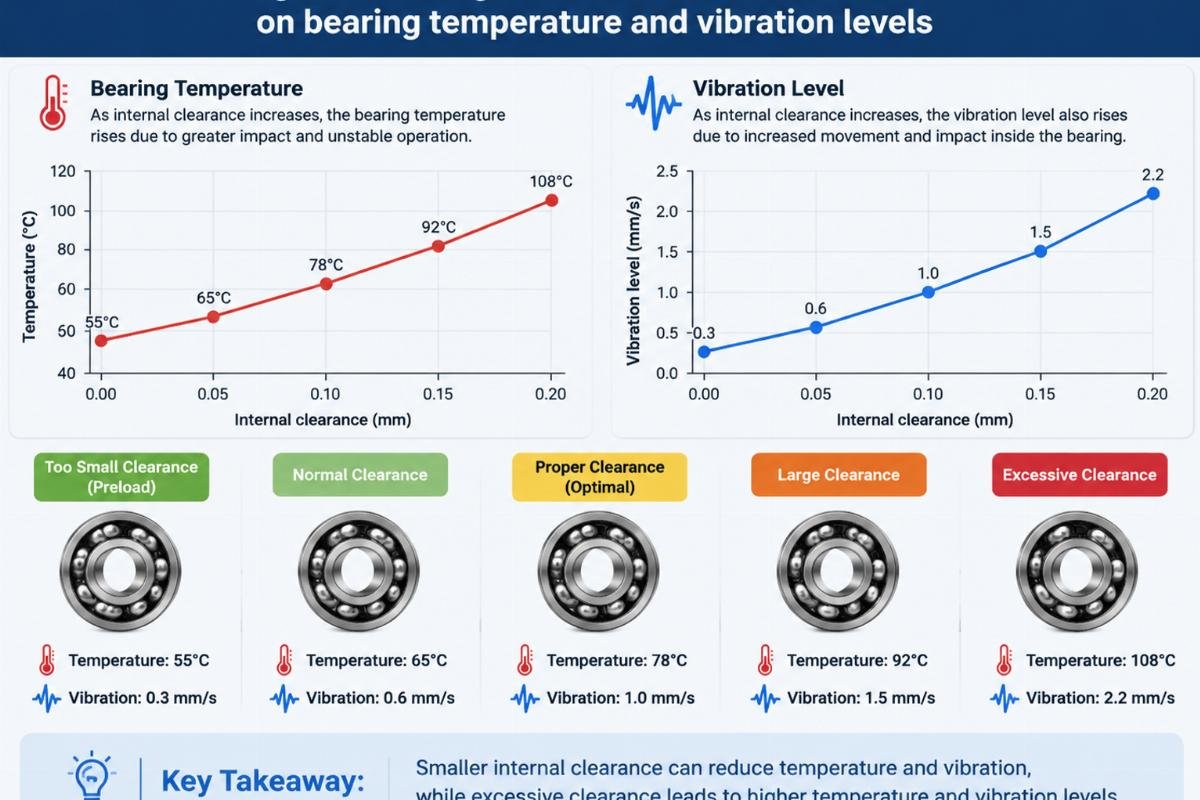
When evaluating 3212 bearing dimensions and internal specs, do not ignore the clearance class. It is a silent parameter that dictates thermal behavior. A bearing with the wrong clearance will fail regardless of how well it fits the shaft. Always confirm the operating temperature range and speed requirements before finalizing the purchase. This step alone eliminates a majority of premature failure cases in heavy industry.
Which Suffix Codes (2RS1, TN9, C3) Matter for Your Application?
Suffix codes are not optional extras; they are functional definitions.
The suffix code on a bearing label tells you exactly how the component is constructed. Ignoring these codes is akin to buying a car without checking if it has brakes. For the 3212 series, common suffixes include 2RS1, 2Z, TN9, and C3. Each letter and number represents a specific feature that impacts performance, maintenance, and longevity.
2RS1 indicates that the bearing is sealed on both sides with rubber seals. These seals provide excellent protection against dust and moisture, making them ideal for agricultural and construction equipment where contamination is a constant threat. However, rubber seals create friction, which generates heat. They are not suitable for very high-speed applications. 2Z, on the other hand, denotes metal shields. Metal shields offer less protection against fine dust but generate significantly less friction and can operate at higher speeds. Choosing 2RS1 for a high-speed spindle will cause overheating, while choosing 2Z for a dusty farm implement will lead to internal contamination and wear. [NEED_CITE: Manufacturer guidelines on seal types and speed limits]
TN9 refers to the cage material. In this case, it signifies a glass fiber reinforced polyamide cage. This material is lighter and more flexible than steel cages, allowing for better lubrication distribution and higher speed capabilities. It also has good thermal stability. However, in applications involving strong chemicals or extreme temperatures, polyamide may degrade. Steel cages are more robust in harsh chemical environments but are heavier. Understanding the cage material is crucial for ensuring compatibility with the lubricant and operating environment.
C3, as discussed, refers to the internal clearance. When combined with other suffixes, such as 3212 A 2RS1 bearing specifications, it creates a unique profile. A 3212 A 2RS1 C3 bearing is a specific product designed for high-load, contaminated, and thermally challenging environments. Substituting it with a standard 3212 2Z will result in failure. The suffix code is the DNA of the bearing. It must be read and understood before purchase.
| Suffix Code | Meaning | Functional Impact |
|---|---|---|
| 2RS1 | Rubber Seal Both Sides | High contamination protection, higher friction |
| 2Z | Metal Shield Both Sides | Lower friction, lower contamination protection |
| TN9 | Polyamide Cage | Lighter weight, better lubrication, chemical sensitivity |
| C3 | Increased Internal Clearance | Accommodates thermal expansion, reduces preload risk |
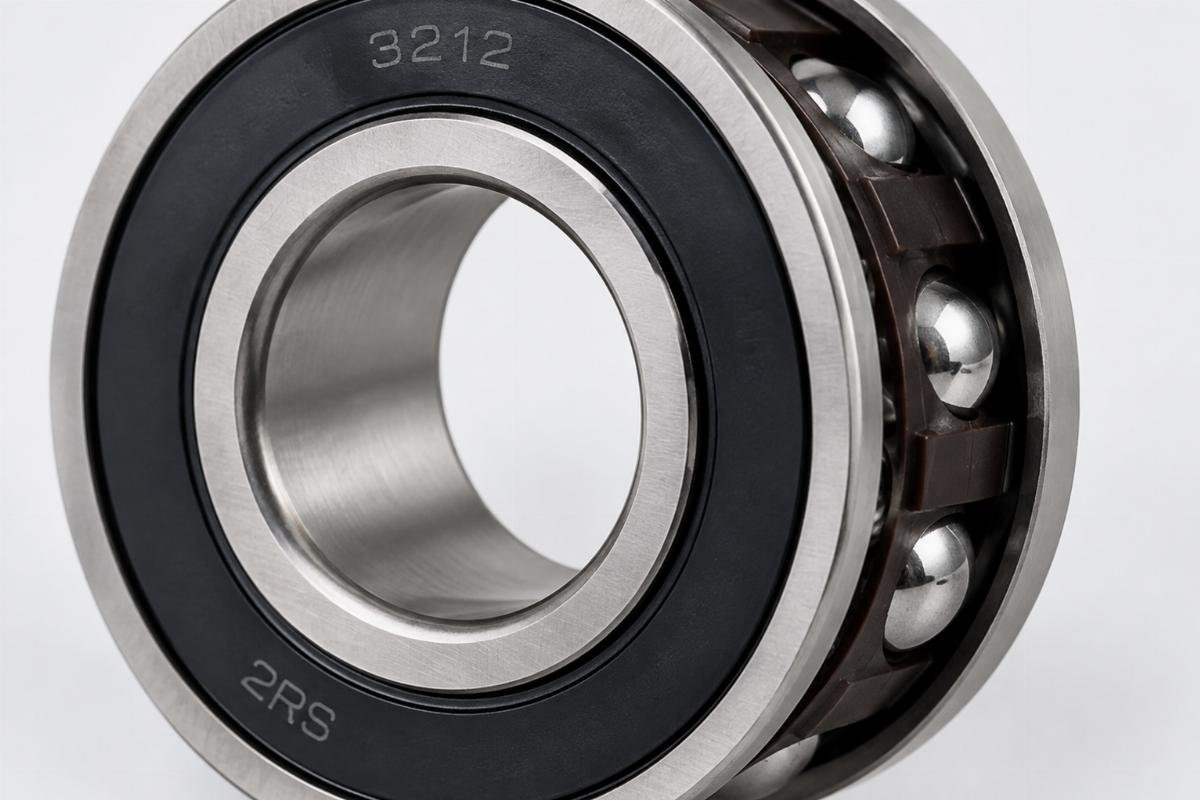
When sourcing from global suppliers, insist on seeing the full suffix code. Do not accept “equivalent” substitutions without verifying every character. A missing C3 or a swapped 2RS1 for 2Z changes the fundamental nature of the component. Precision in specification prevents chaos in operation.
How to Verify 3212 Specs When Sourcing from Global Suppliers?
Trust but verify with documentation and physical inspection.
Sourcing bearings from international markets introduces risks of counterfeits and mislabeled goods. A box labeled 3212 may contain a completely different internal design. To mitigate this risk, a rigorous verification process is essential. This process begins with documentation and ends with physical inspection.
First, request the original manufacturer’s certificate of conformity. This document should trace the bearing back to the production batch. Check for consistency in the part number, including all suffixes. Cross-reference the load ratings and dimensions with the official catalog of the claimed brand. Discrepancies in these values are red flags. [NEED_CITE: Guidelines for verifying authentic bearing documentation]
Second, perform a visual and dimensional inspection upon receipt. Use calibrated micrometers to check the inner and outer diameters. While these are standardized, significant deviations indicate poor manufacturing quality. Check the surface finish of the raceways. They should be smooth and free of scratches or discoloration. Inspect the seals or shields for proper seating and integrity. A loose seal is a sign of poor assembly.
Third, verify the cage material. If the suffix indicates TN9, the cage should feel lightweight and have a distinct texture compared to steel. If it feels heavy and metallic, the suffix is incorrect. Finally, check the marking on the bearing itself. Laser etching or stamping should be clear and legible. Blurred or uneven markings often indicate counterfeit products.
For large orders, consider third-party inspection services. They can perform non-destructive testing to verify material composition and hardness. This step adds cost but provides peace of mind for critical applications. In my experience, the cost of inspection is negligible compared to the cost of a production shutdown caused by a failed bearing.

Verification is not a bureaucratic hurdle; it is a technical necessity. By demanding transparency and performing due diligence, you protect your operations from the hidden risks of global supply chains. Ensure that every 3212 double row angular contact bearing specs sheet matches the physical product in your hand.
Conclusion
Precision in specification prevents failure in operation.
The 3212 double row angular contact bearing is a robust component, but its performance depends on precise matching of dimensions, contact angles, clearance, and suffix codes. Relying solely on outer dimensions is a recipe for disaster. By understanding the technical nuances and verifying every detail, you ensure reliability and longevity in your machinery. Always prioritize accurate specification over convenient substitution.