6322 Bearing Specs & Large Motor Uses: Wholesale Supplier
Standard dimensions do not guarantee survival in extreme industrial environments.
The core specification of a 6322 bearing is its dimensional identity: 110mm bore, 240mm outer diameter, and 50mm width. However, for large motors operating in high-temperature or high-humidity conditions, the critical selection parameters are not just size, but the internal clearance class (such as C3), cage material composition, and sealing technology. Selecting the wrong variant leads to premature thermal expansion lock-up or lubricant breakdown, regardless of brand authenticity.
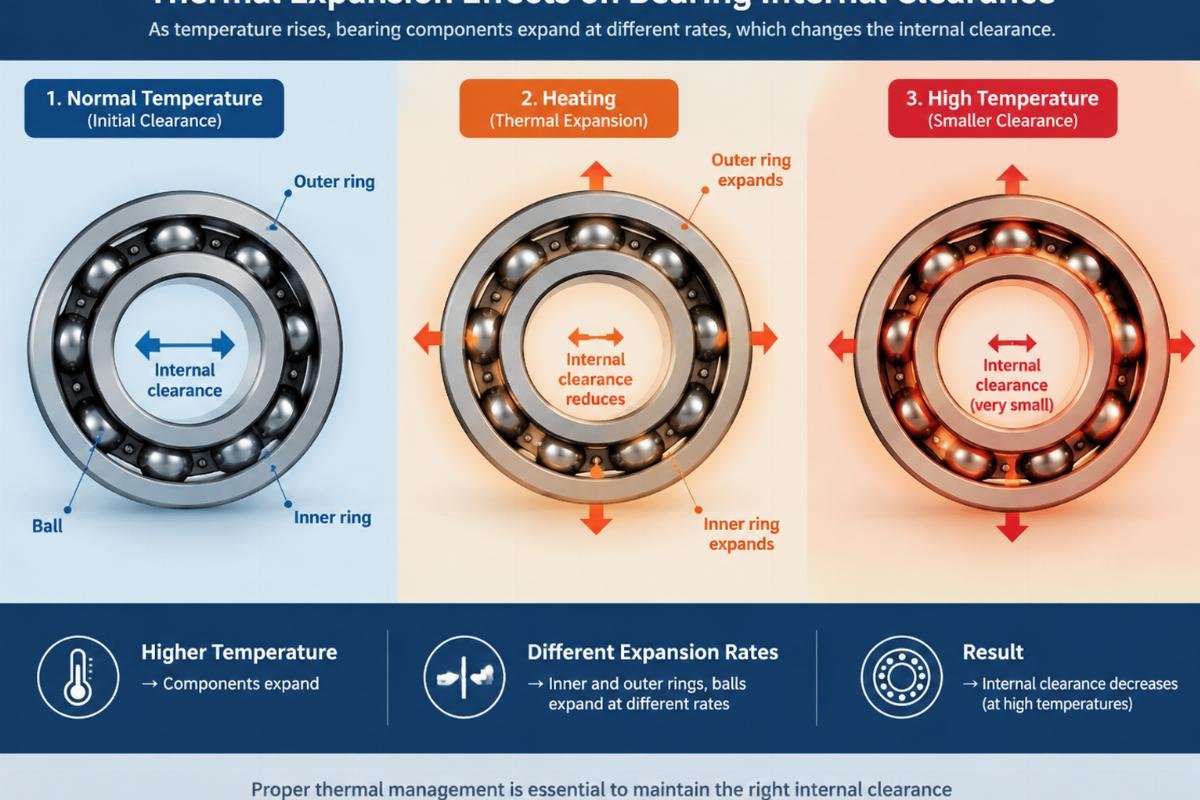
I still recall the humid air in a palm oil processing plant in Sumatra. The maintenance manager was furious, pointing at a seized large motor that had failed within months. They had installed standard 6322 units without accounting for the intense heat and moisture. The lack of C3 clearance and specialized high-temperature grease caused the internal play to vanish as the metal expanded, leading to a catastrophic seizure. That incident reinforced a hard lesson: in heavy industry, the devil is in the details of the spec sheet, not just the part number. [NEED_CITE: thermal expansion effects on bearing clearance in ISO standards]

Understanding these nuances is essential for anyone sourcing components for demanding applications. Let us break down why generic selections fail and how to match the right 6322 bearing specs to your operational reality.
What Are the Core Specs of a 6322 Bearing?
The 110x240x50mm footprint is merely the entry ticket, not the performance guarantee.
A 6322 deep groove ball bearing is defined by its boundary dimensions, which are standardized globally to ensure interchangeability. The bore diameter of 110mm fits specific shaft sizes common in large industrial motors, pumps, and gearboxes. The 240mm outer diameter and 50mm width provide the necessary structural integrity to handle significant radial loads. However, relying solely on these physical measurements ignores the internal engineering that dictates lifespan. [NEED_CITE: ISO 15 standard for rolling bearing dimensions]
The load carrying capacity is another fundamental metric. A standard 6322 unit typically offers a dynamic load rating in the range of 180kN and a static load rating near 200kN. These figures determine whether the bearing can withstand the operational forces without premature fatigue. For MRO professionals and OEM engineers, verifying these ratings against the actual application load is the first step in preventing unexpected downtime.
| Parameter | Specification Value | Significance |
|---|---|---|
| Bore Diameter | 110 mm | Shaft fitment compatibility |
| Outer Diameter | 240 mm | Housing bore compatibility |
| Width | 50 mm | Axial space requirement |
| Dynamic Load Rating | Approx. 180 kN | Resistance to rotational fatigue |
| Static Load Rating | Approx. 200 kN | Resistance to stationary overload |
When sourcing a 6322 bearing, buyers must look beyond the basic dimensions. The internal geometry, including the raceway curvature and ball complement, varies by manufacturer and affects noise levels and speed capabilities. For large motors, where vibration control is critical, these subtle design differences matter. [NEED_CITE: bearing geometry impact on vibration levels]
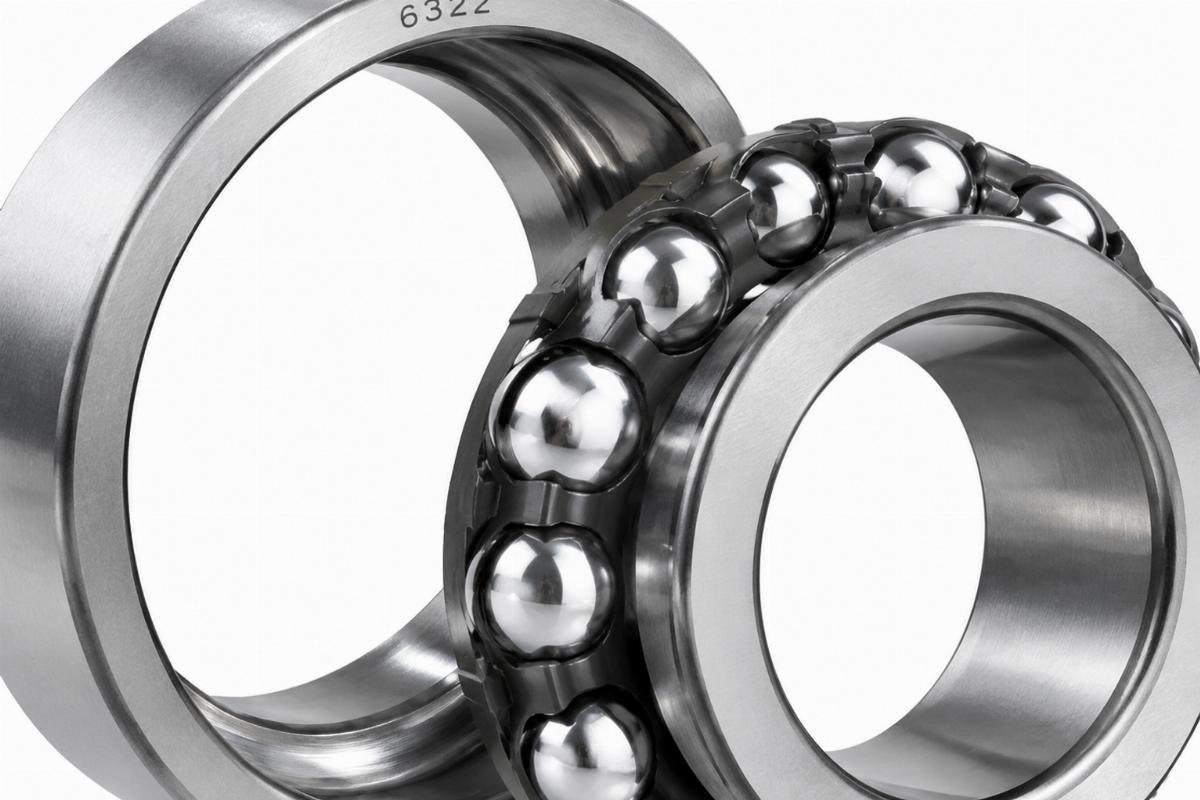
Ensuring that the selected 6322 bearing meets the required load and dimensional standards is foundational. Yet, as we will see, this is only the beginning of the selection process for harsh environments.
Why Do Standard 6322 Bearings Fail in Large Motors?
Thermal expansion and lubricant degradation are the silent killers of standard bearings in heavy-duty motors.
Many procurement teams assume that a standard clearance bearing will suffice for any motor application. This is a dangerous misconception. In large motors, especially those driving crushers or fans in hot climates, the operating temperature can rise significantly. Standard internal clearance (CN) is designed for normal operating conditions. When subjected to high heat, the inner ring expands more than the outer ring due to direct shaft heating. This reduces the internal play. If the initial clearance is not sufficient, the bearing becomes preloaded, generating excessive heat and friction until it seizes. [NEED_CITE: thermal expansion coefficients of bearing steel]
I have seen this scenario play out repeatedly. In a mining operation, a primary crusher motor failed repeatedly because the maintenance team used standard 6322 units. The heat generated by the heavy load and ambient temperature caused the clearance to disappear. The result was not just a replaced bearing, but weeks of unplanned downtime and costly repairs to the motor shaft.
Another common failure mode is lubricant breakdown. Standard greases may oxidize or dry out at elevated temperatures, losing their ability to protect the rolling elements. Without proper lubrication, metal-to-metal contact occurs, leading to rapid wear and eventual catastrophic failure. This is particularly prevalent in environments with high humidity, where water contamination can further degrade the lubricant film. [NEED_CITE: lubricant oxidation rates at elevated temperatures]
| Failure Mode | Root Cause | Consequence |
|---|---|---|
| Thermal Seizure | Insufficient internal clearance | Bearing lock-up, shaft damage |
| Lubricant Breakdown | High temperature oxidation | Increased friction, wear |
| Corrosion | Humidity/water ingress | Pitting, surface degradation |
| Cage Fracture | High shock loads on stamped cages | Complete bearing disintegration |
Selecting a 6322 bearing with appropriate clearance and lubrication is not optional for these applications; it is a necessity for reliability.
Understanding these failure mechanisms allows engineers to specify the correct variants, moving from reactive replacement to proactive reliability.
How to Select the Right 6322 Variant for Harsh Conditions?
Match the internal clearance, cage material, and sealing to the specific environmental stressors.
For high-temperature applications, such as those found in steel mills or tropical processing plants, selecting a 6322 C3 clearance high temperature variant is crucial. C3 clearance provides greater internal space than standard clearance, accommodating the thermal expansion of the inner ring without causing preload. This simple adjustment can extend bearing life significantly. [NEED_CITE: ISO 5753 standard for internal clearance]
In applications involving heavy shock loads, such as mining crushers or construction equipment, the cage material becomes a critical factor. Stamped steel cages, while cost-effective, may fracture under severe impact. Machined brass or polyamide cages offer superior strength and durability in these demanding conditions. I recall a case where switching from stamped to machined cages in a 6322 bearing reduced failure rates noticeably in a rocky quarry environment.
Sealing is another vital consideration. In dusty or wet environments, open bearings are vulnerable to contamination. Rubber-sealed (2RS) or shielded (ZZ) variants protect the internal components. However, in very high-temperature scenarios, standard rubber seals may degrade. Specialized high-temperature seals or labyrinthine shielding options should be considered. [NEED_CITE: seal material temperature limits]
| Application Condition | Recommended 6322 Variant Feature | Reason |
|---|---|---|
| High Temperature | C3 or C4 Clearance | Accommodates thermal expansion |
| Heavy Shock Loads | Machined Brass/Polyamide Cage | Resists fracture under impact |
| Dusty/Wet Environment | 2RS or ZZ Sealing | Prevents contaminant ingress |
| High Speed | Optimized Cage Design | Reduces centrifugal force effects |
Sourcing these specialized variants requires a supplier who understands these technical distinctions. A reliable 6322 bearing supplier will offer a full matrix of options, including C3 clearance, various cage types, and sealing configurations from brands like SKF, FAG, NSK, and others. This ensures that the exact technical requirement is met, rather than forcing a compromise.

By carefully matching these features to the operational environment, you can mitigate the most common causes of premature bearing failure.
What Maintenance Practices Extend 6322 Motor Bearing Life?
Proactive monitoring and correct relubrication are key to maximizing service intervals.
Even the best-selected 6322 bearing requires proper maintenance to achieve its potential lifespan. In large motors, regular vibration analysis can detect early signs of imbalance, misalignment, or bearing degradation. Identifying these issues before they lead to failure allows for planned maintenance during scheduled shutdowns, avoiding costly unplanned outages. [NEED_CITE: vibration analysis standards for rotating machinery]
Relubrication is another critical practice. While some sealed bearings are marketed as “maintenance-free,” in high-temperature or continuous operation scenarios, the grease can eventually degrade or leak. Establishing a relubrication schedule based on operating hours and temperature is essential. Using the correct type and amount of grease is vital; over-greasing can cause churning and overheating, while under-greasing leads to wear. [NEED_CITE: bearing relubrication guidelines]
In coastal or chemical environments, corrosion protection is paramount. Regular inspection for signs of rust or seal damage can prevent minor issues from becoming major failures. Applying protective coatings or using bearings with enhanced corrosion-resistant features can also extend life in these aggressive conditions.
| Maintenance Activity | Frequency/Trigger | Benefit |
|---|---|---|
| Vibration Analysis | Monthly/Quarterly | Early fault detection |
| Relubrication | Based on hours/temp | Maintains lubricant film |
| Visual Inspection | During shutdowns | Identifies external damage/corrosion |
| Temperature Monitoring | Continuous/Periodic | Detects overheating trends |
Implementing these practices requires a partnership with a supplier who can provide not just the product, but also technical support and guidance. Access to genuine parts and expert advice ensures that maintenance efforts are effective and efficient.

Consistent, informed maintenance transforms bearing management from a cost center into a reliability asset.
Conclusion
Correct specification and proactive care define bearing longevity, not just the part number.
The 6322 bearing is a robust component, but its success in large motor applications depends on matching its internal clearance, cage, and sealing to the specific environmental challenges. Ignoring factors like thermal expansion or shock loads leads to predictable failures. By understanding these technical nuances and implementing disciplined maintenance, operators can ensure reliable performance and minimize downtime. Sourcing from a knowledgeable partner who offers a comprehensive range of genuine options is the final piece of the puzzle for achieving operational excellence.