
22314 Bearing Specs & Crusher Applications Wholesale Supplier
Standard clearance kills crushers.
The correct selection for a jaw crusher main shaft is a 22314 spherical roller bearing with C4 internal clearance and robust labyrinth sealing, not the standard C3 or CN variants often supplied by generalist distributors. This specific configuration accommodates the thermal expansion generated during heavy crushing cycles and prevents dust ingress from locking the rolling elements, which is the primary cause of premature failure in mining environments.
I still remember the heat radiating off the frame of a stationary jaw crusher in a quarry outside Riyadh. The site manager was furious, pointing at a seized main shaft bearing and accusing our shipment of being defective. It was a genuine brand, handled correctly during shipping, yet it had failed within weeks. When we dismantled the housing, the issue was not material fatigue but contamination. Fine silica dust had bypassed the inadequate seal, mixed with the lubricant, and formed an abrasive paste. This paste filled the internal voids, eliminating the necessary operational clearance. The bearing did not fail because it was weak; it failed because the 22314 bearing specs selected ignored the reality of the operating environment. In high-dust, high-thermal-load applications, the technical data sheet is more critical than the brand name.

Understanding why standard specifications fail requires looking beyond the basic dimensions. The 22314 bearing is a workhorse in heavy industry, but its performance is entirely dependent on matching its internal geometry to the mechanical stresses of the application.
Why Standard Clearance Fails in High-Heat Crushing Operations
Thermal expansion is not a variable; it is a guarantee.
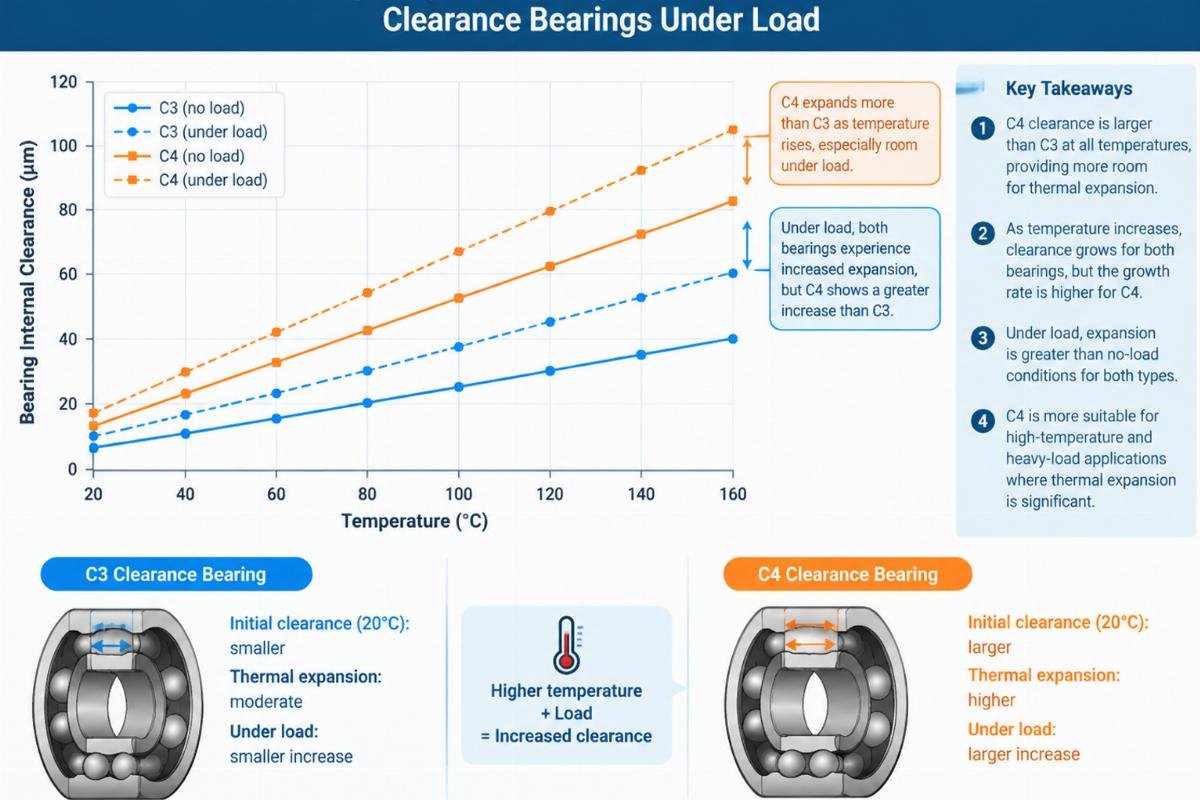
When a crusher processes hard rock, the friction and impact forces generate significant heat within the bearing housing. Steel expands when heated. If the internal clearance of the bearing is too tight, this expansion has nowhere to go. The rolling elements press harder against the raceways, increasing friction, which generates more heat, leading to a thermal runaway cycle that ends in seizure.
The standard internal clearance for many industrial bearings is CN or C3. However, for applications like vibrating screens and crushers, the industry standard shifts to C4. The C4 clearance provides a larger initial gap between the rollers and raceways. This extra space acts as a buffer, allowing the metal components to expand without creating destructive preload. [NEED_CITE: ISO standard internal clearance classes for radial bearings]
Consider the difference in a real-world scenario. A cement plant operator in Southeast Asia reported frequent overheating issues with their secondary crusher. Upon inspection, the installed bearings were standard C3 clearance. The operating temperature regularly exceeded 80 degrees Celsius. By switching to 22314 bearing specs that mandated C4 clearance, the operational temperature stabilized. The bearings ran noticeably cooler because the internal geometry could accommodate the thermal growth without inducing stress. This is not about using a “better” bearing; it is about using the right geometric specification for the thermal load.
| Clearance Class | Typical Application | Thermal Expansion Tolerance | Dust Ingress Resistance |
|---|---|---|---|
| CN (Normal) | General electric motors, fans | Low | Vulnerable |
| C3 | Pumps, gearboxes, moderate loads | Standard | Vulnerable |
| C4 | Vibrating screens, crushers, kilns | High | Requires robust sealing |
| C5 | Extreme thermal environments | Very High | Requires specialized sealing |
Selecting the wrong clearance class is a common error in procurement. Buyers often focus on the outer diameter and width, assuming all 22314 units are interchangeable. They are not. A C3 bearing in a crusher is a ticking time bomb. The 22314 bearing specs must explicitly state the clearance class to ensure the component can survive the thermal cycle of the machinery.
The Critical Role of Sealing in Dusty Environments
Lubricant is only effective if it stays clean.
In mining and quarrying, the air is thick with particulate matter. This dust is abrasive and relentless. If it enters the bearing cavity, it acts like lapping compound, grinding away the precision surfaces of the rollers and raceways. The failure mode is rarely sudden; it is a gradual degradation of performance until the bearing vibrates excessively and fails.
The standard rubber seals found on many off-the-shelf bearings are insufficient for crusher applications. They can degrade under high heat and may not provide enough protection against fine dust. Effective protection requires a labyrinth seal design or a combination of external housing seals and internal bearing shields. The seal must create a tortuous path that dust particles cannot easily navigate, while still allowing for the necessary ventilation to prevent pressure buildup.
A case from a Latin American copper mine illustrates this point. The maintenance team was replacing main shaft bearings every few months. The root cause analysis revealed that the existing seals were allowing dust to enter during the cooling phase of the machine. As the bearing cooled, it created a slight vacuum, pulling contaminated air past the seals. By upgrading to a housing design with improved labyrinth sealing and ensuring the 22314 bearing specs included compatible shield options, the service life extended substantially. The bearings were no longer fighting a constant battle against contamination.
It is crucial to verify the seal type when sourcing. Some suppliers may offer a standard open bearing or a basic RS seal, which is inadequate for this duty. The specification must call for seals designed for heavy-duty, dirty environments. This often means coordinating with the housing manufacturer to ensure the external seals complement the internal bearing protection. The 22314 bearing specs are incomplete without defining the sealing strategy.

Interpreting Load Ratings for Real-World Durability
Static load ratings do not predict dynamic life.
Manufacturers provide two key load ratings: the dynamic load rating (Cr) and the static load rating (Cor). For crushers, the dynamic rating is the primary metric for calculating theoretical life. However, these ratings are based on ideal conditions: clean lubrication, perfect alignment, and steady loads. Real-world crushing involves shock loads, misalignment, and contamination.
The 22314 bearing is designed to handle heavy radial loads and moderate axial loads. Its spherical outer ring allows for self-alignment, which is vital in structures that may flex or shift under load. This self-aligning feature compensates for minor misalignments between the shaft and housing, preventing edge loading on the rollers. Edge loading concentrates stress on a small area of the roller, leading to rapid spalling and failure.
When evaluating 22314 bearing specs, look beyond the basic load numbers. Consider the cage design. A robust cage, often made from stamped steel or machined brass, ensures that the rollers are evenly spaced and guided correctly under high vibration. In high-vibration applications like crushers, a weak cage can deform, leading to roller collision and catastrophic failure. [NEED_CITE: Influence of cage design on spherical roller bearing performance in vibrating applications]
A European aggregate producer experienced premature failures due to cage deformation. The original bearings used a lightweight stamped steel cage that could not withstand the intense vibration of the primary crusher. Switching to a version with a heavier, reinforced cage resolved the issue. The load ratings were identical, but the structural integrity of the cage was the differentiating factor. This highlights the importance of reviewing the full technical specification, not just the load capacity tables.
| Feature | Standard Specification | Heavy-Duty Crusher Specification |
|---|---|---|
| Cage Material | Stamped Steel | Machined Brass or Reinforced Steel |
| Seal Type | Rubber Contact | Labyrinth or Combination |
| Clearance | C3 | C4 |
| Lubrication | Standard Grease | High-Temperature, Extreme Pressure |
The dynamic load rating is a starting point, but the durability comes from the construction details. The 22314 bearing specs must reflect the need for robust internal components that can withstand the harsh realities of crushing operations.

Sourcing Authentic Components for Critical Applications
Traceability is your insurance policy.
The market is flooded with bearings that look identical but perform vastly differently. Counterfeit or substandard bearings may use inferior steel, lack proper heat treatment, or have poor surface finishes. These defects are not visible to the naked eye but lead to early failure. For critical applications like crushers, where downtime costs are high, sourcing from a verified supplier is essential.
Authentic bearings come with full traceability documentation. This includes material certificates, heat treatment records, and quality control inspections. When reviewing 22314 bearing specs from a supplier, ask for this documentation. A reputable supplier will provide it without hesitation. This paperwork verifies that the bearing meets the international standards it claims to meet.
A Middle East steel mill once faced repeated failures in their conveyor systems. The bearings were sourced from a low-cost vendor who could not provide traceability documents. Upon switching to a supplier who offered full documentation and genuine products from established brands, the failure rate dropped noticeably. The cost per bearing was higher, but the total cost of ownership was lower due to reduced downtime and maintenance labor.
Sourcing also involves understanding the supply chain. Genuine bearings are produced in specific factories with strict quality controls. Mixing batches from different origins can lead to inconsistencies in performance. A reliable supplier ensures batch-to-batch consistency and provides technical support for selection. They understand that the 22314 bearing specs are not just numbers but a recipe for reliability.

Conclusion
Specification dictates survival.
Selecting the right 22314 bearing for a crusher requires moving beyond basic dimensions to consider clearance, sealing, and construction quality. C4 clearance accommodates thermal expansion, while robust sealing prevents dust ingress. These factors, combined with authentic sourcing and traceability, ensure that the bearing performs as intended in harsh environments. Ignoring these details leads to premature failure and costly downtime. The 22314 bearing specs are the blueprint for reliability; follow them precisely.


