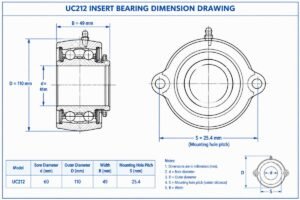
UCP212 Pillow Block Bearing Specs, Load & Wholesale Supplier
Bore size alone does not guarantee performance in heavy-duty applications.
Selecting a UCP212 pillow block requires matching its dynamic load rating to actual site radial loads, not just relying on bore size, to prevent housing failure. Many buyers assume that a 60mm bore ensures compatibility, but without verifying the equivalent dynamic load against operational stresses, cast iron housings are prone to cracking under impact or misalignment.
I still remember the dust and heat of a mining site in the Middle East where a conveyor system had failed repeatedly. The local maintenance team insisted the bearings were defective because the cast iron housings had split open after only a few months of operation. They pointed to the brand name on the box as proof of quality. However, upon inspection, I found no manufacturing defects in the metal structure. The issue was not the material but the application. The radial loads generated by the heavy aggregate material far exceeded the static rating of the standard unit, and slight misalignment during installation created stress concentrations that the housing could not withstand. This incident reinforced a critical lesson: technical specifications must align with real-world forces, not just dimensional fit. [NEED_CITE: common failure modes in pillow block bearings per ISO 15243]

Understanding the interplay between specification and load is essential for any procurement decision. Below, we break down the core dimensions, calculation methods, and selection criteria that define a reliable UCP212 pillow block bearing specs and load profile.
What Are the Core Dimensions of UCP212?
Standardized dimensions ensure interchangeability, but they do not dictate load capacity.
The UCP212 is part of the standard series of pillow block units, featuring a 60mm bore diameter. While the bore size is the primary identifier, other physical parameters determine how the unit fits into existing machinery frames. Buyers often request a simple dimension chart to cross-reference with their current inventory. However, focusing solely on bolt spacing or center height without considering the internal bearing insert’s load limits can lead to premature failure.
The following table outlines the key dimensional parameters for a standard UCP212 unit. These values are based on industry-standard guidelines for pillow block dimensions. [NEED_CITE: ABMA/AFBMA guidelines for pillow block dimensions]
| Parameter | Value/Description | Note |
|---|---|---|
| Bore Diameter | 60 mm | Standard metric size |
| Center Height | Approx. 76 mm | Distance from base to shaft center |
| Overall Length | Varies by manufacturer | Check specific datasheet |
| Bolt Spacing | Standardized pattern | Ensures mounting compatibility |
| Housing Material | Cast Iron (Gray) | Standard for general industrial use |
It is crucial to note that while these dimensions are standardized, the internal bearing insert may vary slightly in width or sealing configuration depending on the brand. For instance, some manufacturers offer wider inserts for enhanced stability, which might affect the overall length. When sourcing a UCP212 pillow block bearing specs and load data, always verify the specific manufacturer’s drawing to ensure it fits your mounting surface.
A European distributor once ordered a batch of units based solely on the bore size and center height. Upon arrival, they found that the bolt holes did not align with their existing frames because they had sourced a non-standard variant from a lesser-known supplier. This highlights the importance of requesting full dimensional drawings rather than relying on generic part numbers. [NEED_CITE: importance of dimensional verification in MRO procurement]

When evaluating options, ensure that the housing material matches your environmental requirements. Standard gray cast iron is suitable for most indoor applications, but corrosive environments may require stainless steel or coated variants. Always confirm the material specification alongside the dimensions to avoid compatibility issues later.
How to Calculate the Actual Radial Load for UCP212?
Equivalent dynamic load calculations reveal the true stress on the bearing system.
Many failures occur because buyers rely on the basic dynamic load rating provided in catalogs without adjusting for actual operating conditions. The rated load is determined under ideal laboratory conditions, which rarely exist in heavy industries like mining or cement production. To predict lifespan accurately, one must calculate the equivalent dynamic load (P) that accounts for radial and axial forces, as well as impact factors.
The calculation involves several steps. First, identify the actual radial load (Fr) and axial load (Fa) acting on the shaft. Next, apply the appropriate load factors (X and Y) based on the bearing type. Finally, multiply by a service factor (f) that accounts for shock loads and vibration. [NEED_CITE: ISO 281 standard for dynamic load ratings]
- Determine Applied Loads: Measure or estimate the maximum radial and axial forces during operation.
- Select Load Factors: Use the manufacturer’s tables to find X and Y values for the specific insert bearing.
- Apply Service Factor: Increase the calculated load by a factor (often 1.5 to 2.5 for heavy shock) to account for real-world irregularities.
- Calculate Equivalent Load: Use the formula $P = f times (X cdot Fr + Y cdot Fa)$ to get the effective load.
In a cement plant fan application, engineers initially selected a UCP212 based on the nominal motor weight. However, they failed to account for the aerodynamic forces and vibration during startup. The actual equivalent dynamic load was nearly double the calculated value, leading to rapid wear. By recalculating with a higher service factor, they identified that a larger unit or a higher-rated bearing was necessary. [NEED_CITE: case studies on fan bearing failures due to underestimated loads]

This method ensures that the selected UCP212 pillow block bearing specs and load capacity are sufficient for the application. Ignoring these calculations often results in selecting a unit that looks correct on paper but fails prematurely in the field. Always consult technical support if you are unsure about the load factors for your specific machinery.
Why Do UCP212 Housings Crack Under Heavy Loads?
Stress concentration from misalignment exceeds the structural limits of cast iron.
A common misconception is that housing cracks are due to poor casting quality. In reality, most fractures result from uncalculated radial loads causing stress concentration at the mounting points or around the bolt holes. Cast iron is strong in compression but brittle under tension and impact. When a bearing is misaligned, even by a small degree, it creates uneven pressure distribution that the housing cannot absorb.
Consider an aggregate crusher where bearings seized frequently. The investigation revealed that the shafts were not perfectly parallel, causing angular stress on the UCP212 units. The dynamic limits of the bearing were exceeded locally, transmitting excessive force to the housing walls. Over time, this led to micro-cracks that propagated until the housing split. [NEED_CITE: analysis of stress concentration in pillow block housings]
To prevent this, ensure that the mounting surface is flat and parallel. Use shims if necessary to correct alignment before tightening the bolts. Additionally, consider using self-aligning features if available, but do not rely on them to correct gross misalignment. The structural integrity of the UCP212 pillow block bearing specs and load design assumes proper installation.
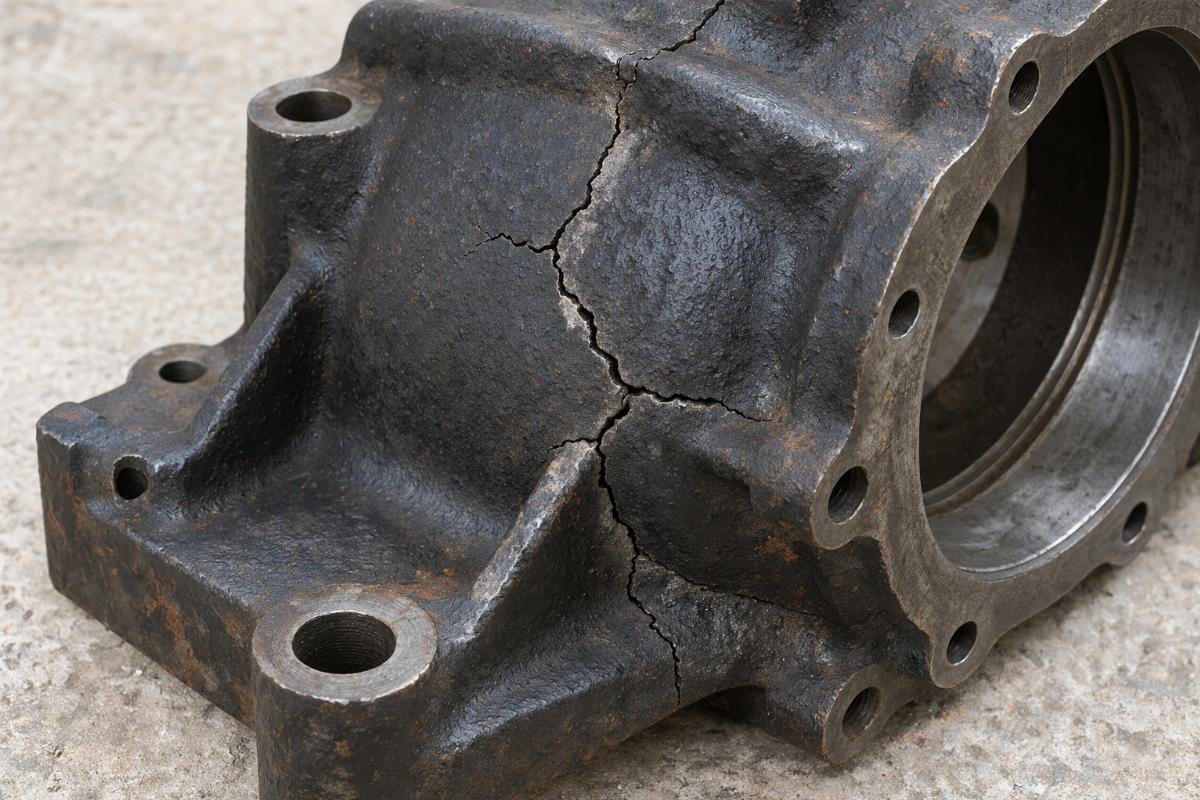
Regular inspection of the housing for early signs of stress, such as hairline cracks near the bolt holes, can prevent catastrophic failure. If cracks are detected, investigate the alignment and load conditions immediately rather than simply replacing the unit. Addressing the root cause is essential for long-term reliability.
How to Select the Right UCP212 for Harsh Environments?
Matching load ratings with sealing and lubrication requirements prevents premature wear.
Harsh environments such as mines and quarries expose bearings to dust, moisture, and heavy impacts. Selecting the right UCP212 involves more than just checking the load rating; it requires evaluating the sealing system and lubrication method. Standard seals may not be sufficient for high-contamination areas, leading to ingress of particles that accelerate wear.
For mining conveyors, look for units with triple-lip seals or labyrinth seals that offer better protection against dust and water. Additionally, ensure that the housing has provisions for easy relubrication. Grease helps flush out contaminants and maintains a protective film between rolling elements. [NEED_CITE: best practices for bearing lubrication in contaminated environments]
A steel mill operator reported significant improvements in bearing life after switching to UCP212 units with enhanced sealing and a more robust grease fitting arrangement. The initial cost was higher, but the reduction in downtime and replacement frequency resulted in substantial savings. This demonstrates the value of selecting components based on total cost of ownership rather than just upfront price.

When sourcing, verify that the supplier provides complete traceability documentation for the bearings. This ensures that you are receiving genuine products that meet the specified standards. Our inventory includes multi-brand options such as SKF, NSK, and ZWZ, allowing you to choose the best fit for your technical and budgetary requirements. We provide technical selection support to help you match the UCP212 pillow block bearing specs and load capabilities with your specific operational needs.
Conclusion
Proper load calculation and alignment are key to maximizing UCP212 lifespan.
Selecting a UCP212 pillow block requires a holistic approach that considers dimensions, load ratings, and environmental factors. By calculating the actual radial load and ensuring proper installation, buyers can prevent housing failures and extend equipment life. Always verify specifications against real-world conditions to ensure reliable performance.