
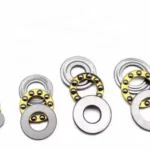
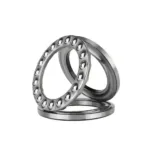
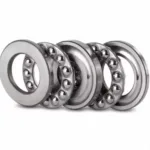
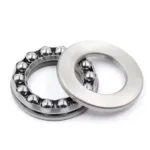


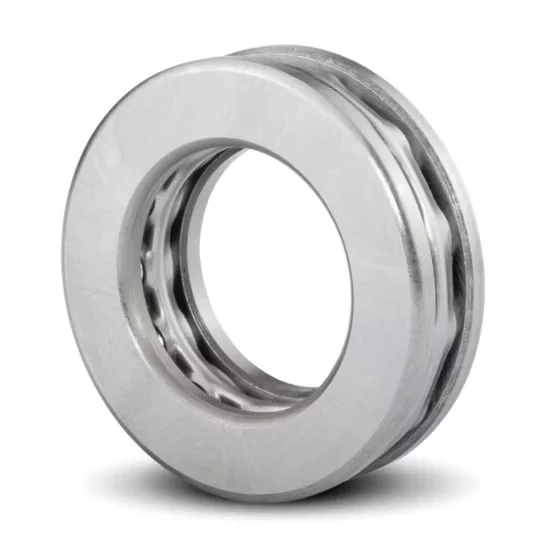

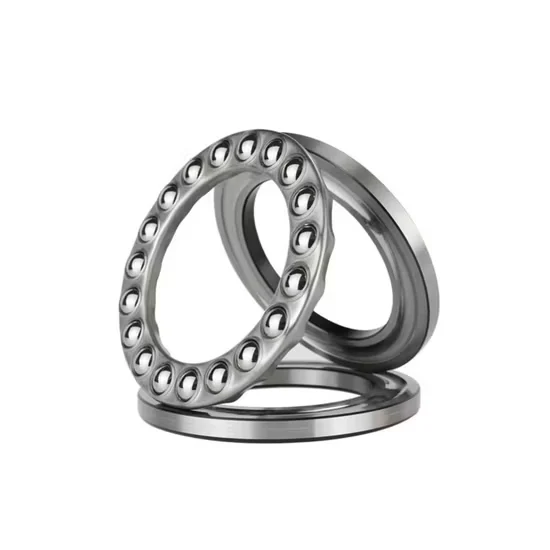
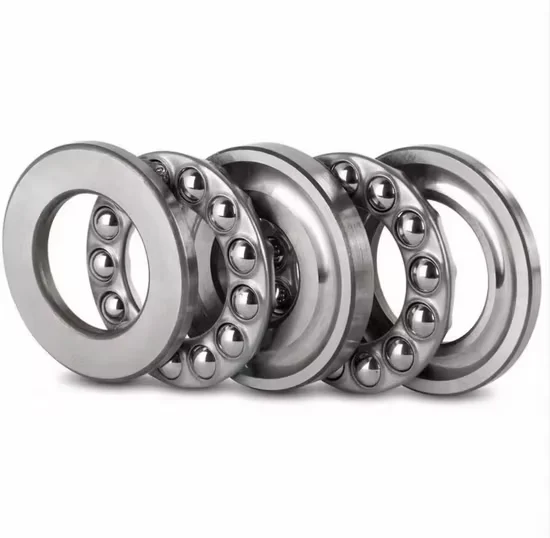
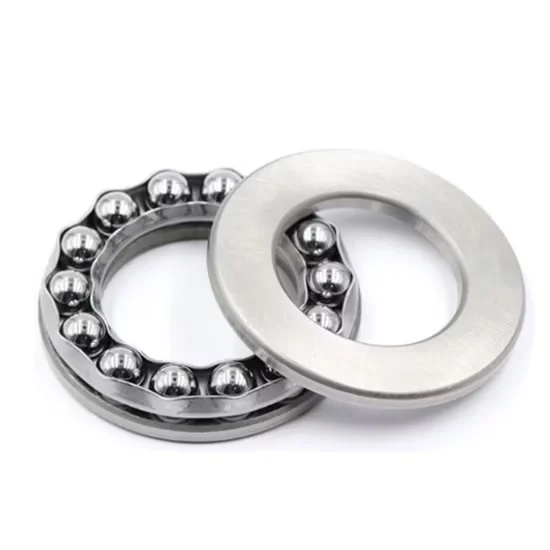
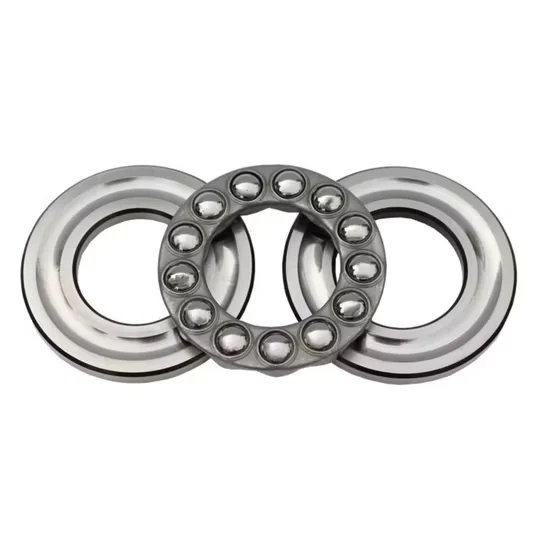

51410 51412 51413 Thrust Ball Bearing Single Direction for Machinery
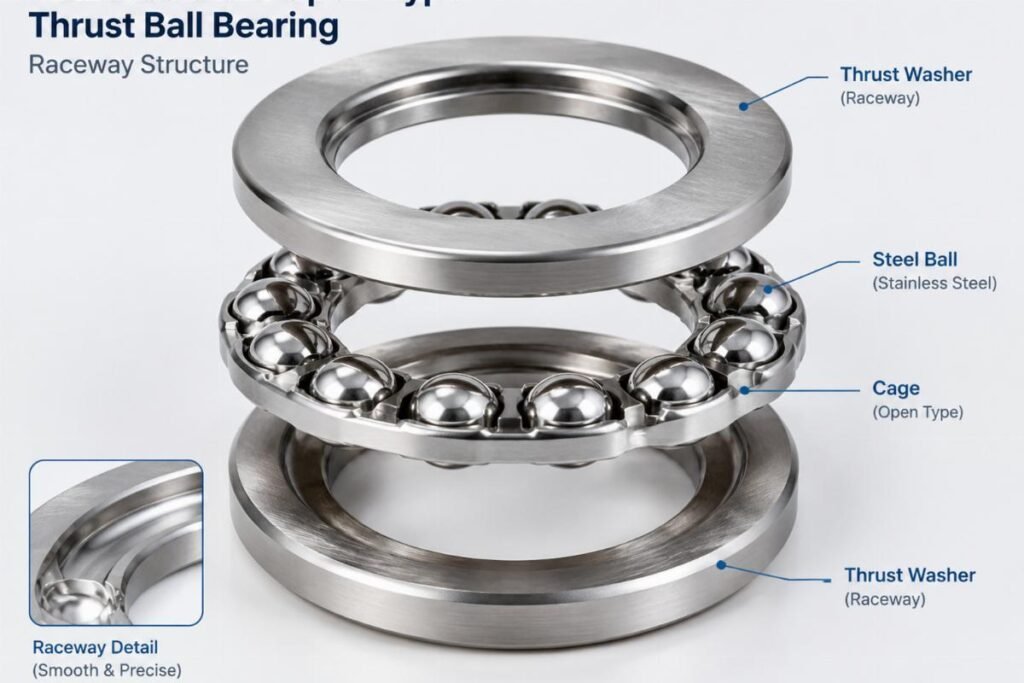
51410 Thrust Ball Bearing P0, P6, P5 — Open single direction design requires external lubrication routines, while stainless steel construction provides reliable corrosion resistance for vertical shafts and heavy machinery applications.
- Precision classes P0, P6 and P5 are available to match specific machinery tolerance requirements
- Scan the official app QR code on each package to verify product authenticity instantly
Original Packaging
Factory sealed
Batch Traceability
Per-piece tracking
Pre-Ship Inspection
Photo & video proof
12-Month Warranty
Quality guaranteed
Technical Specifications
| Bearing Type | Thrust Ball Bearing |
|---|---|
| Condition | New -- Original Packaging |
Need this bearing?
Get a verified quotation
Pricing, stock photos & batch codes — reply within 24 hours.
- Original packaging & batch codes
- Photo & video before shipment
- Mixed-brand orders welcome
Product Description
Traceable Batch Origins — Every 51410 unit ships with verifiable factory lot documentation to guarantee material pedigree.
Technical Specifications
| Parameter | Value |
|---|---|
| Designation | 51410 |
| Bearing Type | Thrust Ball Bearing |
| Number of Rows | Single Row / Double Row |
| Seal or Shield Type | Open |
| Material | Stainless Steel |
| Precision Class | P0 / P6 / P5 |
| Origin | Shandong, China |
Application Suitability
| Industry | Typical Applications |
|---|---|
| Machine Tools | Vertical spindle thrust support |
| Heavy Machinery | Vertical shaft axial load management |
| General Manufacturing | Rotary table axial positioning |
Axial Drift in Vertical Shafts: Why the 51410 thrust ball bearing Often Fails First
Precision tolerance stacking causes catastrophic axial play long before the steel itself fatigues.
When sourcing a 51410 thrust ball bearing for vertical shafts, buyers frequently overlook how minor precision deviations compound under continuous axial load. I have seen stamping cages fracture simply because the basic model number masked the true operating demands, ignoring the vital precision code. Selecting the correct precision class prevents premature axial runout and protects the entire spindle assembly from catastrophic vibrational damage. Many procurement teams focus solely on basic dimensions, missing the critical tolerance stacking that dictates real-world performance in heavy-duty machinery.

Matching the 51410 thrust ball bearing to Vertical Load Profiles
Vertical applications demand strict axial alignment, making the 51410 thrust ball bearing an ideal candidate for managing unidirectional loads in demanding environments. Our engineering team cross-checks your specific shaft tolerances against the available P0, P6, and P5 precision classes to ensure optimal fit. This rigorous validation ensures the selected configuration maintains stability without inducing excessive friction in machine tool spindles. By analyzing the exact load profile, we prevent the common pitfall of over-specifying precision where standard tolerances suffice, or under-specifying where micron-level accuracy is mandatory.
Operational Challenges in Heavy-Duty Axial Environments
Vertical shafts in heavy machinery subject thrust components to continuous unidirectional stress and potential shock loads from operational vibrations. Open-type configurations require meticulous external lubrication routines to prevent contaminant ingress, which severely degrades raceway surfaces and accelerates wear. Furthermore, thermal expansion from high-speed spindle operation dictates the necessary internal clearance to avoid preload binding and subsequent thermal seizure. Ignoring these thermal dynamics often results in the lubricant breaking down, leaving the metal surfaces unprotected during peak operational temperatures.
Decoding the Core Specifications for Axial Stability
The open seal type facilitates direct access for custom lubrication, essential for flushing out metallic debris in heavy-duty machinery environments. Stainless steel material options provide substantially higher corrosion resistance compared to standard chrome steel, proving crucial for washdown environments or marine applications. Choosing between P0, P6, and P5 precision classes directly dictates the allowable axial runout in high-speed machine tool spindles, influencing the final surface finish of the machined parts. Single row configurations handle strict unidirectional loads, while double row variants manage bidirectional axial forces, requiring careful assessment of the shaft’s dynamic behavior.

The Hidden Costs of Ignoring Precision Tolerances
Specifying a standard P0 class for a high-speed vertical spindle inevitably leads to excessive vibration and premature raceway wear, compromising the entire machining process. According to ISO 15243, surface distress from inadequate precision alignment accounts for a significant share of unplanned downtime in heavy manufacturing facilities. This localized wear cascades into catastrophic damage to adjacent shaft seals, ultimately voiding equipment warranties and forcing complete spindle rebuilds. The financial impact extends far beyond the replacement part, encompassing lost production hours and scrapped workpieces.
Securing Reliable Axial Components Through Verified Sourcing
Sourcing genuine thrust components requires strict verification of material certificates, especially when specifying stainless steel variants for corrosive environments. We provide complete batch traceability to ensure every 51410 thrust ball bearing meets your exact metallurgical requirements and performance expectations. Our technical team cross-references adjacent models like 51412 and 51413 to confirm dimensional interchangeability, streamlining your maintenance schedules and inventory management. We maintain massive spot inventory to fulfill urgent single-unit emergency orders without delaying your production line, backed by long-term after-sales support for failure analysis. This comprehensive approach eliminates the risks associated with unauthorized distributors.
Documentation & Authenticity
- Material test reports confirming stainless steel grade compliance for corrosion resistance in washdown environments.
- Dimensional inspection certificates verifying P5 axial runout tolerances before dispatch to ensure spindle accuracy.
- Factory batch traceability documents linking each open-type unit to its original production lot for audit purposes.
- Certificate of Conformity validating single direction thrust load design parameters against ISO standards.
Storage, Handling & Mounting
- Store open-type units in original packaging to prevent dust ingress on the stainless steel raceways before installation.
- Use clean lint-free gloves when handling P5 precision classes to avoid skin acid corrosion on the polished surfaces.
- Apply specified axial preload during mounting to prevent sliding friction in vertical shaft applications under light loads.
- Keep single row and double row variants strictly segregated to avoid costly assembly mix-ups on the shop floor.
Engineering Review for Axial Load Applications
Provide your specific axial load magnitudes, operating speeds, and vertical shaft dimensions for a comprehensive L10 life calculation tailored to your exact machinery. Share your OEM equipment model numbers so we can verify cross-reference compatibility with 51414 or 51415 equivalents, ensuring seamless integration. Detail your environmental exposure, including humidity and chemical presence, to confirm if the stainless steel material option is strictly necessary for your application. Supplying these critical parameters allows our engineering team to recommend the optimal precision class and lubrication strategy for maximum operational longevity.
Frequently Asked Questions
Q: How to choose between P0, P6, and P5 precision classes for thrust ball bearings?
A: P0 suits general heavy machinery with low-speed vertical shafts, while P6 offers tighter axial runout for standard machine tools. P5 is strictly reserved for high-speed spindles requiring minimal vibration. Selecting the wrong class leads to excessive heat generation or premature raceway fatigue under continuous axial loading.
Q: What are the lubrication requirements for open-type thrust ball bearings?
A: Open configurations lack integral seals, requiring a continuous or scheduled external lubrication supply to flush contaminants. In vertical shaft applications, gravity assists oil flow, but grease requires careful application to prevent starvation. Always match the lubricant viscosity to your specific operating temperature and rotational speed to maintain the protective film.
Q: Single row vs. double row thrust ball bearings: which fits your axial load?
A: Single row variants strictly accommodate unidirectional axial loads, making them ideal for vertical shafts where gravity provides constant downward force. Double row configurations handle bidirectional axial forces, necessary when the shaft experiences upward thrust or reversing loads. Installing a single row in a reversing load application causes immediate cage failure.
Q: How to verify the authenticity of premium brand thrust bearings?
A: Always demand original factory batch traceability documents and material test reports that match the physical markings on the raceway. Counterfeit units often exhibit incorrect hardness levels and poor raceway finishes, leading to rapid spalling. Cross-check the provided documentation against the manufacturer’s official verification channels before installation.
Q: What are the common failure modes of thrust ball bearings in vertical shaft applications?
A: Smearing and surface distress frequently occur if the axial load drops below the minimum required to prevent sliding friction. Contaminant ingress in open-type designs accelerates abrasive wear on the stainless steel raceways. Misalignment during mounting induces uneven load distribution, causing localized fatigue and premature spalling on one side of the groove.
Inspection Records
- Dimensional measurement report
- Radial clearance verification
- Noise level check (Z-grade)
- Batch code & serial number log
Packaging Photos
- Sealed original box photos
- Label & marking close-ups
- Bearing surface detail shots
- Video walkthrough on request
Certificate of Origin
- Certificate of origin (CO)
- Commercial invoice & packing list
- Fumigation certificate (if required)
- Full export documentation set
All documents are prepared and sent for your review before shipment. You approve the inspection results before we ship. Additional testing or documentation can be arranged upon request.
How to Identify Genuine Bearings
Check the Packaging
Genuine bearings come in sealed, tamper-evident packaging with consistent print quality. Look for holographic seals, QR codes, and batch numbers that match the bearing markings.
Inspect the Markings
Genuine markings are laser-engraved with uniform depth and spacing. Counterfeit bearings often have uneven, shallow, or ink-printed markings that smudge or wear off easily.
Feel the Finish
Genuine bearings have a smooth, uniform surface finish. Rough grinding marks, uneven chamfers, or visible machining defects indicate poor-quality or counterfeit products.
Spin Test
When spun by hand, a genuine bearing rotates smoothly with minimal noise. Excessive vibration, rough spots, or grinding sounds suggest defective or refurbished products.
Common Counterfeit Warning Signs
- Price significantly below market average -- if it seems too good to be true, it usually is
- Packaging with spelling errors, blurry logos, or incorrect color tones
- Missing or non-verifiable batch codes and serial numbers
- Excessive or unusual grease -- used to mask surface defects
- Supplier unwilling to provide pre-shipment inspection or documentation
Free Authenticity Review
Already holding a bearing you doubt? Send us clear photos of the packaging, markings, and bearing surface. Our team will assess authenticity at no charge.
Send Photos for Review// same series
Related Products
 Thrust Ball Bearing
s 8207 998912 for Friction Reduction
View details Thrust Ball Bearing
51110 Single Row Thrust Ball Bearing Chrome Steel Carbon Steel for Chinese Machinery
View details Thrust Ball Bearing
53204 U 204 Thrust Ball Bearing - Metric/Inch Size [WARN] draft identifier mismatch
View details Thrust Ball Bearing