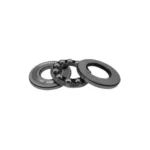
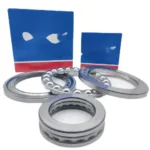
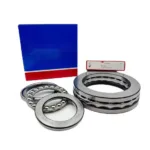


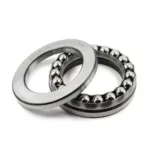


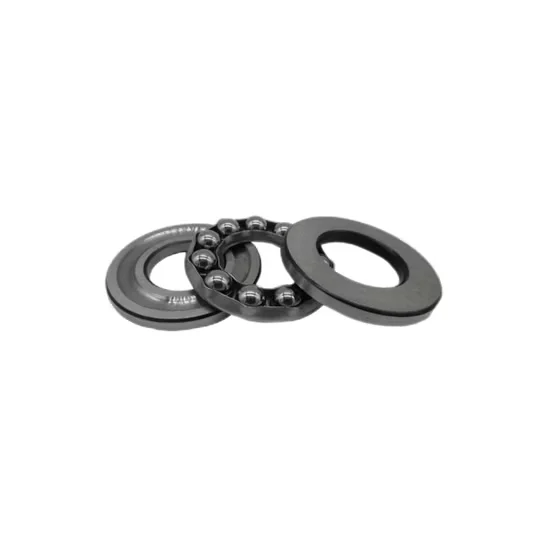


51200 Thrust Ball Bearing 10mm Bore 15mm Width Gcr15 Chrome Steel for Printing Shops
51200 Thrust Ball Bearing 10mm Bore — open type in Gcr15 chrome steel designed for printing machinery.
- Requires external lubrication and proper sealing due to the open design.
- Available in P0, P6, and P5 precision classes to match specific axial load and operational speed requirements.
- Verify product authenticity instantly via the official app QR verification channel for every dispatched unit.
Original Packaging
Factory sealed
Batch Traceability
Per-piece tracking
Pre-Ship Inspection
Photo & video proof
12-Month Warranty
Quality guaranteed
Technical Specifications
| Bore Diameter (d) | 10 mm |
|---|---|
| Bearing Type | Thrust Ball Bearing |
| Condition | New -- Original Packaging |
Need this bearing?
Get a verified quotation
Pricing, stock photos & batch codes — reply within 24 hours.
- Original packaging & batch codes
- Photo & video before shipment
- Mixed-brand orders welcome
Product Description
Original Batch Traceability — Every 51200 unit ships with verifiable manufacturer batch records to guarantee metallurgical consistency for high-speed printing presses.
Technical Specifications
| Parameter | Value |
|---|---|
| Designation | 51200 |
| Bearing Type | Thrust Ball Bearing |
| Bore Diameter (d) | 10mm |
| Width (T) | 15mm |
| Material | Available in Gcr15 chrome steel or stainless steel variants |
| Precision Class | P0, P6, P5 |
| Seal or Shield Type | Open |
| Number of Rows | Single Row |
| Origin | Shandong, China |
Application Suitability
| Industry | Typical Applications |
|---|---|
| Printing Shops | High-speed impression cylinder axial positioning |
| Machine Tools | Vertical spindle thrust support |
| Gearboxes | Axial load reaction surfaces in reduction units |
Why Standard Tolerances Cause Catastrophic Seizure in 51200 Thrust Ball Bearing Applications
Precision class dictates survival when axial loads meet high rotational speeds.
I learned this the hard way during a press installation in Nigeria. The client provided only the equipment model without specifying the required precision suffix. We supplied a standard P0 open unit, which quickly generated excessive heat and seized under the high-speed cyclic axial loads of the printing mechanism. Standard tolerances simply cannot maintain the necessary film thickness, leading to metal-to-metal contact.

Matching Axial Support to High-Speed Printing Mechanics
The 51200 thrust ball bearing is engineered specifically to handle unidirectional axial loads while allowing high rotational velocities. In printing machinery, maintaining exact cylinder alignment prevents registration errors and paper jams. Our sourcing network ensures you receive the exact precision grade required to keep these sensitive impression mechanisms running smoothly without vibrational chatter.
Navigating Thermal Expansion and Lubrication Starvation
Printing presses operate continuously, generating significant frictional heat at the thrust collars. This thermal expansion can alter the internal geometry of an open-type bearing, making consistent external lubrication critical to prevent starvation. Furthermore, the absence of integrated seals means the surrounding housing must effectively block paper dust and ink mist from contaminating the rolling elements.
Decoding Precision Classes and Material Options
Selecting between P0, P6, and P5 precision classes directly influences the running accuracy and noise levels of the assembly. While P0 suffices for slow-moving crane hooks, P5 is mandatory for machine tool spindles and printing shops to minimize axial runout. Additionally, the material selection offers Gcr15 chrome steel for maximum load capacity in dry environments, or stainless steel variants for applications exposed to mild corrosive agents or washdown routines.

The Financial Impact of Incorrect Precision Selection
Installing a lower-precision unit in a high-speed application inevitably leads to unplanned downtime and catastrophic damage to adjacent shaft components. According to failure analysis frameworks like ISO 15243, inadequate running accuracy accelerates surface distress and spalling on the raceways. The cost of replacing a seized shaft and halting a production line far exceeds the initial savings of choosing a standard tolerance bearing.
Securing Authentic High-Precision Units for Critical Machinery
Sourcing genuine P5 precision units requires strict channel verification to avoid counterfeit or downgraded stock. We provide complete factory batch traceability for every 51200 thrust ball bearing, ensuring the metallurgical properties match the certificate. Our flexible consolidation allows you to order a single emergency P5 replacement alongside bulk P0 stock for general maintenance, all verified through dimensional and running accuracy inspections before dispatch.
Documentation & Authenticity
- Original manufacturer batch traceability records confirming the specific heat treatment lot for the chrome steel rings.
- Dimensional inspection reports verifying the 10mm bore and 15mm width tolerances match the declared P5 or P6 class.
- Running accuracy test certificates proving axial runout limits are strictly maintained for high-speed printing applications.
- Material inspection reports validating the Gcr15 or stainless steel chemical composition against industry standards.
Storage, Handling & Mounting
- Keep the open-type bearing in its original vapor-phase inhibitor packaging until the exact moment of installation to prevent surface oxidation.
- Use dedicated clean gloves when handling the P5 precision raceways, as skin moisture can initiate micro-corrosion on the highly polished Gcr15 surfaces.
- Apply the specified high-speed spindle oil immediately after mounting, as the open design lacks factory pre-filling for printing press environments.
- Ensure the shaft shoulder squareness is strictly within tolerance to prevent uneven load distribution across the 10mm bore thrust collar.
Engineering Review for Your Specific Application
To ensure the selected precision class and material variant perfectly match your operational demands, please share the specific axial load values, rotational speeds, and operating temperatures. If you are replacing an existing unit in a printing press or gearbox, providing the exact OEM equipment model number allows our engineering team to perform a cross-reference check and verify the required running accuracy.
Frequently Asked Questions
Q: What are the specific differences between P0, P6, and P5 precision classes for 51200 thrust ball bearings in printing machinery?
A: P0 is the standard tolerance suitable for low-speed, heavy-load applications like crane hooks. P6 offers tighter axial runout limits for general gearboxes. P5 provides the strictest dimensional and running accuracy, which is absolutely mandatory for high-speed printing shops and machine tool spindles to prevent vibrational chatter, noise generation, and premature seizure under continuous cyclic axial loading.
Q: How to set lubrication recommendations and relubrication intervals for open-type thrust ball bearings?
A: Since the open design lacks integrated seals, external lubrication must be managed by the housing system. For high-speed printing applications, continuous oil mist or circulating oil systems are recommended to dissipate frictional heat. Relubrication intervals depend entirely on the operating temperature and rotational speed; monitoring the exhaust oil condition is the most reliable method to determine when fresh lubricant is required.
Q: What are the selection boundaries between Gcr15 chrome steel and stainless steel materials regarding anti-corrosion and load capacity?
A: Gcr15 chrome steel provides superior hardness and dynamic load capacity, making it the default choice for standard dry or well-lubricated industrial environments. Stainless steel variants are selected when the bearing is exposed to mild corrosive agents, high humidity, or washdown procedures. However, stainless steel generally offers a lower maximum load rating, so the axial load must be carefully evaluated before switching materials.
Q: How to verify if the purchased 51200 bearings have complete original factory batch traceability documents?
A: Genuine traceability requires more than a generic certificate. You should request the original manufacturer’s batch records that specifically link the heat treatment lot number to the physical bearing markings. We provide these exact factory documents alongside dimensional and running accuracy inspection reports, ensuring the metallurgical consistency and precision class of every unit can be independently verified before installation.
Inspection Records
- Dimensional measurement report
- Radial clearance verification
- Noise level check (Z-grade)
- Batch code & serial number log
Packaging Photos
- Sealed original box photos
- Label & marking close-ups
- Bearing surface detail shots
- Video walkthrough on request
Certificate of Origin
- Certificate of origin (CO)
- Commercial invoice & packing list
- Fumigation certificate (if required)
- Full export documentation set
All documents are prepared and sent for your review before shipment. You approve the inspection results before we ship. Additional testing or documentation can be arranged upon request.
How to Identify Genuine Bearings
Check the Packaging
Genuine bearings come in sealed, tamper-evident packaging with consistent print quality. Look for holographic seals, QR codes, and batch numbers that match the bearing markings.
Inspect the Markings
Genuine markings are laser-engraved with uniform depth and spacing. Counterfeit bearings often have uneven, shallow, or ink-printed markings that smudge or wear off easily.
Feel the Finish
Genuine bearings have a smooth, uniform surface finish. Rough grinding marks, uneven chamfers, or visible machining defects indicate poor-quality or counterfeit products.
Spin Test
When spun by hand, a genuine bearing rotates smoothly with minimal noise. Excessive vibration, rough spots, or grinding sounds suggest defective or refurbished products.
Common Counterfeit Warning Signs
- Price significantly below market average -- if it seems too good to be true, it usually is
- Packaging with spelling errors, blurry logos, or incorrect color tones
- Missing or non-verifiable batch codes and serial numbers
- Excessive or unusual grease -- used to mask surface defects
- Supplier unwilling to provide pre-shipment inspection or documentation
Free Authenticity Review
Already holding a bearing you doubt? Send us clear photos of the packaging, markings, and bearing surface. Our team will assess authenticity at no charge.
Send Photos for Review// same series
Related Products
 Thrust Ball Bearing
51410 51412 51413 Thrust Ball Bearing Single Direction for Machinery
View details Thrust Ball Bearing
Brand 51304-51311 Single Row Thrust Ball Bearing 140mm Bore Chrome Steel [WARN] draft identifier mismatch
View details Thrust Ball Bearing
511/670f3 Thrust Ball Bearings Genuine Supplier [WARN] draft identifier mismatch
View details Thrust Ball Bearing