
Oil Refinery Bearings for Pumps, Compressors & Fans Wholesale Supplier
Saving a few dollars on initial procurement often multiplies operational expenses through catastrophic unplanned downtime.
In oil refineries, bearing authenticity and full traceability for pumps, compressors, and fans must strictly override initial procurement costs to prevent costly unplanned downtime. The core argument is simple: the microscopic defects in non-genuine components cannot withstand the extreme heat and continuous heavy loads inherent to refinery operations. Procurement managers and MRO operators must prioritize verified sourcing channels that provide original mill certificates over quotes that lack documentation. This approach ensures that dynamic load ratings and high-temperature lubrication compatibility are not just theoretical specifications but guaranteed performance metrics.

The transition from viewing bearings as commodity items to critical safety components requires a shift in mindset. I learned this the hard way during a project in Hanover, where the pressure to reduce capital expenditure led to selecting a supplier who could not provide verifiable origin documents. The result was a fractured compressor cage under high-load conditions, causing a production halt that cost far more than the entire annual bearing budget. That incident reshaped my approach to sourcing oil refinery bearings. Now, every recommendation starts with a verification of the supply chain’s integrity rather than a comparison of unit prices.
Why Do Refinery Pumps and Compressors Fail Prematurely?
Extreme heat and continuous heavy loads expose microscopic defects in non-genuine bearings.
Refinery environments are unforgiving. Boiler feed pumps and gas compressors operate under conditions that push materials to their physical limits. When a bearing fails prematurely, it is rarely due to random bad luck. More often, it is the result of sub-standard steel quality or improper heat treatment that leaves the component vulnerable to early fatigue. [NEED_CITE: common failure modes in high-temperature industrial applications per ISO 15243]
Consider the case of a mid-sized refinery in Southeast Asia that switched to a lower-cost alternative for its main process gas compressors. Within months, the maintenance team noticed a drastic shortening of the replacement cycle. The bearings, which should have lasted several years, were failing in a fraction of that time. Upon analysis, the internal clearance had shifted due to thermal instability, leading to metal-to-metal contact and rapid wear. This is a classic example of how false economy in sourcing oil refinery bearings leads to higher long-term operational costs.
| Failure Factor | Genuine Premium Brand | Unverified Low-Cost Alternative |
|---|---|---|
| Steel Purity | Controlled inclusion density | Uncontrolled variance |
| Heat Treatment | Consistent batch-level hardness | Inconsistent surface depth |
| Traceability | Full mill certificate provided | No verifiable documentation |
| Lifecycle Expectancy | Substantially extended service life | Noticeably reduced durability |
The table above highlights the qualitative differences that matter in practice. While both options may look identical on the outside, the internal metallurgy determines whether the bearing can survive the thermal cycles of a refinery. Sourcing oil refinery bearings without verifying these underlying qualities is a gamble that most facilities cannot afford to take.

How to Select the Right Bearing for Fans and Compressors?
Matching internal clearance and precision grades to specific API operating conditions is critical.
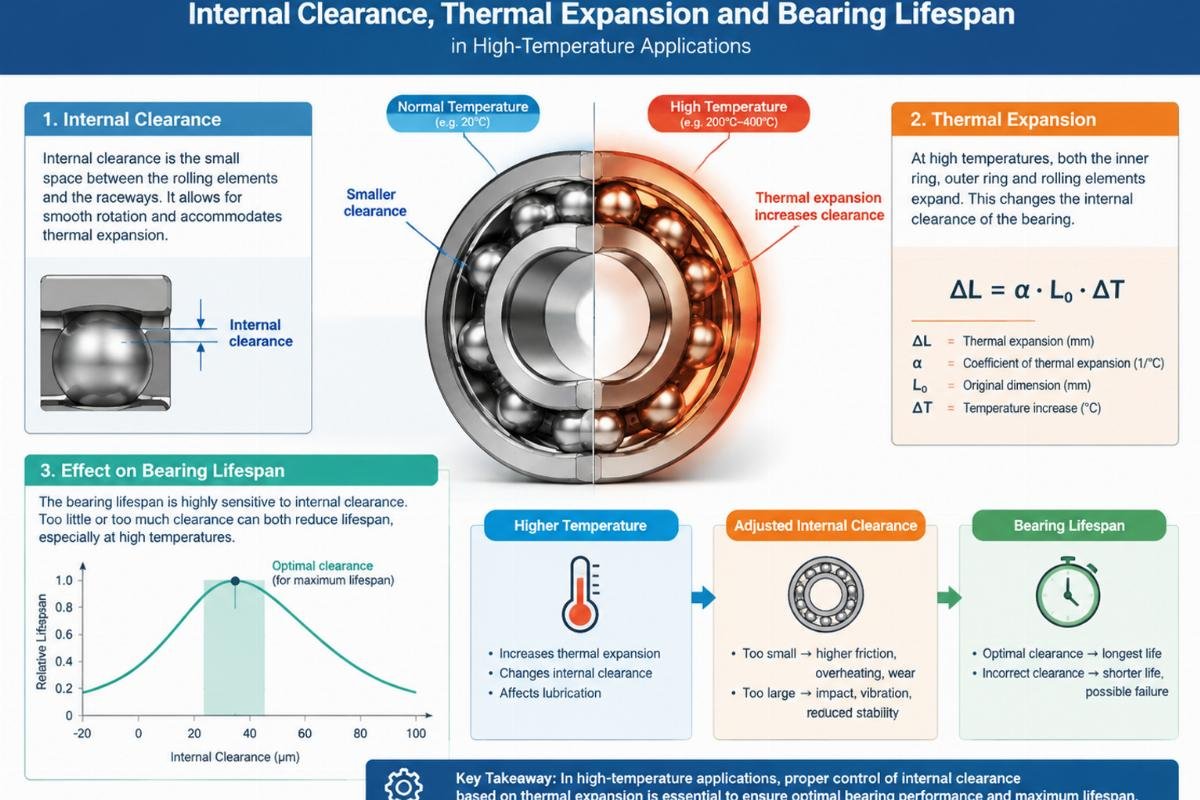
Selection is not just about matching dimensions. It involves understanding the specific operational stresses of the equipment. For high-temperature fan bearings in oil refineries, standard clearances may not suffice. Thermal expansion can cause the inner ring to expand faster than the outer ring, reducing internal clearance and leading to preload issues. If the clearance is too tight, the bearing overheats and seizes. If it is too loose, vibration increases, causing damage to the housing and shaft.
A European wind farm operator once faced persistent vibration issues in their cooling systems. The problem was resolved only after upgrading to precision-grade spherical roller bearings with the correct internal clearance class. The vibration amplitude dropped noticeably, stabilizing the entire system. This demonstrates that technical selection support is as important as the product itself. When evaluating oil refinery bearings, one must consider the dynamic load rating calculations for continuous duty and ensure compatibility with high-temperature lubricants.
[NEED_CITE: guidelines for bearing selection in heavy industry per API standards]
The process involves:
- Identifying the operating temperature range and load profile.
- Determining the required precision grade (e.g., P0, P6, or higher for critical applications).
- Selecting the appropriate internal clearance (C3, C4, etc.) to accommodate thermal expansion.
- Verifying lubrication compatibility with the refinery’s specific chemical environment.
Without this detailed approach, even a genuine brand bearing can fail if it is not suited to the specific application. This is why technical consultation is a key part of acquiring reliable oil refinery bearings.
What Sourcing Risks Hide Behind “Cheap” Bearing Quotes?
Lack of traceability documents is the biggest red flag for counterfeit or rebranded products.
The market is flooded with offers that seem too good to be true. Often, they are. Counterfeit bearings may carry the logo of a premium brand but lack the engineering integrity behind it. These products are often made from inferior steel and assembled in uncontrolled environments. The risk is not just premature failure; it is the potential for catastrophic accidents in hazardous refinery zones.
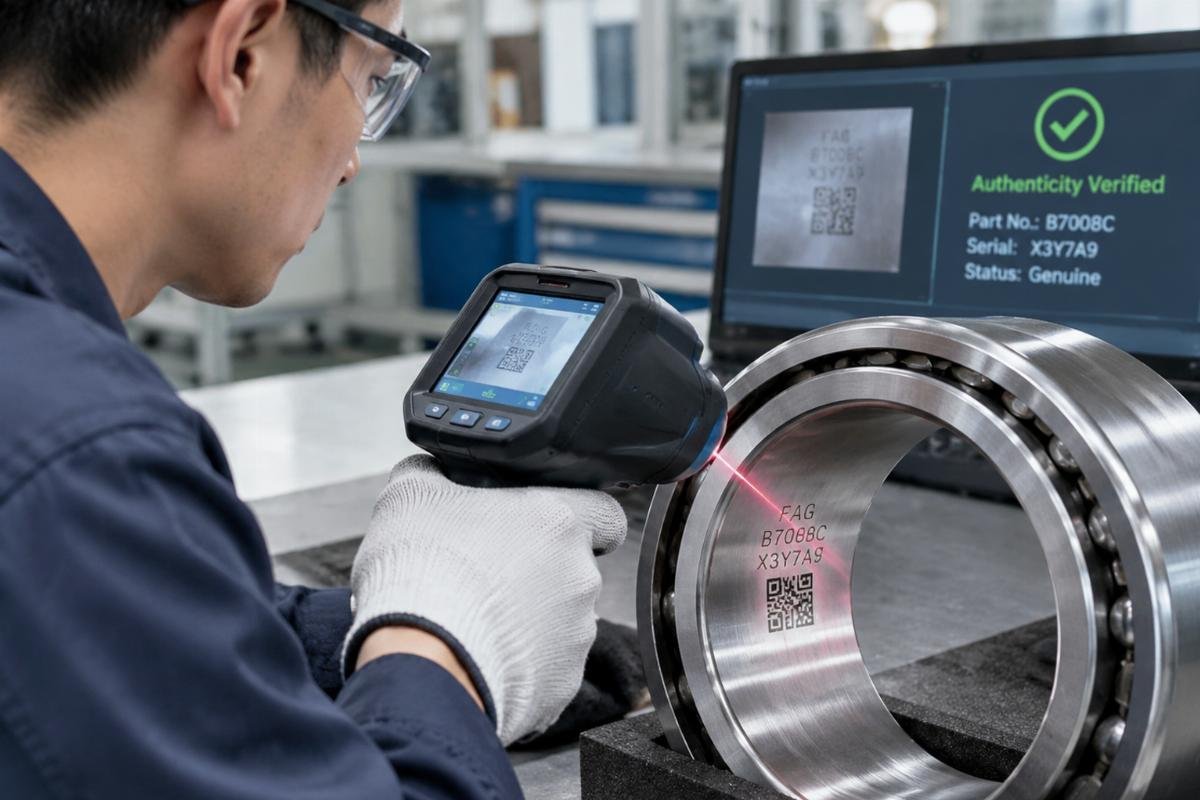
A common misconception is that brand labels guarantee quality. In reality, traceability documents are the only real proof against counterfeits. A US buyer once purchased a bulk order of what he believed to be genuine FAG bearings. Upon arrival, the packaging looked correct, but the bearings themselves lacked the specific laser-etching codes that verify authenticity. When tested, they failed to meet the basic hardness requirements. This incident underscores the importance of demanding original mill certificates and official brand authorization.
When sourcing oil refinery bearings, buyers should be wary of suppliers who cannot provide:
- Original manufacturer certificates of conformity.
- Batch-specific traceability records.
- Proof of authorized distributor status.
These documents are not just paperwork; they are insurance policies against failure. Without them, the buyer is exposed to significant financial and safety risks.

How to Verify Bearing Authenticity Before Installation?
Demanding original mill certificates and official brand authorization is the only way to ensure reliability.
Verification should happen before the bearing ever touches the installation tool. This involves a multi-step check that goes beyond visual inspection. First, verify the supplier’s authorization status with the bearing manufacturer. Authorized distributors have direct access to the manufacturer’s supply chain, ensuring that the products are genuine. Second, request the original mill certificate for the specific batch of bearings. This document contains details about the steel composition, heat treatment, and quality control checks performed during manufacturing.
Third, inspect the physical bearing for authenticity markers. Premium brands like SKF, FAG, and NSK use advanced laser-etching techniques to mark their products. These marks are difficult to replicate and provide a unique identifier that can be traced back to the production facility. Finally, perform a basic dimensional and hardness check if possible. While this requires specialized equipment, it can reveal obvious discrepancies in quality.
[NEED_CITE: best practices for verifying industrial bearing authenticity]
By following these steps, procurement managers can eliminate the risk of installing counterfeit components. This diligence is essential when dealing with oil refinery bearings, where the cost of failure is measured in millions of dollars and potential safety hazards. The goal is to create a supply chain that is transparent, verifiable, and reliable.
Conclusion
Authenticity and traceability are non-negotiable in refinery bearing procurement.
The choice of oil refinery bearings directly impacts the reliability and safety of critical infrastructure. By prioritizing verified sourcing, matching technical specifications to operational conditions, and rigorously checking authenticity, facilities can avoid the high costs of unplanned downtime. The initial savings from cheaper alternatives are illusory compared to the long-term value of genuine, traceable components.


