Vibration Monitoring Route Bearing Supplier for Bulk Industrial MRO Orders
Most bearing failures are not caused by poor quality, but by ignoring the vibration data that screams for help weeks before seizure.
Building a structured vibration monitoring route transforms reactive maintenance into proactive asset management. It requires defining critical assets, standardizing measurement points against ISO standards, setting dynamic alarm thresholds, and using spectrum analysis to identify root causes like misalignment rather than just replacing worn components. This methodology ensures that when a replacement is necessary, the correct high-precision bearing is sourced and installed to prevent recurrence.
I still remember the heat radiating from a crusher主轴 in a Nigerian cement plant. The spherical roller bearing had seized after only three months. We replaced it, then again, and again. Each time, we blamed the part. It was only when I stopped swapping components and started reading the high-frequency shock data on the vibration monitor that the truth emerged. The issue was not the bearing quality; it was severe misalignment masked by excessive greasing. That failure taught me that a vibration monitoring route is not just a checklist; it is the diagnostic backbone of reliable industrial operations. Without it, even genuine premium bearings will fail prematurely under unresolved mechanical stress.
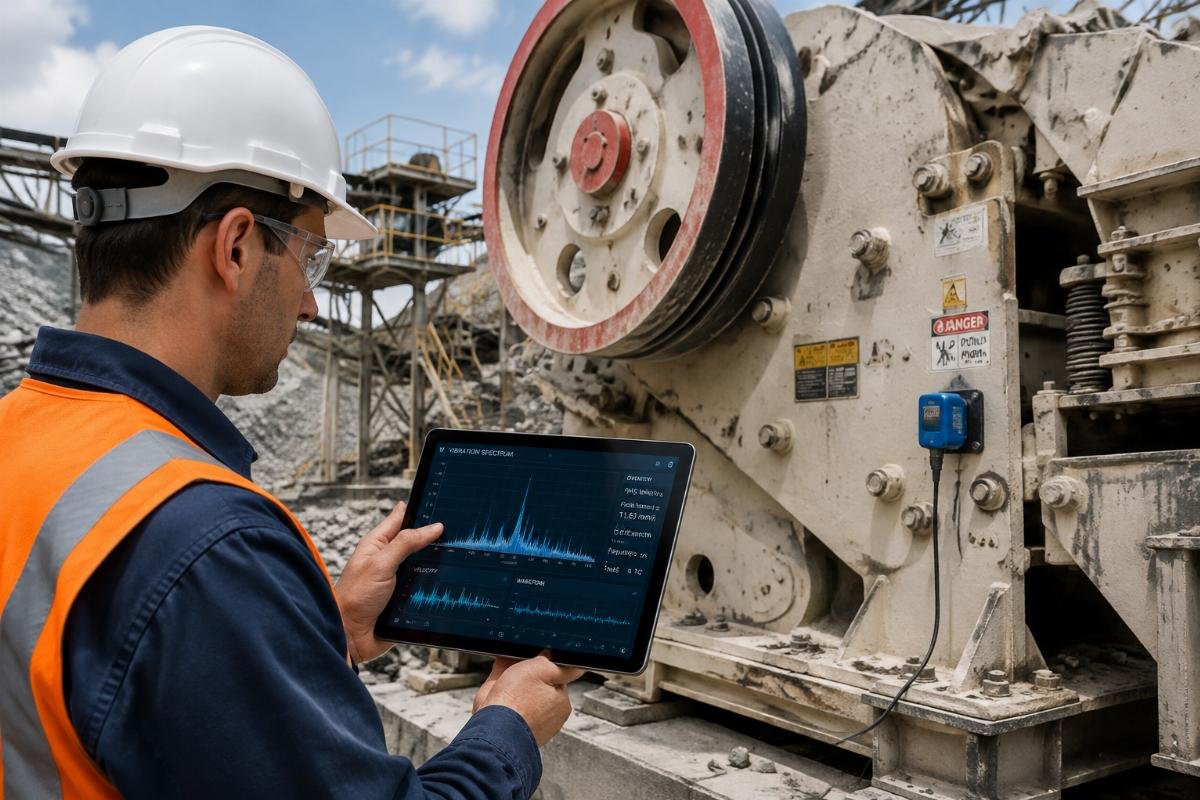
This approach shifts the focus from simple part replacement to system health optimization. For MRO managers and procurement specialists, understanding this technical workflow is essential for sourcing the right components. A vibration monitoring route provides the evidence needed to justify investment in higher-grade bearings and precise installation tools.
What Defines a Critical Asset for Vibration Monitoring?
Not every rotating machine deserves the same level of scrutiny; prioritization based on production impact and failure cost is the first step.
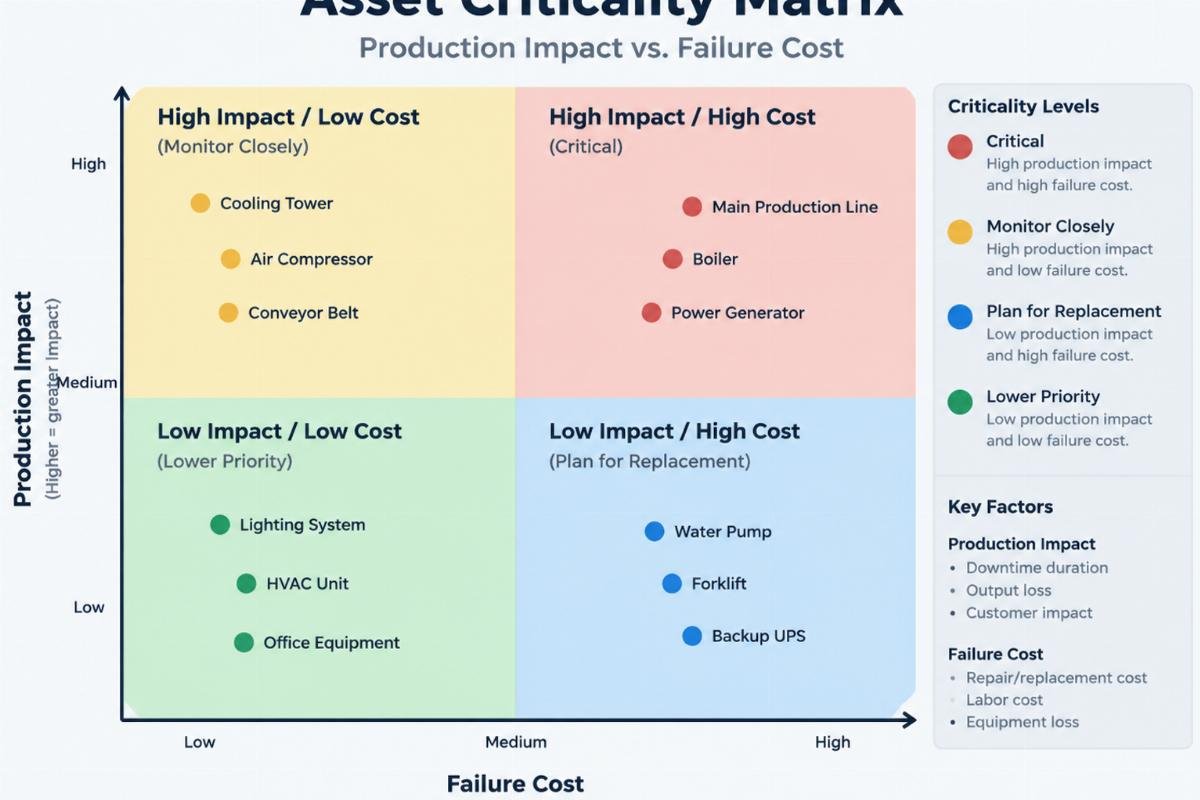
A effective vibration monitoring route begins with asset criticality assessment. Trying to monitor every motor and pump with equal intensity dilutes resources and obscures critical signals. The goal is to identify equipment where failure results in significant production loss, safety hazards, or expensive collateral damage. [NEED_CITE: criteria for criticality assessment in rotating machinery maintenance]
In a large-scale mining operation, conveyor drive units are often deemed critical due to their direct impact on material throughput. Conversely, a small cooling fan in a non-process area might be run-to-failure. By categorizing assets, maintenance teams can allocate high-resolution data collection to key machines while using simpler checks for others. This stratification ensures that the vibration monitoring route remains manageable and focused on high-value targets.
| Asset Category | Production Impact | Failure Cost | Monitoring Priority | Data Collection Frequency |
|---|---|---|---|---|
| Critical | High | Severe | Highest | Continuous or Daily |
| Essential | Medium | Moderate | High | Weekly or Bi-weekly |
| Non-Critical | Low | Minimal | Low | Monthly or Run-to-Failure |
Consider a steel mill fan system. When treated as a non-critical asset, unexpected breakdowns caused hours of emergency downtime. After reclassifying it as critical and integrating it into the vibration monitoring route, the team detected early-stage imbalance. This allowed for scheduled intervention during planned shutdowns, avoiding catastrophic failure. The lesson is clear: the value of a vibration monitoring route lies in its ability to protect the most vulnerable links in the production chain.
How to Standardize Measurement Points and Baselines?
Consistency in data collection is more important than the sophistication of the analysis tool.
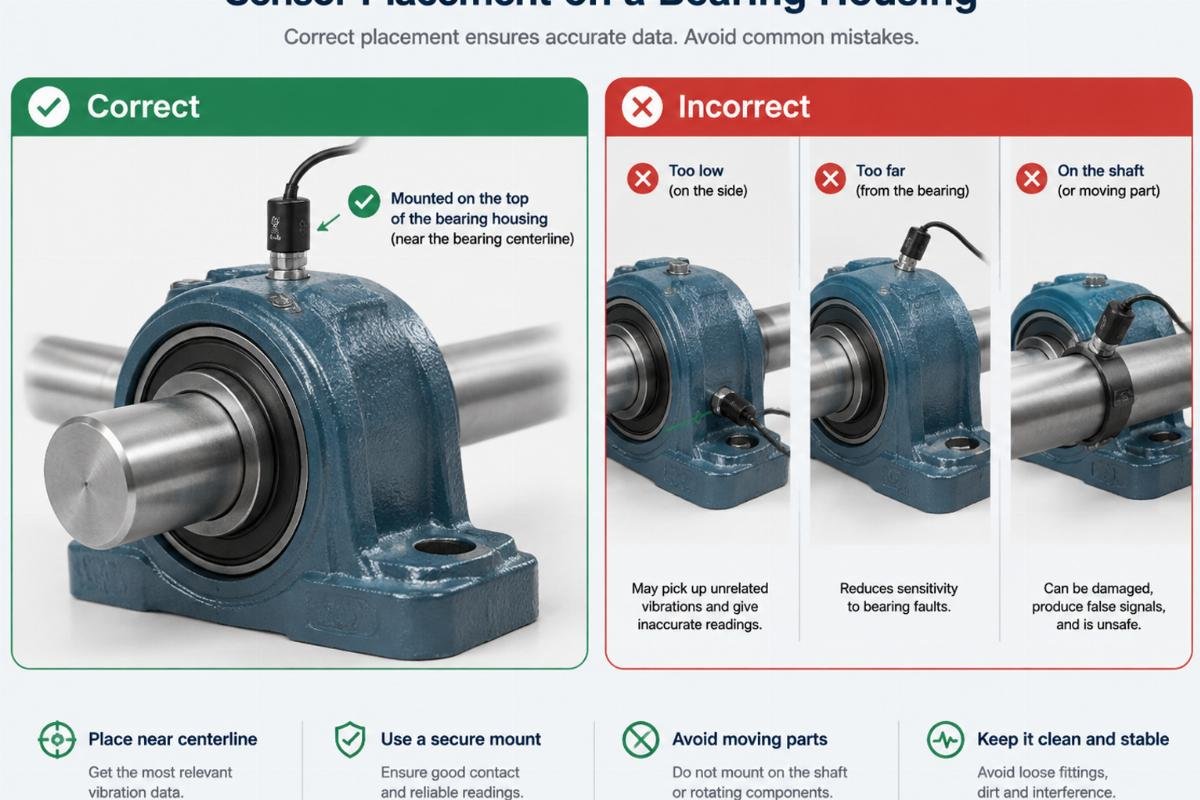
A common mistake in setting up a vibration monitoring route is assuming that any point on the housing will yield useful data. In reality, vibration signals attenuate rapidly through metal structures. Measurement points must be standardized, rigid, and directly coupled to the bearing load zone. [NEED_CITE: best practices for sensor placement on bearing housings]
During my time in the field, I observed technicians placing sensors on thin sheet-metal covers or flexible conduit boxes. The resulting data was noisy and irrelevant. Proper standardization involves marking exact locations on the bearing housing, typically in horizontal, vertical, and axial directions. These points must be clean, flat, and accessible. Once defined, they become permanent fixtures in the vibration monitoring route.
Baseline acquisition is equally vital. A baseline represents the vibration signature of a healthy machine under normal operating conditions. Without this reference, alarm thresholds are arbitrary guesses. Capturing baseline data requires the machine to be in a stable state, free from transient loads or startup transients. This initial dataset serves as the fingerprint for future comparisons.
For example, in a cement plant crusher application, establishing a baseline revealed that high-frequency shock values were initially low but increased steadily over time. This trend was invisible without a consistent reference point. By adhering to strict measurement point standards, the team could isolate bearing defects from general structural noise. A well-defined vibration monitoring route eliminates variability, ensuring that changes in data reflect true machine condition rather than operator error.
How to Set Route Frequencies and Alarm Thresholds?
Inspection intervals must align with machine dynamics, not just calendar convenience.
Setting the frequency of a vibration monitoring route requires balancing risk detection with resource availability. Fast-speed machines with lower mass tend to develop faults more quickly than slow-speed, heavy-mass equipment. Therefore, the route frequency should be inversely proportional to the machine’s criticality and speed. [NEED_CITE: ISO 10816 guidelines for vibration severity zones]
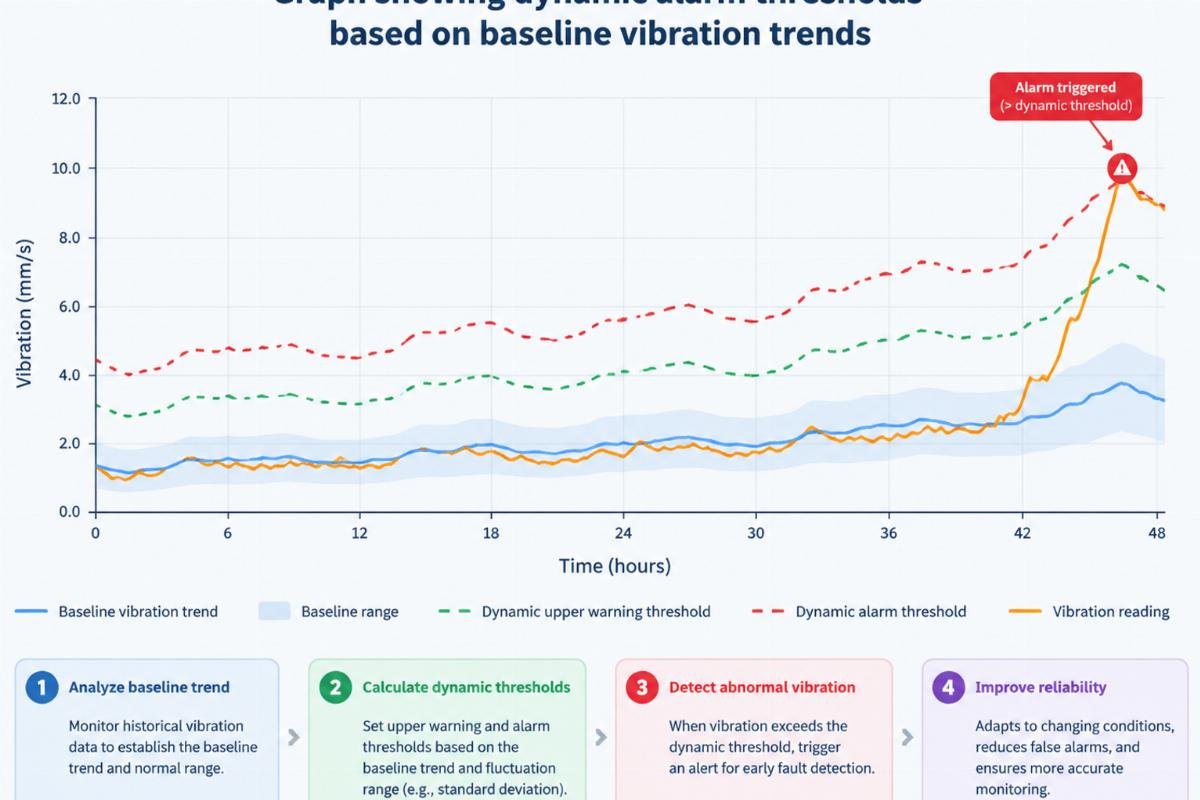
Alarm thresholds should not be static numbers pulled from a generic table. They must be dynamic, based on the established baseline and international standards such as ISO 10816. A typical approach involves setting alert levels at multiples of the baseline value or absolute velocity limits defined by the standard. This prevents false alarms from normal operational variations while catching genuine degradation.
In a mining conveyor scenario, the maintenance team initially inspected bearings monthly. However, vibration trends showed rapid deterioration between checks. By adjusting the vibration monitoring route to weekly inspections for critical drives, they detected lubrication issues early. This adjustment extended lubrication intervals and optimized spare parts stock, as they could predict exactly when intervention was needed.
Thresholds must also account for machine type. A rigid-mounted pump has different vibration characteristics than a flexible-coupled fan. Using a one-size-fits-all threshold leads to either missed faults or unnecessary shutdowns. A tailored vibration monitoring route uses specific thresholds for each asset class, ensuring accurate fault detection.
How to Analyze Vibration Spectra for Bearing Faults?
Frequency analysis reveals the specific component failing, allowing for targeted repairs rather than blind replacements.
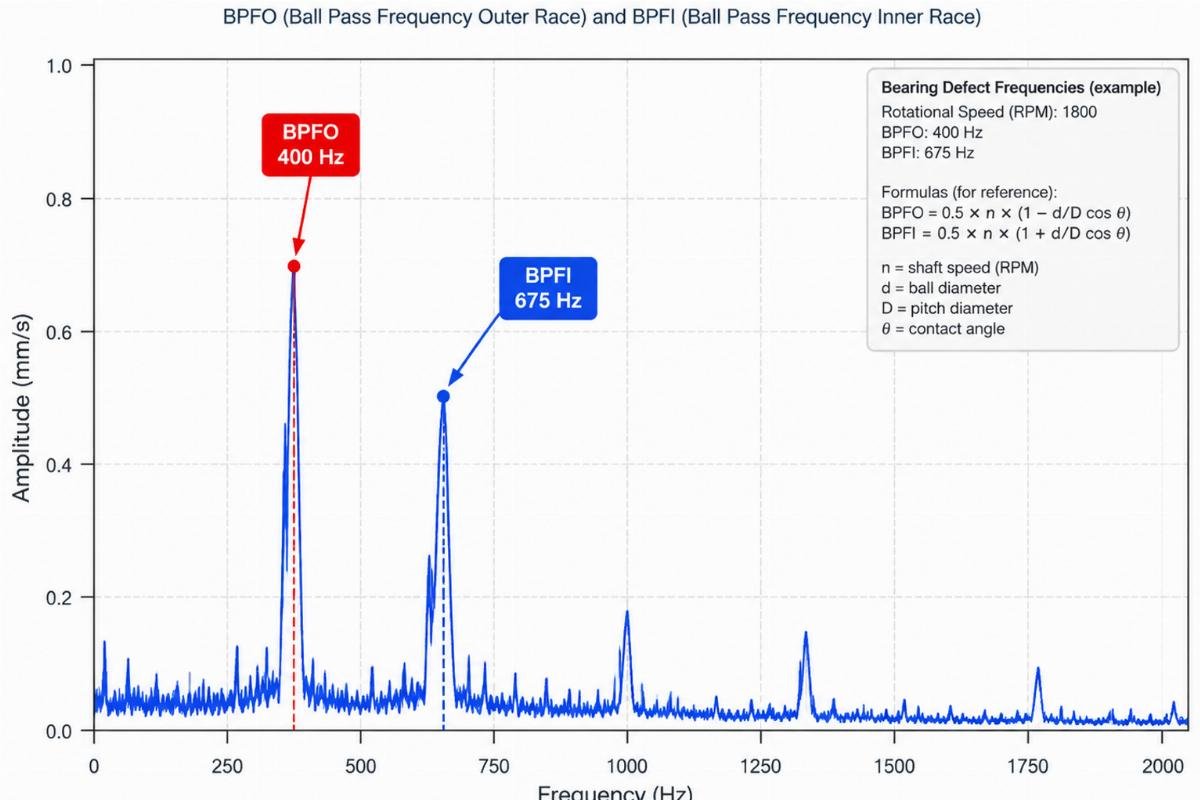
The core value of a vibration monitoring route lies in spectrum analysis. Time-domain data shows overall severity, but frequency-domain data identifies the source. Bearing defects generate specific frequencies related to their geometry: ball pass frequency outer race (BPFO), ball pass frequency inner race (BPFI), and fundamental train frequency (FTF). [NEED_CITE: calculation methods for bearing defect frequencies]
Many operators mistakenly believe that frequent greasing prevents failure. In reality, over-greasing causes overheating and churning, which vibration data reveals as elevated high-frequency energy. By analyzing the spectrum, engineers can distinguish between lubrication issues, misalignment, and actual bearing wear. This distinction is crucial for selecting the correct corrective action.
When a defect is confirmed, the choice of replacement bearing becomes critical. Generic substitutes often lack the precision and material quality required for harsh environments. Genuine spherical roller bearings from brands like SKF or FAG offer superior load capacity and fatigue resistance. However, installing a premium bearing without addressing the root cause identified in the spectrum—such as misalignment—is futile. The vibration monitoring route ensures that the right bearing is sourced and installed correctly, preventing repeat failures.
In a case involving a European wind farm operator, spectrum analysis identified early-stage spalling on an inner race. Instead of waiting for total failure, the team scheduled a replacement during a low-wind period. They used a genuine high-precision bearing, verified by traceability documentation. This proactive approach, driven by the vibration monitoring route, saved substantial downtime costs and extended the turbine’s service life meaningfully.
Conclusion
A vibration monitoring route is not a bureaucratic task; it is the primary defense against unplanned downtime.
By prioritizing critical assets, standardizing measurement points, setting dynamic thresholds, and analyzing spectra for root causes, industries can shift from reactive repairs to proactive maintenance. This methodology ensures that every bearing replacement is justified and executed with precision. For those managing bulk industrial MRO orders, integrating these technical insights with genuine, high-quality components creates a resilient supply chain. A well-executed vibration monitoring route turns data into reliability.