





22222 Ek/C3 Double Row Self Aligning Roller Bearing Open Gcr15 Carbon Steel [WARN] draft identifier mismatch
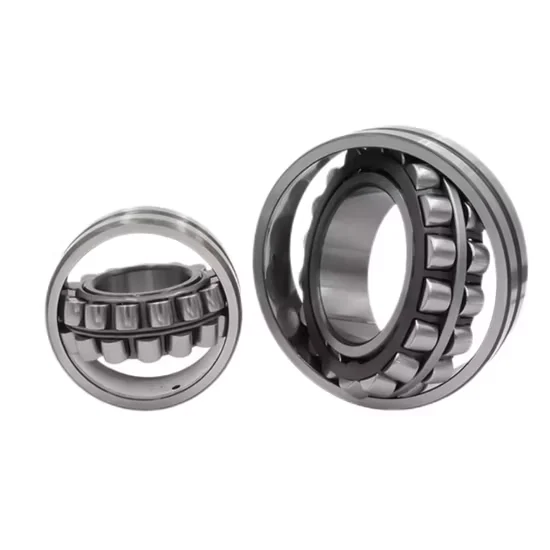
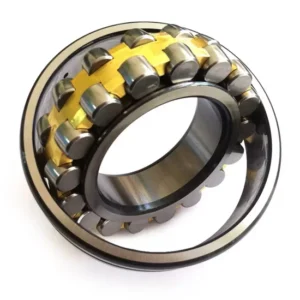
22222 Ek/C3 Spherical Roller Bearing features an open design requiring external lubrication and a 1:12 tapered bore for secure adapter sleeve mounting. The C3 internal clearance effectively accommodates thermal expansion during high-temperature continuous operations, while the enhanced internal structure handles heavy radial loads.
- Every order includes a complete documentation package with material certificates and dimensional inspection reports.
Original Packaging
Factory sealed
Batch Traceability
Per-piece tracking
Pre-Ship Inspection
Photo & video proof
12-Month Warranty
Quality guaranteed
Technical Specifications
| Bearing Type | Self Aligning Roller Bearing |
|---|---|
| Condition | New -- Original Packaging |
Need this bearing?
Get a verified quotation
Pricing, stock photos & batch codes — reply within 24 hours.
- Original packaging & batch codes
- Photo & video before shipment
- Mixed-brand orders welcome
Product Description
Multi-Brand Sourcing Consolidation — We unify SKF, NSK, and KOYO equivalents for this exact taper bore specification into single mixed-container shipments.
Technical Specifications
| Parameter | Value |
|---|---|
| Designation | 22222 Ek/C3 |
| Product Type | Spherical Roller Bearing |
| Bearing Type | Self-Aligning Roller |
| Number of Rows | Double-Row |
| Bore Type | 1:12 tapered bore |
| Material | Chrome Steel Gcr15 |
| Seal or Shield Type | Open |
| Clearance Class | C3 |
| Internal Design | Enhanced design |
Application Suitability
| Industry | Typical Applications |
|---|---|
| Mining | Primary crusher eccentric shafts and vibrating screen mechanisms |
| Metallurgy | Continuous casting machine rolls and steel mill conveyor gearboxes |
| Agriculture | Heavy-duty tractor PTO shafts and combine harvester rotors |
| Paper Manufacturing | Paper machine dryer cylinders and felt roll assemblies |
Why Standard Clearance Fails in High-Heat Crusher Operations
Thermal expansion instantly eliminates normal internal clearance, leading to catastrophic roller skewing and sudden seizure.
Running heavy equipment in tropical or high-friction environments exposes the severe limitations of standard clearance selections. When ambient heat combines with intense operational friction, the inner ring expands radially and crushes the rolling elements against the outer raceway. Selecting the right 22222 Ek/C3 spherical roller bearing prevents this thermal binding by providing the necessary operational breathing room. Field replacements caused by ignored thermal dynamics account for a massive portion of unplanned downtime in continuous processing plants. Many maintenance teams mistakenly assume that a tighter fit improves stability, but in high-heat zones, this approach guarantees premature destruction. Properly matching the internal geometry to the thermal profile is the only way to ensure reliable continuous operation.

Matching Taper Bore Geometry to Heavy Shock Loads
The conical inner profile ensures a rigid interference fit when mounted with adapter sleeves, preventing inner ring creep under extreme radial shocks. This specific 22222 Ek/C3 spherical roller bearing distributes impact forces evenly across the enhanced roller profile, protecting the raceway from localized spalling. Our engineering team cross-checks your shaft tolerances to guarantee the sleeve locknut achieves the precise drive-up distance required for optimal grip. When dealing with heavy vibrating screens or primary crushers, any micro-movement between the shaft and the inner ring will rapidly wear away the journal surface. The taper design completely eliminates this risk by locking the component firmly into position, transferring the immense crushing loads directly into the robust shaft material without inducing fretting corrosion.
Navigating Dust Ingress and Lubrication Starvation
Open-type configurations in mining and metallurgy face constant particulate contamination that accelerates raceway spalling and degrades the lubricant film. Without integrated seals, the bearing relies entirely on external housing labyrinth seals and regular grease purging to flush out abrasive dust before it embeds into the softer cage material. Operating at elevated temperatures continuously thins the lubricant film, demanding high-viscosity greases fortified with extreme pressure additives to maintain separation between the rolling elements. Failure to maintain adequate grease volume in these harsh conditions leads to rapid surface fatigue and catastrophic cage failure. Maintenance crews must establish strict relubrication intervals based on the actual dust ingress rate rather than relying on generic manual recommendations.
Decoding the Suffix Stack for Operational Survival
The “E” designation signifies an enhanced internal geometry with optimized roller guidance, maximizing load capacity without increasing the outer envelope dimensions. The “k” suffix confirms the 1:12 tapered bore, which is mandatory for adapter sleeve mounting on straight shafts to simplify installation and removal in tight spaces. Finally, the C3 clearance class provides greater than normal radial internal clearance, specifically engineered to accommodate thermal expansion and tight interference fits. Ignoring these suffix details often results in ordering a cylindrical bore or standard clearance variant that will fail during the very first heat cycle. Procurement teams must verify every single character in the designation string, as even a minor deviation in the clearance code will completely alter the operational lifespan of the assembly in demanding environments.

The Financial Drain of Incorrect Clearance Selection
Installing a standard clearance variant in a high-heat application causes immediate preload buildup as the shaft expands under operational loads. This excessive internal stress generates runaway friction heat, ultimately welding the rollers to the raceway and destroying the surrounding housing structure. Such catastrophic damage voids manufacturer warranties and triggers massive secondary repair costs across the entire drive assembly, far exceeding the initial component price. Adhering to ISO 281 life calculation standards requires factoring in these operational clearance shifts to avoid chronic premature failures. Replacing a seized unit in an underground mining shaft or a high-altitude metallurgy plant introduces severe safety risks and extended production halts that devastate quarterly output targets.
Securing Traceability in a Counterfeit-Prone Market
We verify the exact metallurgical composition of the Gcr15 rings to ensure they meet the necessary hardness thresholds for heavy crushing applications. Sourcing mixed brands like NSK, KOYO, or NTN through our consolidated supply chain eliminates the risk of receiving mismatched clearance classes from unauthorized traders. Every shipment includes full batch traceability, ensuring the tapered bore dimensions strictly align with your existing adapter sleeves and locknuts. Our technical desk reviews your specific operating temperatures to confirm the C3 clearance is genuinely sufficient for your thermal profile. We do not just ship boxes; we validate that the exact suffix combination matches the engineering requirements of your specific machinery, preventing the costly mistakes that arise from generic catalog ordering.
Documentation & Authenticity
- Certificate of Conformity confirming the C3 radial internal clearance range before dispatch.
- Original manufacturer batch traceability codes linking the Gcr15 steel heat to the final machining.
- Dimensional inspection reports verifying the 1:12 tapered bore angle and diameter tolerances.
- Material test certificates validating the chrome steel chemical composition and hardness profiles.
Storage, Handling & Mounting
- Store the open bearing in its original vapor-phase inhibitor packaging until mounting to prevent Gcr15 surface corrosion.
- Use induction heaters with automated temperature cutoffs to expand the tapered bore evenly without altering the C3 clearance.
- Measure the drive-up distance on the adapter sleeve meticulously to ensure the internal clearance reduces to the precise target.
- Apply clean lint-free gloves when handling the exposed enhanced rollers to prevent acidic sweat from initiating microscopic pitting.
Engineering Validation Before Procurement
Provide your specific radial and axial load profiles, operating temperatures, and shaft speeds so our team can recalculate the L10 life with the correct clearance adjustments. Share the original equipment manufacturer part numbers to allow us to cross-reference the exact taper bore and sleeve compatibility across different global brands. Detailing your housing seal arrangements helps us recommend the optimal external contamination defense for this open configuration. If your application involves severe misalignment or shaft deflection, sharing those structural dynamics allows us to confirm the self-aligning capabilities will fully compensate without overloading the outer ring. This collaborative validation process ensures you receive a component that survives the actual field conditions rather than just fitting the physical dimensions.
Frequently Asked Questions
Q: What is the practical difference between C3 and normal clearance in this series?
A: Normal clearance suits standard ambient temperatures and moderate fits. The C3 designation provides extra internal space to compensate for the inner ring expansion caused by high operational heat and the tight interference fit of the adapter sleeve, preventing the rollers from binding and skidding inside the raceway.
Q: How do I properly mount the tapered bore using an adapter sleeve?
A: You must calculate the exact drive-up distance or measure the remaining internal clearance reduction during installation. Tightening the locknut too far eliminates the C3 clearance and causes immediate overheating, while under-tightening allows the inner ring to spin on the shaft, destroying the journal.
Q: Can this open-type bearing be retrofitted with external seals in dusty environments?
A: Since the bearing itself lacks integrated seals, you must rely on the housing design. We highly recommend utilizing heavy-duty labyrinth seals or taconite seals within the bearing block to exclude abrasive mining dust while allowing the necessary purge grease to escape and flush away contaminants.
Q: How to verify the authenticity of multi-brand spherical roller bearings upon delivery?
A: We provide official manufacturer QR codes, batch traceability documents, and original certificates of conformity. You can cross-check the physical weight, laser-etched designation markings on the outer ring, and the specific C3 clearance feel against the official brand catalogs to confirm absolute authenticity.
Inspection Records
- Dimensional measurement report
- Radial clearance verification
- Noise level check (Z-grade)
- Batch code & serial number log
Packaging Photos
- Sealed original box photos
- Label & marking close-ups
- Bearing surface detail shots
- Video walkthrough on request
Certificate of Origin
- Certificate of origin (CO)
- Commercial invoice & packing list
- Fumigation certificate (if required)
- Full export documentation set
All documents are prepared and sent for your review before shipment. You approve the inspection results before we ship. Additional testing or documentation can be arranged upon request.
How to Identify Genuine Bearings
Check the Packaging
Genuine bearings come in sealed, tamper-evident packaging with consistent print quality. Look for holographic seals, QR codes, and batch numbers that match the bearing markings.
Inspect the Markings
Genuine markings are laser-engraved with uniform depth and spacing. Counterfeit bearings often have uneven, shallow, or ink-printed markings that smudge or wear off easily.
Feel the Finish
Genuine bearings have a smooth, uniform surface finish. Rough grinding marks, uneven chamfers, or visible machining defects indicate poor-quality or counterfeit products.
Spin Test
When spun by hand, a genuine bearing rotates smoothly with minimal noise. Excessive vibration, rough spots, or grinding sounds suggest defective or refurbished products.
Common Counterfeit Warning Signs
- Price significantly below market average -- if it seems too good to be true, it usually is
- Packaging with spelling errors, blurry logos, or incorrect color tones
- Missing or non-verifiable batch codes and serial numbers
- Excessive or unusual grease -- used to mask surface defects
- Supplier unwilling to provide pre-shipment inspection or documentation
Free Authenticity Review
Already holding a bearing you doubt? Send us clear photos of the packaging, markings, and bearing surface. Our team will assess authenticity at no charge.
Send Photos for Review// same series
Related Products
 Self Aligning Roller Bearing
Self-Aligning Roller Bearings for Water Treatment Plants, Pumps & Filters
View details Self Aligning Roller Bearing
22310cc/W33 Self-Aligning Roller Bearing for Industrial Use [WARN] draft identifier mismatch
View details Self Aligning Roller Bearing
Self-Aligning Roller Bearing for Industrial Use, High Strength New Design
View details Self Aligning Roller Bearing