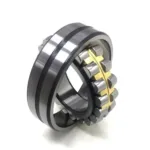
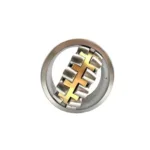
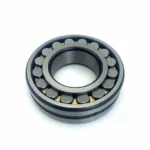
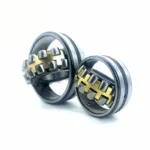
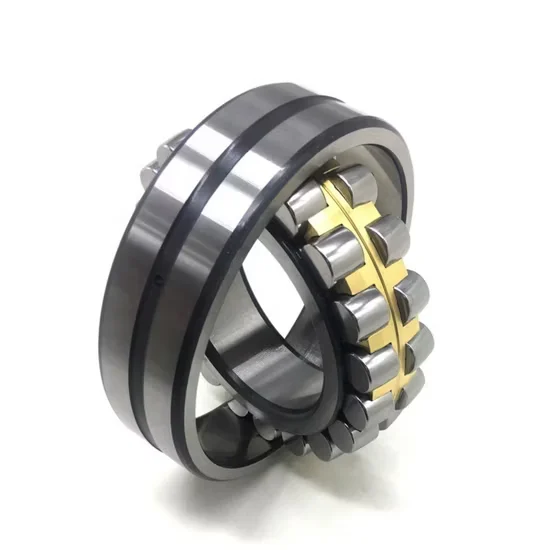
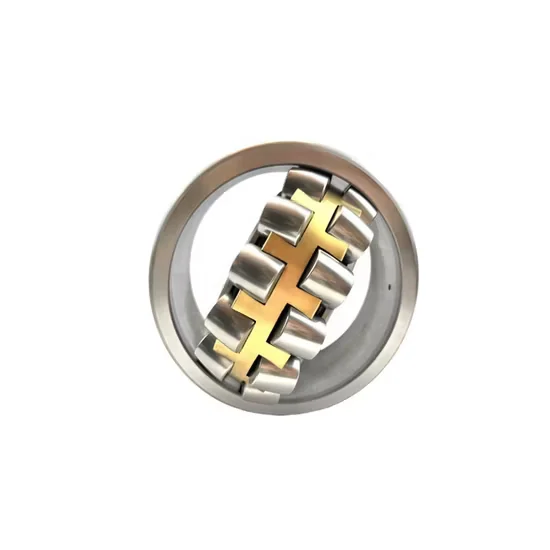
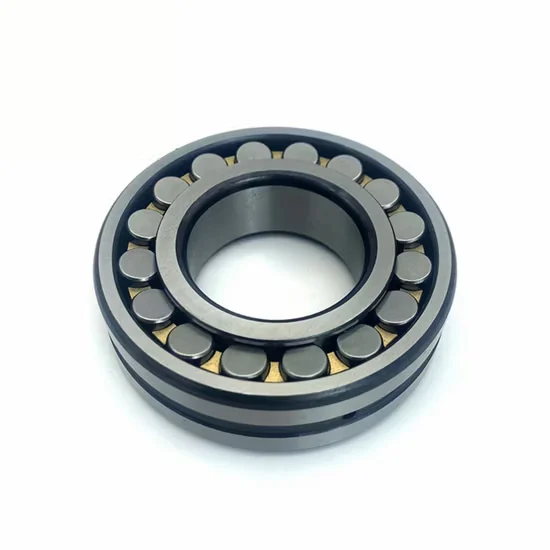
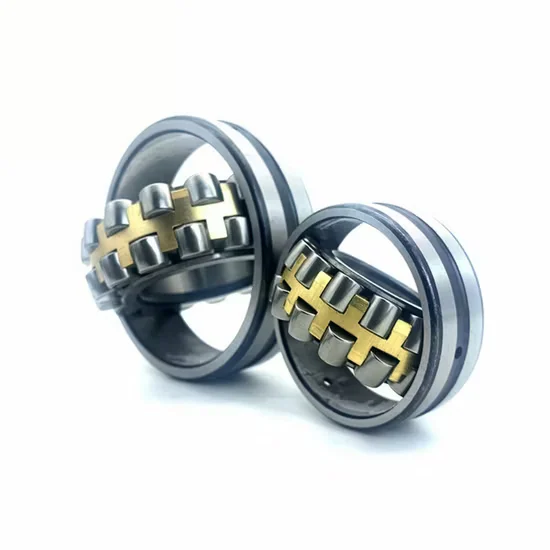
Self-Aligning Roller Bearing for Industrial Use, High Strength New Design
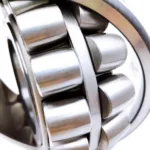
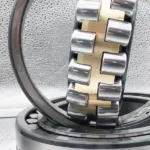
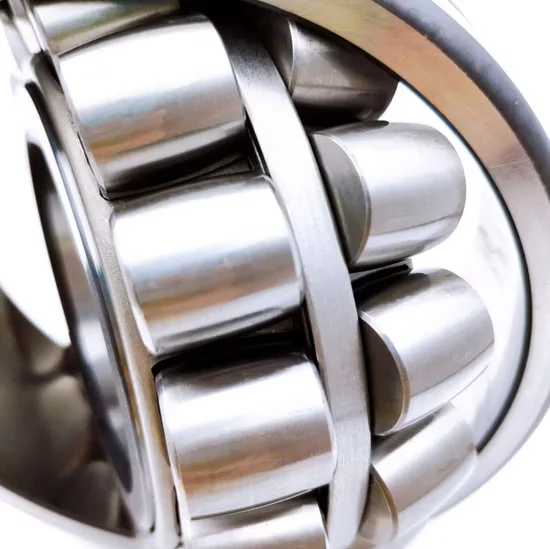
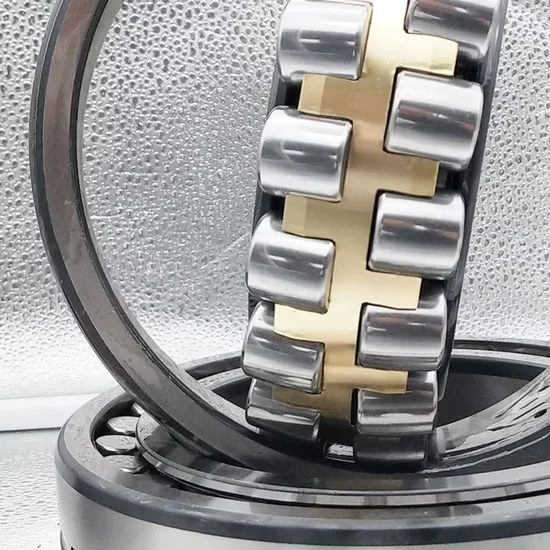
Self-Aligning Roller Bearing for Heavy-Duty Industrial Applications — crafted from Chrome Steel Gcr15 to sustain heavy radial loads and accommodate shaft misalignment in demanding mining, metallurgy, and agricultural machinery environments.
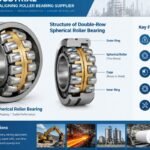
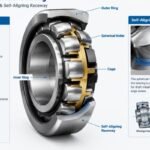
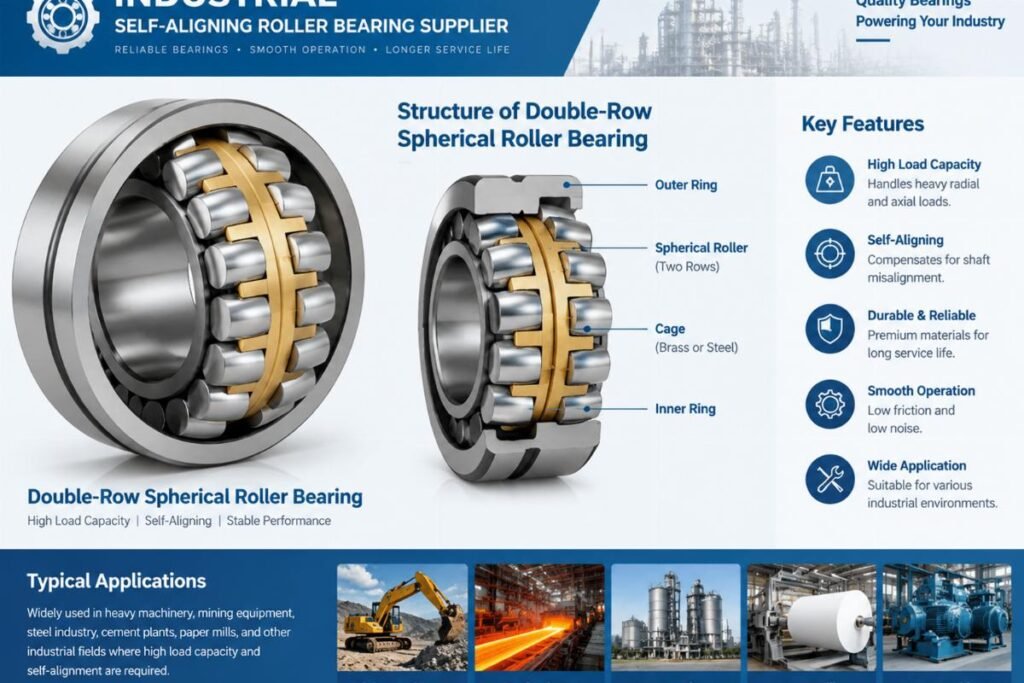
- Double-row structure ensures superior radial load capacity and inherent self-aligning capability.
- Multi-brand availability allows flexible selection matching specific performance requirements.
- Complete original factory batch traceability documentation is guaranteed for every premium brand shipment.
Original Packaging
Factory sealed
Batch Traceability
Per-piece tracking
Pre-Ship Inspection
Photo & video proof
12-Month Warranty
Quality guaranteed
Technical Specifications
| Bearing Type | Self Aligning Roller Bearing |
|---|---|
| Condition | New -- Original Packaging |
Need this bearing?
Get a verified quotation
Pricing, stock photos & batch codes — reply within 24 hours.
- Original packaging & batch codes
- Photo & video before shipment
- Mixed-brand orders welcome
Product Description
Multi-Brand Sourcing Consolidation — Procure KOYO, NTN, and domestic lines in a single shipment without juggling multiple vendor accounts.
Technical Specifications
| Parameter | Value |
|---|---|
| Product Type | Spherical Roller Bearing |
| Number of Rows | Double-Row |
| Material | Chrome Steel Gcr15 options available |
| Structure | Self-Aligning Roller |
| Origin | Shandong, China |
| Application | Mining, Metallurgy, Paper machines, Steel mill equipment |
Application Suitability
| Industry | Typical Applications |
|---|---|
| Mining & Metallurgy | Vibrating screens, crushers, and continuous casting rolls |
| Pulp & Paper | Paper machine dryer cylinders and press rolls |
| Heavy Machinery | Steel mill equipment and heavy-duty agricultural gearboxes |
Why Shaft Deflection Destroys Standard Bearings Before the Steel Yields
Finding a reliable industrial self-aligning roller bearing supplier is only the first step; understanding shaft deflection is what keeps the production line running.
Misalignment tolerance prevents catastrophic edge loading and premature fatigue.
During a paper mill retrofit in Dongguan, I watched a freshly installed spherical roller bearing seize within hours of startup. The root cause was not the radial load, but thermal expansion trapped by an incorrect internal clearance. When heavy industrial loads meet high operating temperatures, standard clearances vanish, turning the rolling elements into a solid block of friction. This experience highlighted that high strength and innovative design are not just performance metrics, but the absolute baseline for preventing unplanned downtime. In heavy machinery, ignoring the physical realities of shaft flex and thermal growth guarantees rapid mechanical failure. Engineers must account for the dynamic deflection of long shafts under load, ensuring the bearing can articulate without binding.
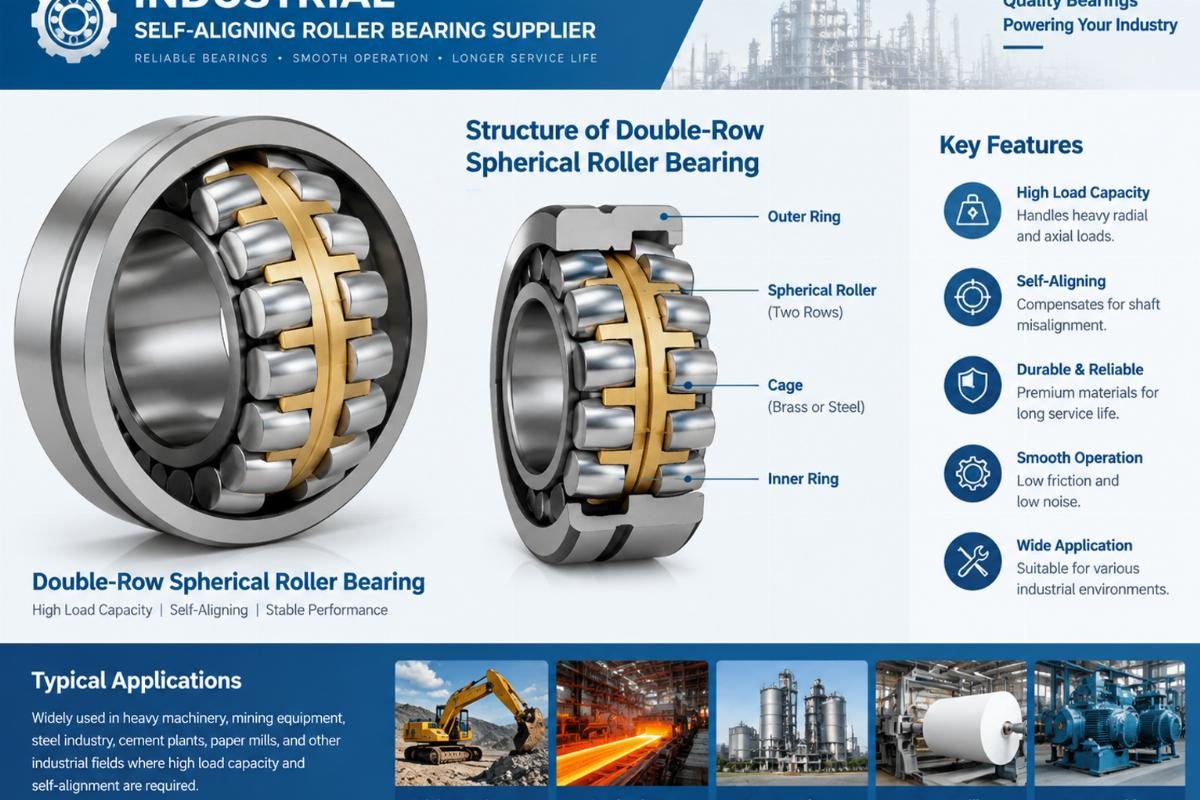
Matching Double-Row Geometry to Extreme Radial Demands
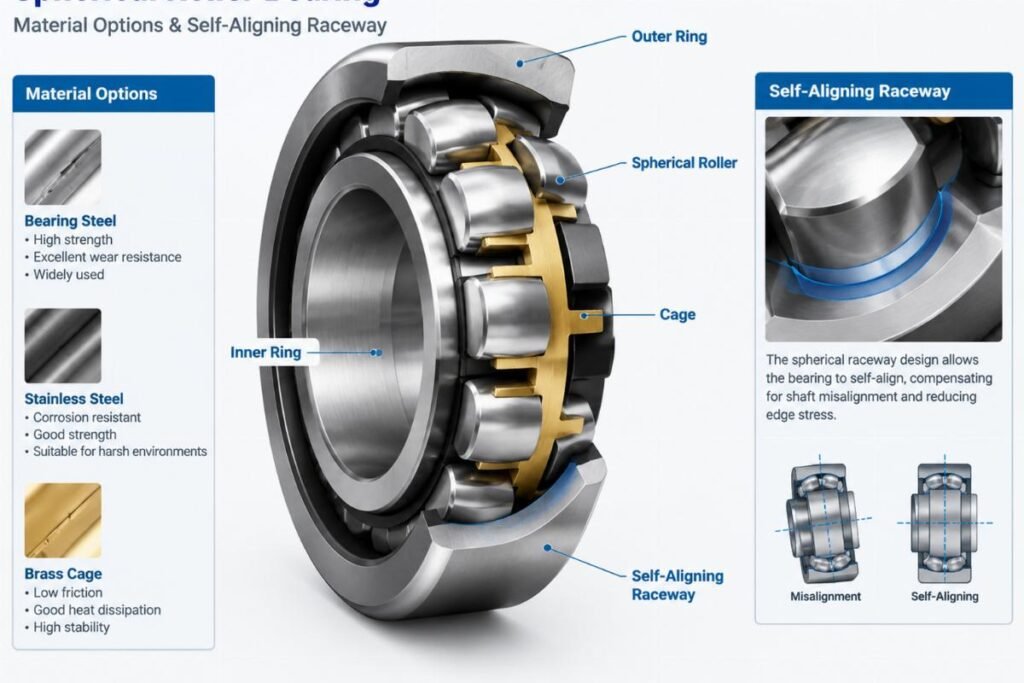
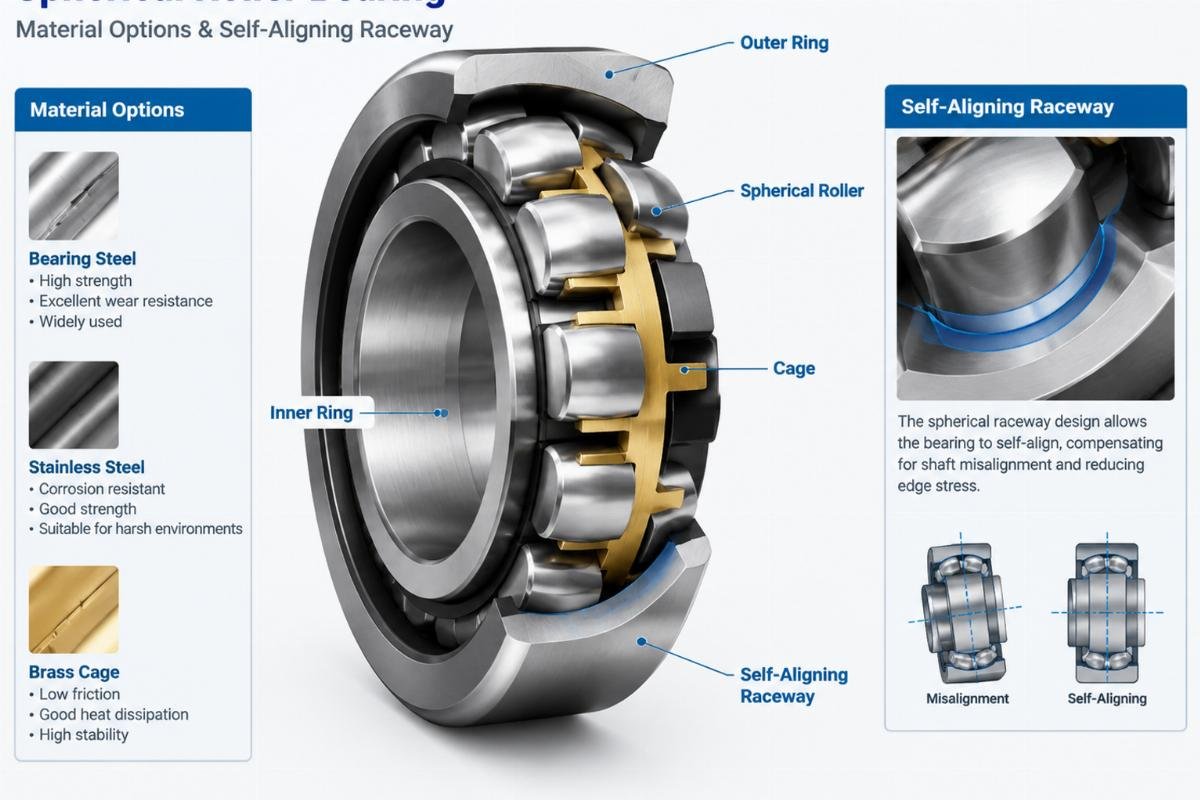
The double-row configuration inherently balances massive radial forces while accommodating angular misalignment from shaft deflections or housing inaccuracies. As an experienced industrial self-aligning roller bearing supplier, we match the specific cage design and roller profile to your exact vibration and load parameters. This ensures the component absorbs shock loads without transferring destructive stress to the surrounding housing structure. By carefully evaluating the operational envelope, we prevent the localized stress concentrations that typically fracture rigid bearing arrangements under heavy industrial duty cycles. The spherical raceway geometry allows the inner ring to tilt slightly, maintaining optimal load distribution across the roller paths even when the shaft bends under peak operational forces.
Managing Thermal and Contamination Hazards in Heavy Industry
In metallurgy and mining operations, ambient heat and process temperatures drastically alter the operational clearance of the assembly. Selecting the correct clearance class, such as C3 or C4, is mandatory to prevent the thermal seizure I witnessed in the paper mill. Furthermore, abrasive dust and slurry demand heavy-duty sealing solutions or external lubrication flushing to prevent particle ingress into the roller paths. Proper mounting practices, including controlled induction heating for cylindrical bores, ensure the inner ring expands uniformly without damaging the precision raceway. Neglecting these environmental and installation variables inevitably compromises the structural integrity of the entire drive system. Effective contamination exclusion is just as critical as load capacity when operating in highly abrasive processing plants.
Decoding Material and Clearance Options for Operational Longevity
Chrome Steel Gcr15 remains the standard for high strength and wear resistance in most heavy-duty environments. However, for chemical processing or highly corrosive mining applications, stainless steel or specialized coated variants are available to resist surface degradation. The self-aligning capability relies on the spherical outer ring raceway, which allows the inner ring and roller assembly to pivot freely under load. Internal clearance selection is equally critical; while standard CN clearance suits normal temperatures, elevated heat requires C3 or C4 to compensate for thermal expansion. Understanding these material and clearance options ensures the selected component survives the specific environmental hazards of your facility. Evaluating the intersection of material hardness and operational temperature prevents unexpected micro-cracking in the raceway during continuous heavy-duty operation.
The Financial Impact of Ignoring Misalignment Tolerances
Specifying a rigid bearing in a flexing shaft application leads to severe edge loading and accelerated fatigue. According to the failure mode classification per ISO 15243, misalignment often manifests as localized smearing and rapid raceway spalling. This unplanned downtime cascades through the production line, causing catastrophic damage to adjacent gears, seals, and housings. Ultimately, the financial burden of a halted paper machine or primary crusher far exceeds the initial savings of choosing an under-specified component. Recognizing these hidden costs shifts the procurement focus from unit price to total cost of ownership and operational continuity. Ignoring the self-aligning requirement forces the machinery to absorb deflection stresses, leading to widespread structural failures beyond the bearing itself.
Securing Traceability and Technical Alignment for Critical Spares
Sourcing genuine spherical roller bearings requires strict verification to avoid counterfeit materials that fail under heavy radial loads. We provide complete factory batch traceability for premium brands like KOYO and NTN, ensuring the metallurgical integrity of the Chrome Steel Gcr15 components. Our engineering team assists with cross-brand equivalent model consultation when substituting obsolete part numbers for urgent MRO requirements. We maintain massive spot inventory to support flexible MOQ, from single-unit emergency spares to full container consolidation for mining projects. Additionally, our technical support extends to post-installation failure analysis, helping you refine clearance and lubrication strategies for future shutdowns. This comprehensive approach ensures your maintenance team receives not just a replacement part, but a validated solution for your specific operational challenges.
Documentation & Authenticity
- Certificate of Conformity validating the specific heat treatment and material grade of the Chrome Steel Gcr15 rings.
- Original factory batch traceability documents linking the bearing to its exact production run and metallurgical test results.
- Official brand app QR verification for premium lines to confirm authenticity before mounting in critical vibrating screens.
- Dimensional and running accuracy inspection reports confirming the spherical raceway tolerances prior to dispatch.
Storage, Handling & Mounting
- Keep the double-row bearing in its original moisture-proof packaging until immediately before installation to prevent raceway corrosion.
- Use induction heating for cylindrical bore mounting, strictly controlling the temperature to preserve the factory-set internal clearance.
- Avoid using carbon steel tools directly on the Chrome Steel Gcr15 surfaces to prevent cross-contamination and localized rusting.
- Verify the shaft and housing seating dimensions meticulously, as out-of-roundness will restrict the outer ring’s self-aligning capability.
- Apply the recommended initial grease fill evenly across both roller rows to ensure adequate lubrication during the critical run-in period.
Engineering the Right Fit for Your Equipment
To determine the exact bearing designation, please provide your equipment model, available mounting space, and specific operating conditions. Share the calculated radial and axial loads, operational speed, and ambient temperature so our engineering team can verify the L10 life and recommend the optimal clearance class. Detailing the environmental exposure, such as abrasive dust or chemical splashes, allows us to specify the correct sealing or material variant for your application.
Frequently Asked Questions
Q: How do I determine the exact bearing designation for my heavy-duty equipment?
A: Provide our engineering team with your equipment model, shaft dimensions, and operational parameters including load, speed, and temperature. We will calculate the required dynamic load rating and recommend the precise designation, ensuring the internal clearance and cage design match your specific application demands.
Q: What are the common failure modes of these bearings in mining and metallurgy?
A: In harsh environments, premature failures typically stem from contamination, inadequate lubrication, or thermal seizure due to incorrect clearance selection. Misalignment beyond the component’s tolerance causes edge loading and raceway spalling. Regular condition monitoring and proper sealing are essential to mitigate these risks.
Q: How do I choose between premium global brands and domestic lines for MRO?
A: Premium brands offer optimized metallurgy for extreme continuous-duty applications, while reliable domestic lines provide excellent performance for standard heavy-duty use at a competitive cost. We evaluate your specific load cycles and maintenance intervals to recommend the most cost-effective sourcing strategy without compromising operational reliability.
Q: What information is needed to handle custom size requirements and mixed-brand shipments?
A: Share your complete bill of materials, including required dimensions, load ratings, and preferred brand alternatives. Our consolidation service verifies cross-reference alignment across all items, ensuring dimensional interchangeability and coordinating a single mixed-brand shipment to simplify your project procurement and reduce logistics overhead.
Inspection Records
- Dimensional measurement report
- Radial clearance verification
- Noise level check (Z-grade)
- Batch code & serial number log
Packaging Photos
- Sealed original box photos
- Label & marking close-ups
- Bearing surface detail shots
- Video walkthrough on request
Certificate of Origin
- Certificate of origin (CO)
- Commercial invoice & packing list
- Fumigation certificate (if required)
- Full export documentation set
All documents are prepared and sent for your review before shipment. You approve the inspection results before we ship. Additional testing or documentation can be arranged upon request.
How to Identify Genuine Bearings
Check the Packaging
Genuine bearings come in sealed, tamper-evident packaging with consistent print quality. Look for holographic seals, QR codes, and batch numbers that match the bearing markings.
Inspect the Markings
Genuine markings are laser-engraved with uniform depth and spacing. Counterfeit bearings often have uneven, shallow, or ink-printed markings that smudge or wear off easily.
Feel the Finish
Genuine bearings have a smooth, uniform surface finish. Rough grinding marks, uneven chamfers, or visible machining defects indicate poor-quality or counterfeit products.
Spin Test
When spun by hand, a genuine bearing rotates smoothly with minimal noise. Excessive vibration, rough spots, or grinding sounds suggest defective or refurbished products.
Common Counterfeit Warning Signs
- Price significantly below market average -- if it seems too good to be true, it usually is
- Packaging with spelling errors, blurry logos, or incorrect color tones
- Missing or non-verifiable batch codes and serial numbers
- Excessive or unusual grease -- used to mask surface defects
- Supplier unwilling to provide pre-shipment inspection or documentation
Free Authenticity Review
Already holding a bearing you doubt? Send us clear photos of the packaging, markings, and bearing surface. Our team will assess authenticity at no charge.
Send Photos for Review// same series
Related Products
 Self Aligning Roller Bearing
22330 CCK/W33 Self Aligning Roller Bearings Germany Quality [WARN] draft identifier mismatch
View details Self Aligning Roller Bearing
22310cc/W33 Self-Aligning Roller Bearing for Industrial Use [WARN] draft identifier mismatch
View details Self Aligning Roller Bearing
21311ejw33c3 Spherical Roller Bearing for Construction & Industrial Machinery
View details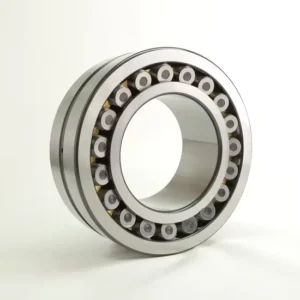 Self Aligning Roller Bearing