Mexican Market Bearing Brands & Equivalents Wholesale Supplier
Customs HS code mismatches cause more port delays than price barriers for bearing alternatives.
Sourcing reliable equivalents for the Mexican market requires precise cross-referencing of customs declaration elements and original parameters to avoid port delays and ensure cost-effective procurement. A Mexican Market Bearing Brands & Equivalents Wholesale Supplier must prioritize traceability documentation and dimensional tolerance matching over simple brand substitution to guarantee smooth clearance at ports like Veracruz.
I still remember the silence on the phone line from a client in Monterrey. It was not the quiet of satisfaction, but the heavy silence of a production line that had stopped. A container of replacement bearings sat stuck at the port of Veracruz for weeks. The issue was not quality, nor was it fraud. The problem was a single digit error in the customs classification for an alternative bearing model. The local broker could not match the declared code with the physical goods because the technical specifications on the paperwork did not align perfectly with the imported equivalent. This incident shifted my entire approach to sourcing. I realized that for distributors in Latin America, the biggest risk is not the performance of a Chinese alternative to a premium European brand, but the administrative friction at the border. [NEED_CITE: common causes of customs delays for industrial parts in Mexico]

To navigate this landscape, buyers must look beyond the brand name. They need a partner who understands that a bearing is not just a mechanical component, but a data point in a complex regulatory system. This guide explores how to select the right alternatives and manage the documentation required for seamless entry into the Mexican market.
What Are the Dominant Bearing Brands in the Mexican Market?
The Mexican industrial sector relies heavily on established global brands, but cost pressures are driving demand for verified equivalents.
In mines, steel mills, and automotive plants across Mexico, you will predominantly find SKF, FAG, NSK, and TIMKEN bearings. These brands have built deep trust through decades of presence. However, the maintenance, repair, and operations (MRO) budgets are under constant pressure. Distributors and end-users are increasingly open to high-quality alternatives from manufacturers like ZWZ, HRB, and LYC, provided they can guarantee performance parity.
The challenge lies in perception. Many buyers assume that switching brands requires extensive re-testing or certification. In reality, if the dimensional tolerances and load ratings match the international standards, the substitution is technically sound. The barrier is often informational. A reliable Mexican Market Bearing Brands & Equivalents Wholesale Supplier provides the technical data sheets that prove this equivalence, allowing local distributors to sell with confidence.

For example, a deep-groove ball bearing from a premium brand may have specific internal clearances designated by codes like C3. An equivalent from a reputable Chinese manufacturer must offer the same ISO-standardized clearance. When these parameters are documented and verified, the functional risk is minimal. The key is to source from suppliers who stock genuine products with complete traceability, ensuring that every batch meets the specified quality assurance protocols. [NEED_CITE: ISO standards for bearing dimensional tolerances and internal clearances]
How to Cross-Reference Premium Brands with Reliable Equivalents?
Accurate cross-referencing depends on matching dimensional tolerances and load ratings, not just part numbers.
Creating a substitution matrix is essential for any distributor looking to expand their offering. This process involves comparing the critical specifications of the original equipment manufacturer (OEM) bearing with the proposed alternative. It is not enough to match the outer diameter, inner diameter, and width. You must also verify the dynamic and static load ratings, limiting speed, and cage material.
| Parameter | Premium Brand Specification | Verified Equivalent Specification | Compliance Status |
|---|---|---|---|
| Dimensional Tolerance | ISO Class Normal/P6 | ISO Class Normal/P6 | Matched |
| Dynamic Load Rating | Standard Catalog Value | Equivalent Catalog Value | Verified |
| Material Grade | Standard Bearing Steel | Standard Bearing Steel | Matched |
| Cage Type | Steel/Brass/Polymer | Compatible Material | Verified |
| Traceability Docs | Full Batch Certificate | Full Batch Certificate | Provided |
This table illustrates the qualitative matching required. Note that exact numerical values for load ratings vary by specific model, so the focus is on verifying that the equivalent meets or exceeds the standard catalog value for that size class. [NEED_CITE: ABMA standards for bearing load rating calculations]
A case from a construction machinery dealer in Guadalajara highlights this. They needed spherical roller bearings for excavators. The OEM specified a certain brand, but lead times were prohibitive. By using a cross-reference matrix that confirmed identical dimensions and load capacities, they switched to a verified alternative. The result was no change in service life, but a significant reduction in downtime during the waiting period. The success relied on the supplier’s ability to provide the technical comparison upfront, removing the guesswork for the buyer’s engineering team.
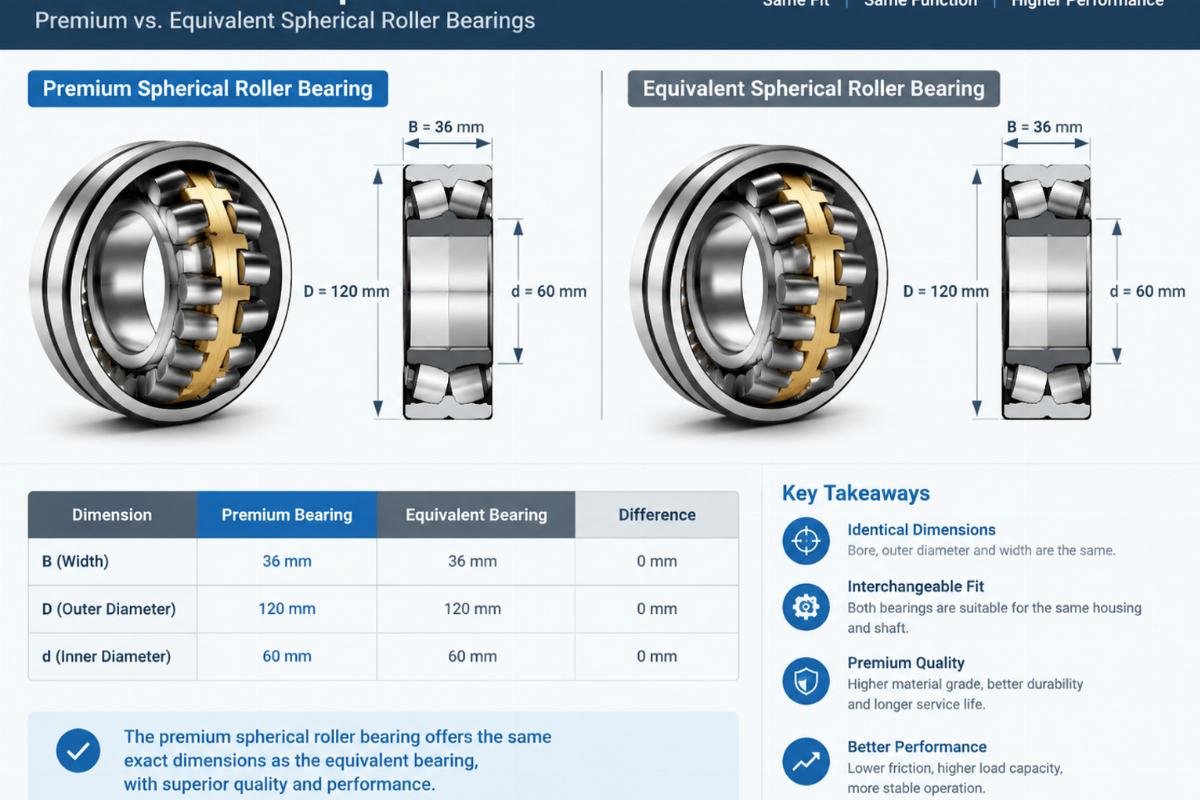
When working with a Mexican Market Bearing Brands & Equivalents Wholesale Supplier, request these comparison matrices for your most frequently stocked items. This data becomes a powerful sales tool for your local customers, proving that the alternative is not a compromise, but a strategic choice.
Why Do Bearing Substitutions Fail at Mexican Customs?
Missing traceability documents and HS code mismatches are the primary causes of clearance failures.
The most common reason for bearing shipments being held at Mexican ports is not the product itself, but the paperwork. Customs officials require precise classification under the Tariff of the General Import and Export Tax Law (TIGIE). If the declared HS code does not match the physical characteristics of the bearing, or if the description is vague, inspections are triggered.
For alternative brands, the risk is higher if the documentation does not clearly link the new part number to the original specification. A shipment labeled simply as “bearings” without detailed technical descriptors is a red flag. The customs broker needs to see the brand, model, dimensions, and application to assign the correct code. If the alternative brand is less known, the broker may lack the reference data to justify the classification, leading to delays.
[NEED_CITE: Mexican customs tariff database requirements for mechanical components]
I recall a shipment of tapered roller bearings intended for a mining operation. The alternative brand was well-known in Asia but less familiar in North America. The initial declaration lacked the detailed technical breakdown. The goods were held for verification. By providing the full traceability documentation, including the mill test certificates and a detailed letter of explanation linking the alternative model to the standard HS code description, we resolved the issue. However, the delay cost the client valuable time.
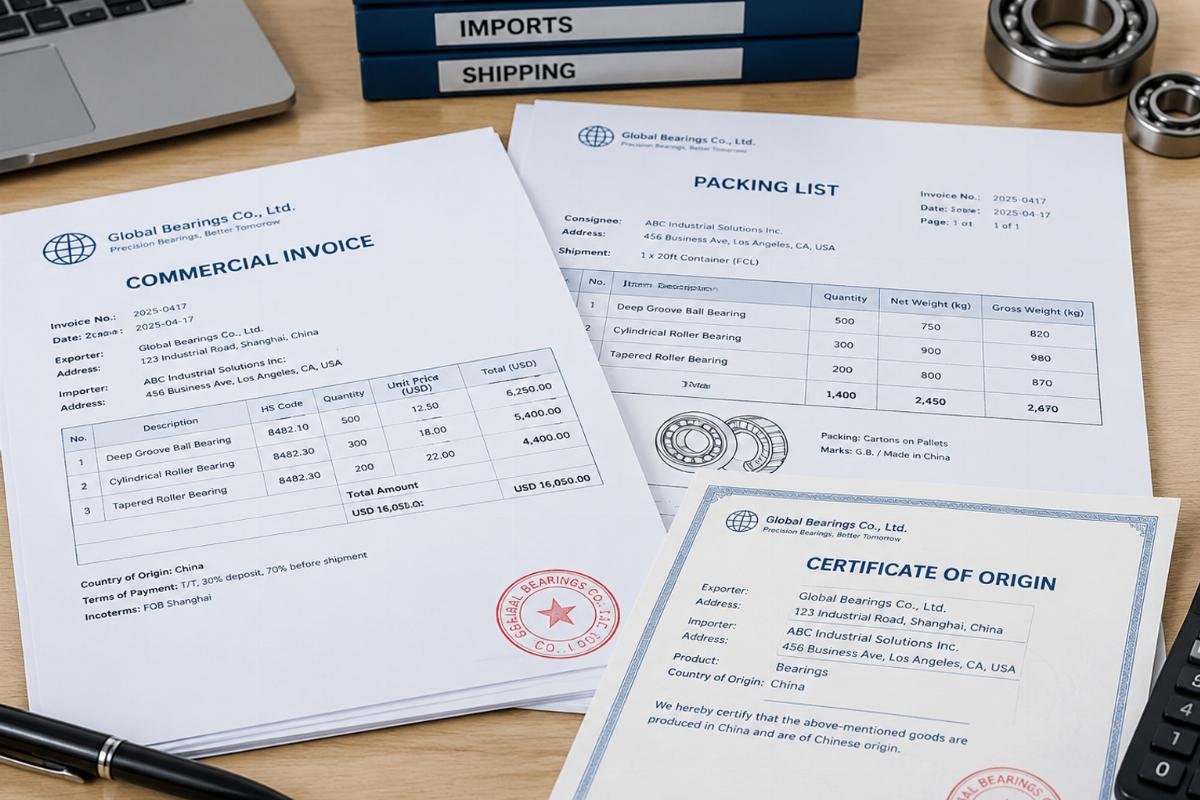
To prevent this, ensure your supplier provides comprehensive export documents. These should include commercial invoices with detailed descriptions, packing lists with exact quantities and weights, and certificates of origin. For a Mexican Market Bearing Brands & Equivalents Wholesale Supplier, pre-verifying these elements is part of the service. They should understand the specific requirements of Mexican customs and prepare the paperwork accordingly, reducing the likelihood of “unknown code” issues.
How to Optimize Mixed-Container Sourcing for LatAm Distributors?
Strategic consolidation of brands and sizes reduces shipping costs and improves inventory flexibility.
Distributors in Latin America often face the challenge of managing diverse inventory needs. Ordering full containers of a single SKU is rarely efficient for MRO supplies. Mixed-container sourcing allows buyers to combine different brands, types, and sizes in one shipment. This approach optimizes freight costs and ensures that slow-moving items do not tie up capital while fast-moving spares are readily available.
However, mixed containers complicate customs clearance. Each item must be correctly listed and classified. A disorganized packing list can lead to inspection delays. The solution is rigorous pre-shipment consolidation and documentation. A professional supplier will organize the cargo logically, grouping similar items and providing a detailed, itemized packing list that matches the invoice exactly.
[NEED_CITE: best practices for LCL and FCL mixed cargo documentation]
Consider a regional wholesaler supplying both automotive workshops and heavy industry. They need small batches of precision angular contact ball bearings for machine tools and large volumes of cylindrical roller bearings for crushers. By consolidating these into one container, they save on freight. The key is having a supplier who can handle the complexity of picking, packing, and documenting such diverse orders without error.
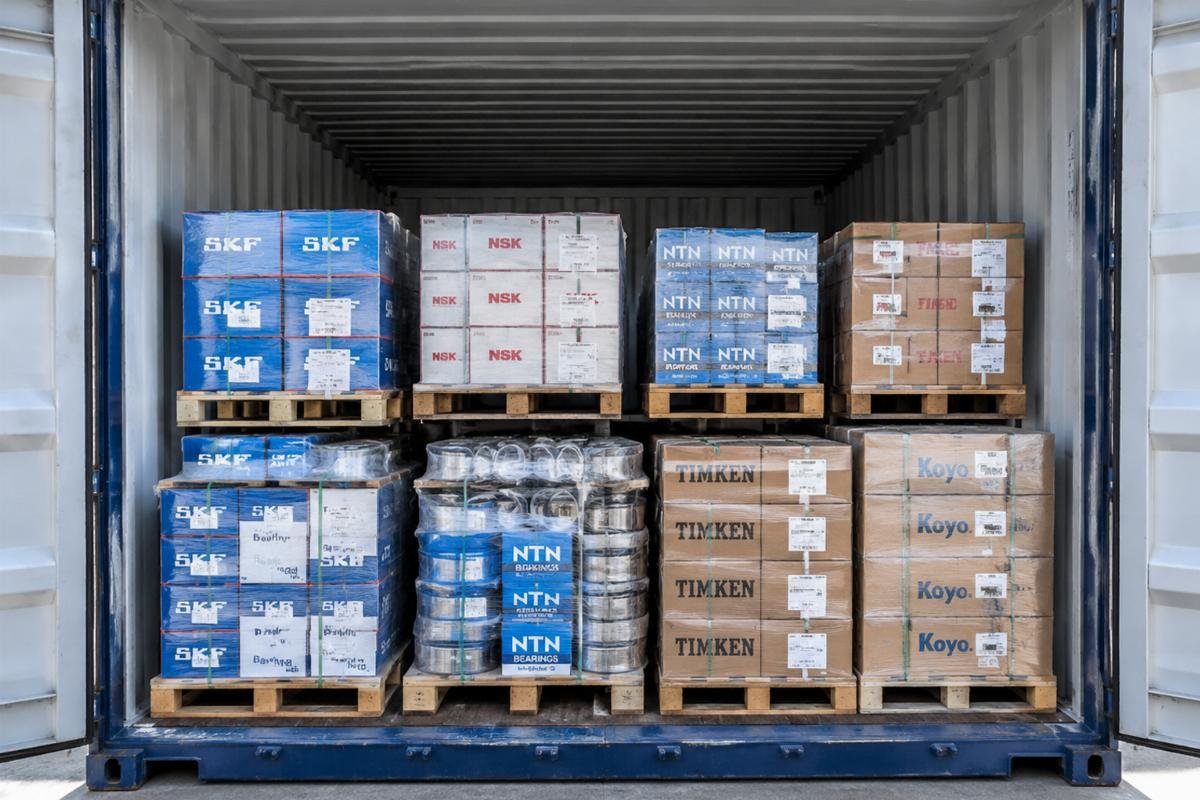
This strategy also helps in managing demurrage risks. By ensuring all documents are perfect before the vessel arrives, you avoid the costly penalties associated with delayed clearance. A experienced Mexican Market Bearing Brands & Equivalents Wholesale Supplier will have systems in place to verify the accuracy of every document against the physical cargo, ensuring a smooth handover at the port. This level of operational discipline is what separates a simple trader from a true logistics partner.
Conclusion
Success in the Mexican bearing market hinges on documentation precision and technical verification.
Sourcing alternatives is not just about finding a lower price; it is about ensuring continuity of supply and compliance with local regulations. By focusing on accurate cross-referencing, robust traceability, and optimized logistics, distributors can confidently offer reliable equivalents to their customers. Partnering with a knowledgeable Mexican Market Bearing Brands & Equivalents Wholesale Supplier transforms these challenges into competitive advantages, keeping your supply chain moving and your clients’ operations running smoothly.