
ME Industrial Projects 2026 Spare Parts: Genuine Bearings Wholesale Supplier
Mixing genuine and non-genuine bearings in a single container does not save money; it mortgages your production line against catastrophic failure.
The surge in Middle East industrial projects in 2026 has created a critical bottleneck for maintenance, repair, and operations teams. The only viable strategy to prevent unplanned downtime in harsh environments is sourcing fully traceable, genuine bearings from a verified supplier who provides original customs declarations and factory documentation for every unit. Cheap alternatives or mixed batches inevitably lead to rapid oxidation, spalling, and total equipment seizure under high heat and dust loads.

Having spent years navigating the complexities of global bearing supply chains, I have seen how minor procurement shortcuts escalate into major operational crises. The market is flooded with components that look identical to premium brands but lack the metallurgical integrity required for heavy industry. [NEED_CITE: common failure modes in counterfeit bearings per ISO 15243] Understanding the difference between a cost-saving measure and a liability requires looking beyond the price tag to the source of the steel and the verification of its journey.
What is driving the 2026 spare parts boom in the Middle East?
Infrastructure expansion and mining sector growth are accelerating replacement cycles for critical rotating equipment.
The Middle East is currently undergoing a significant transformation in its industrial base, with massive investments in mining, steel production, and renewable energy infrastructure. These projects operate in some of the most challenging environmental conditions on earth, characterized by extreme ambient temperatures and pervasive abrasive dust. As new facilities come online and older plants undergo retrofitting, the demand for reliable maintenance, repair, and operations supplies has skyrocketed.
This boom is not just about new installations; it is driven by the urgent need to maintain uptime in existing facilities that are pushing their equipment to maximum capacity. The wear rates in these environments are substantially higher than in temperate climates, meaning that standard replacement intervals are no longer sufficient. Operators are finding themselves needing to procure spare parts more frequently to avoid unexpected breakdowns.

From my perspective, this surge has exposed a vulnerability in the supply chain. Many local distributors are struggling to keep up with the volume and specificity of requests. They often resort to mixing brands or sourcing from unverified channels to fill orders quickly. This approach might satisfy immediate inventory needs, but it fails to address the core requirement of long-term reliability. The 2026 landscape demands a Middle East industrial projects spare parts demand 2026 strategy that prioritizes quality assurance over speed alone. Without a robust supply of genuine components, these ambitious projects risk being derailed by preventable mechanical failures.
Why do harsh environments expose fake bearings so quickly?
High heat and airborne particulates cause rapid oxidation and surface fatigue in bearings made from substandard steel.
In a controlled workshop environment, a non-genuine bearing might perform adequately for a short period. However, the moment it is installed in a mining crusher or a steel mill fan in the Middle East, the differences in material quality become glaringly apparent. Genuine bearings from brands like SKF, FAG, or TIMKEN are manufactured using high-purity steel with controlled inclusion levels and precise heat treatment processes. Counterfeit or lower-tier alternatives often use recycled steel with inconsistent hardness and poor resistance to corrosion.
I recall a specific case involving a mining site where non-genuine spherical roller bearings were installed to cut costs. The environment was characterized by high temperatures and heavy dust ingress. Within a few months, the bearings showed signs of severe blackening and oxidation. The rollers had spalled, leading to vibration levels that threatened the integrity of the entire housing. The expected service life was drastically reduced, turning a planned maintenance task into an emergency shutdown.

The failure was not due to improper installation but rather the inability of the material to withstand the thermal and mechanical stress. [NEED_CITE: impact of operating temperature on bearing fatigue life] In such conditions, the lubricant breaks down faster, and any microscopic imperfections in the steel become initiation points for cracks. This is why relying on genuine bearing suppliers Middle East is not just a preference but a technical necessity. The harsh climate acts as an accelerant for defects that might remain hidden in milder environments.
How can buyers verify genuine traceability before shipping?
Mandatory original customs declarations and factory traceability documents are the only safe proof of authenticity.
Verifying the authenticity of bearings requires more than just checking the packaging. Sophisticated counterfeits can replicate boxes and labels with high accuracy. The true proof lies in the documentation trail that connects the bearing back to the manufacturer’s production facilities. Buyers must insist on seeing original customs declarations and factory certificates that match the batch numbers on the products.
A regional distributor once faced significant delays because their shipment lacked proper traceability documents. The goods were detained at the port for weeks while authorities verified their origin. This delay not only incurred penalty costs but also left their clients without critical spare parts. The issue was not that the bearings were fake, but that the paperwork was incomplete or fabricated, raising red flags during inspection.
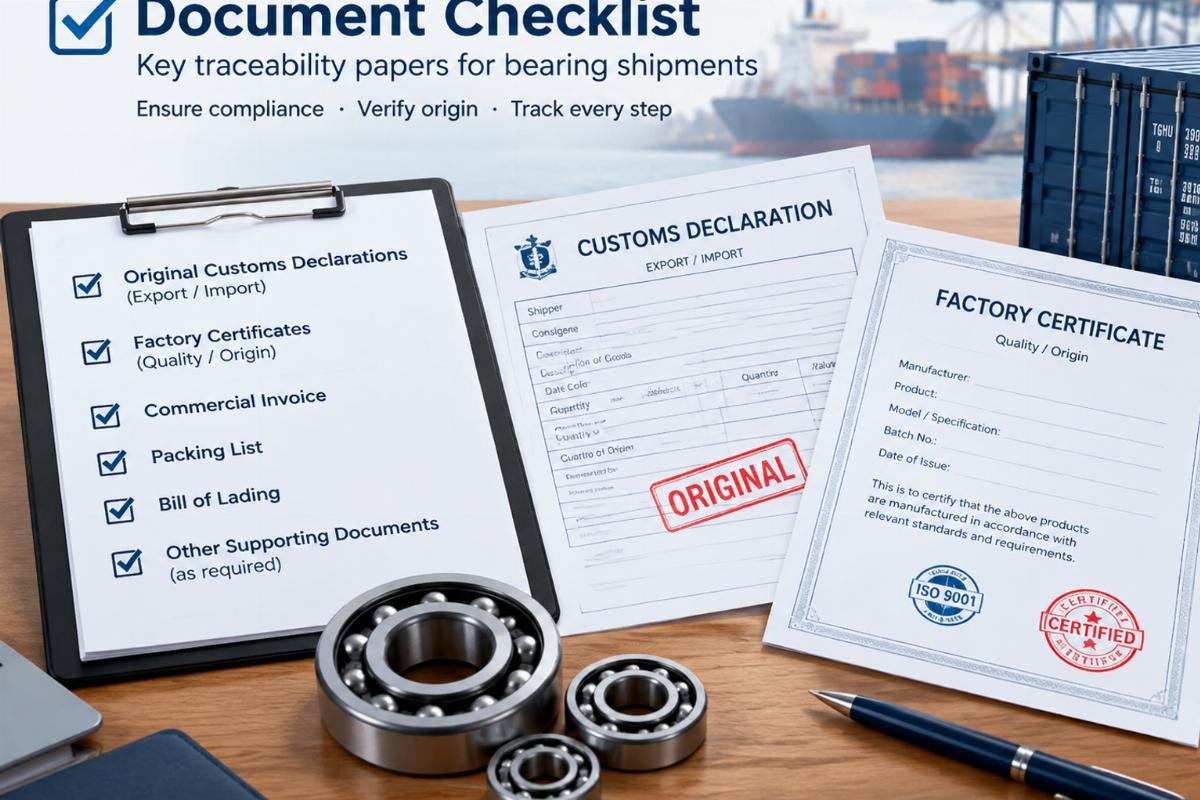
To avoid such pitfalls, procurement teams should implement a strict verification protocol. This includes cross-referencing part numbers with official brand catalogs and demanding digital copies of all relevant documents before payment is released. When dealing with industrial spare parts procurement Middle East, transparency is key. A reputable supplier will provide these documents willingly, as they have nothing to hide. This level of diligence ensures that every bearing installed in your facility is exactly what it claims to be, reducing the risk of receiving counterfeit goods.
What are the hidden costs of mixing genuine and fake batches?
A single failed non-genuine component can halt an entire production line, costing far more than the initial savings from cheaper parts.
The temptation to mix genuine and non-genuine bearings in a single order is strong, especially when trying to meet tight budgets. However, this practice introduces a weak link into an otherwise robust system. In a critical application, the failure of one inferior bearing can cause collateral damage to shafts, housings, and adjacent components. The cost of repairing this secondary damage, plus the lost production time, often exceeds the total value of the original order.
Consider a steel plant that experienced an emergency breakdown due to a mixed batch of bearings. A single counterfeit unit failed prematurely, causing a cascade of failures that halted production for days. The cost of air-freighting replacement parts and paying overtime for repair crews was substantial. This incident highlighted the false economy of mixing sources. The initial savings were negligible compared to the financial impact of the downtime.

For those managing MRO bearing demand 2026, the focus must shift from unit price to total cost of ownership. Reliable suppliers offer flexible minimum order quantities and mixed-brand packages that allow for cost-effective procurement without compromising on authenticity. By sourcing full-range genuine bearings from a trusted partner, operators can ensure consistency across their inventory. This approach minimizes the risk of unexpected failures and supports the long-term reliability of industrial assets.
Conclusion
Authenticity is the foundation of reliability in harsh industrial environments.
The 2026 surge in Middle East industrial projects requires a disciplined approach to spare parts procurement. Prioritizing traceable, genuine bearings over cheap alternatives prevents costly downtime and protects critical infrastructure. By verifying documentation and avoiding mixed batches, operators can ensure sustained performance and safety. Trust in verified supply chains is not just a best practice; it is an operational imperative.


