Genuine Bearings for Sugar Industry in Brazil & India – Wholesale Supplier
Choosing the cheapest option is the most expensive mistake a mill can make.
Selecting bearings for sugar mills in Brazil and India requires prioritizing load capacity, sealing integrity, and material durability over initial purchase price to avoid catastrophic downtime during the critical harvest season. Standard industrial bearings often fail under the unique combination of high radial loads, cane fiber contamination, and extreme humidity found in these regions. The correct specification involves heavy-duty spherical or cylindrical roller bearings with robust sealing solutions and appropriate internal clearances to handle thermal expansion and shock loads.
I still remember the smell of burnt grease and crushed cane that hung in the air of a processing plant in São Paulo. It was not just the scent of production; it was the smell of a failed bearing assembly that had seized mid-shift. The maintenance manager held a shattered outer ring in his hand, pointing at the spalling that looked like someone had taken a chisel to the steel. He had sourced what he thought were equivalent replacements from a low-cost supplier to save on the annual budget. The savings vanished within hours when the entire crusher line stopped. That silence on the factory floor is louder than any machine noise. It is a lesson learned in real-time: in the sugar industry, the bearing is not just a component; it is the heartbeat of the harvest. [NEED_CITE: common failure modes in heavy industrial crushing applications]

The transition from field to factory is brutal on mechanical components. Understanding why standard specs fail is the first step toward reliable procurement.
What Bearing Types Are Essential for Sugar Mill Rollers?
Spherical and cylindrical roller bearings dominate this application due to their ability to handle immense radial loads and misalignment.
Sugar cane crushers exert some of the highest radial forces in industrial machinery. The rollers must crush tough fibrous stalks continuously, creating shock loads that can exceed static ratings if not properly accounted for. Deep groove ball bearings, common in lighter applications, simply cannot survive this environment. The primary choices are spherical roller bearings, which accommodate shaft deflection and misalignment, and cylindrical roller bearings, which offer high radial load capacity in compact designs.
| Bearing Type | Load Capacity | Misalignment Tolerance | Sealing Complexity | Suitability for Crushers |
|---|---|---|---|---|
| Spherical Roller | Very High | High | Moderate to High | Excellent for main rollers |
| Cylindrical Roller | High | Low | Moderate | Good for supported ends |
| Deep Groove Ball | Low to Medium | Low | Low | Unsuitable for main crush zones |
| Tapered Roller | High | Adjustable | High | Used in specific gearboxes |
The choice between spherical and cylindrical often depends on the specific mill design and the expected shaft deflection. In many Brazilian mills, the sheer size of the cane stalks leads to uneven feeding, causing significant shaft movement. Spherical roller bearings absorb this misalignment without inducing premature edge loading on the rollers. [NEED_CITE: ISO standards for rolling bearing load ratings]
However, the type is only half the battle. The internal construction matters. A standard cage design may not withstand the vibration levels of a high-throughput crusher. Reinforced brass or steel cages are often necessary to prevent cage fracture under dynamic stress. I have seen cages disintegrate because the manufacturer used a stamped steel design where a machined brass cage was specified for heavy-duty service. The debris from the cage then circulates through the raceways, accelerating wear exponentially.
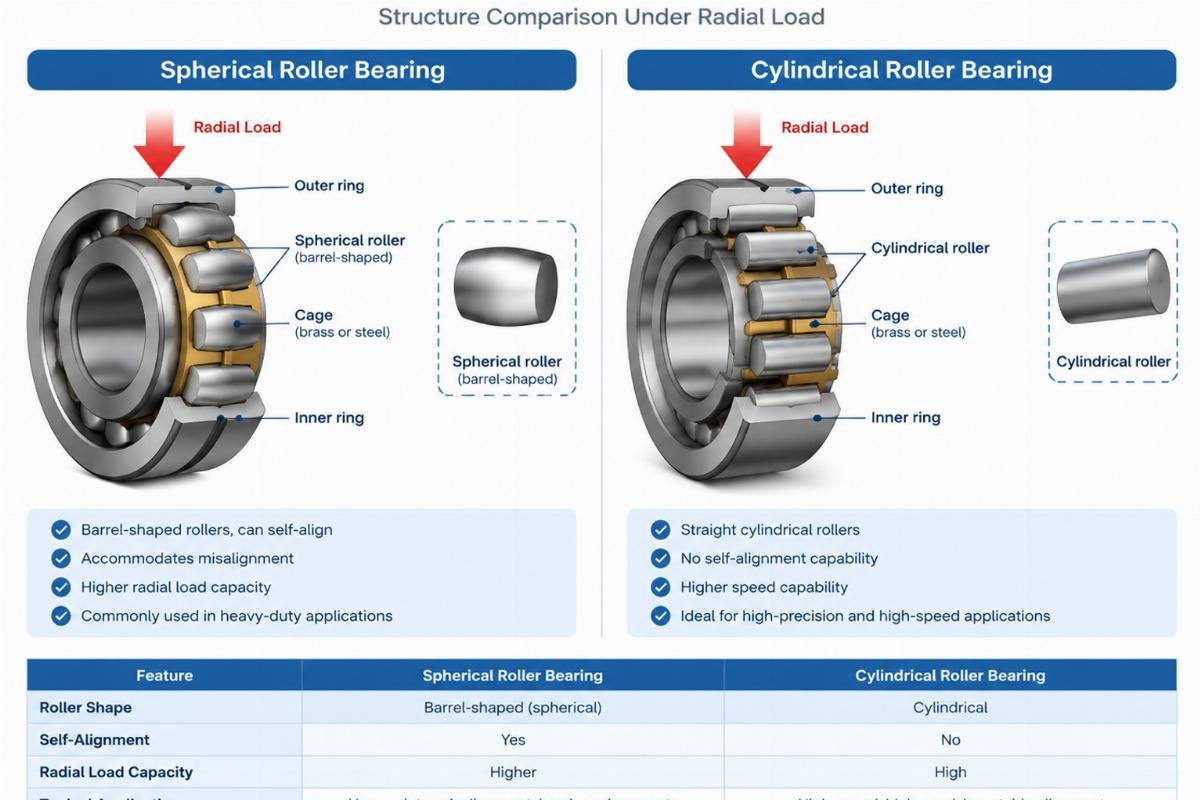
When sourcing bearings for sugar industry in Brazil and India, distributors must verify the cage material and roller profile. These details are often omitted in generic catalogs but are critical for longevity.
How Do Brazil and India’s Harvest Conditions Dictate Specs?
High humidity and abrasive contaminants demand specific internal clearances and robust sealing solutions.
The operating environments in Brazil and India present distinct challenges that go beyond simple load calculations. Brazil’s harvest season often coincides with periods of high humidity, while Indian mills deal with intense heat and fine dust from dried cane residue. These conditions create a perfect storm for bearing failure if the specifications are not adjusted accordingly.
One of the most frequent errors is using standard internal clearance (C0 or CN) in high-temperature environments. As the bearing operates, friction generates heat, causing the inner ring to expand more than the outer ring. This reduces the internal clearance, potentially leading to preload and overheating. In hot climates like those found in many Indian sugar belts, C3 or even C4 clearances are mandatory to ensure the bearing retains sufficient operational clearance at running temperature. [NEED_CITE: ABMA guidelines for bearing internal clearance selection]
Sealing is equally critical. Cane juice is sticky, acidic, and laden with fine silica particles. Standard rubber seals may degrade quickly when exposed to these chemicals, allowing contaminants to enter the raceway. Double-lip seals with garter springs or labyrinthine sealing designs provide better protection. In some cases, mills in humid coastal regions of Brazil have reported rapid corrosion of standard carbon steel bearings. Here, specifying bearings with enhanced corrosion-resistant coatings or stainless steel components for external parts can extend service life significantly.
A case from a mill in Maharashtra illustrates this point. The maintenance team noticed repeated overheating in their crusher bearings despite using reputable brands. Upon inspection, it was revealed that the bearings had been installed with standard clearance. The ambient temperature combined with operational heat had eliminated the internal play, causing the rollers to bind. Switching to C3 clearance bearings resolved the issue, reducing operating temperatures noticeably.

When evaluating sugar mill roller bearings, buyers must ask suppliers about the available clearance options and seal materials. A one-size-fits-all approach does not work in these aggressive environments.
Why Do “Budget” Bearings Fail in Sugarcane Crushers?
Poor tolerances and inferior material quality lead to rapid spalling and catastrophic shaft damage.
The temptation to cut costs by purchasing non-genuine or lower-tier bearings is strong, especially when buying in bulk for multiple mills. However, the cost of a failed bearing is not just the price of the replacement part. It includes the downtime, the labor for emergency replacement, and potentially the damage to the shaft or housing. In the sugar industry, where harvest windows are tight, unplanned downtime can cost several times the savings achieved by buying cheaper components.
The primary difference between genuine premium bearings and budget alternatives lies in material purity and manufacturing precision. Premium brands use vacuum-degassed steel with controlled inclusion levels, which significantly improves fatigue life. Budget bearings often use standard electric furnace steel with higher inclusion counts. These inclusions act as stress concentrators, initiating cracks that lead to spalling under heavy loads. [NEED_CITE: metallurgical standards for bearing steel cleanliness]
Furthermore, geometric tolerances in budget bearings are often wider. This means the rollers may not share the load evenly, causing some rollers to carry disproportionate stress. This uneven loading accelerates wear and generates excessive heat. I once inspected a batch of bearings claimed to be from a top-tier brand but turned out to be counterfeits. The surface finish on the raceways was rough, visible even to the naked eye. Within weeks of installation, these bearings showed signs of micro-spalling, a precursor to total failure.
| Quality Attribute | Genuine Premium Brand | Budget/Counterfeit Alternative | Impact on Performance |
|---|---|---|---|
| Steel Purity | Vacuum-degassed, low inclusions | Standard furnace, higher inclusions | Higher fatigue resistance vs. early spalling |
| Surface Finish | Micron-level precision | Visible roughness | Lower friction/heat vs. accelerated wear |
| Cage Integrity | Machined brass/steel, reinforced | Stamped thin steel | Vibration resistance vs. cage fracture |
| Dimensional Accuracy | Tight tolerances | Wider tolerances | Even load distribution vs. uneven stress |
For MRO managers in Latin America and Asia, verifying the authenticity of heavy duty bearings for sugar industry applications is crucial. Requesting traceability documentation and checking packaging details can help avoid counterfeit products.

The risk extends beyond immediate failure. Poor-quality bearings can damage the shaft journal, requiring expensive machining or replacement of the entire roller assembly. This cascading effect makes the initial savings illusory.
How to Source Genuine, Heavy-Duty Bearings for Your Mill?
Traceability, mixed-brand consolidation, and technical support are key to reliable procurement.
Sourcing the right bearings involves more than just placing an order. It requires a partner who understands the technical nuances and can provide genuine products with full traceability. For regional distributors and MRO managers, finding a supplier who can consolidate orders from multiple premium brands simplifies logistics and ensures consistency in quality.
A reliable supplier should offer complete documentation, including certificates of origin and material test reports. This traceability is essential for verifying that the bearings meet the specified standards. Additionally, technical support is vital. Suppliers should be able to assist with cross-referencing part numbers, selecting appropriate clearances, and recommending sealing solutions based on specific operating conditions. [NEED_CITE: best practices for industrial bearing procurement and verification]
In emergency situations, lead time is critical. Having access to a supplier with substantial spot inventory allows for quick dispatch of urgent spare parts, minimizing downtime. Consolidating shipments from different brands into a single container can also reduce shipping costs and simplify customs clearance for international buyers.
Consider the experience of a distributor in Southeast Asia who needed to source a mixed batch of spherical roller bearings for several sugar mills. By working with a supplier who offered one-stop sourcing for multiple brands, they were able to secure genuine products with consistent quality and reduce their overall procurement time. The supplier’s ability to provide technical consultation on clearance selection helped prevent future overheating issues.
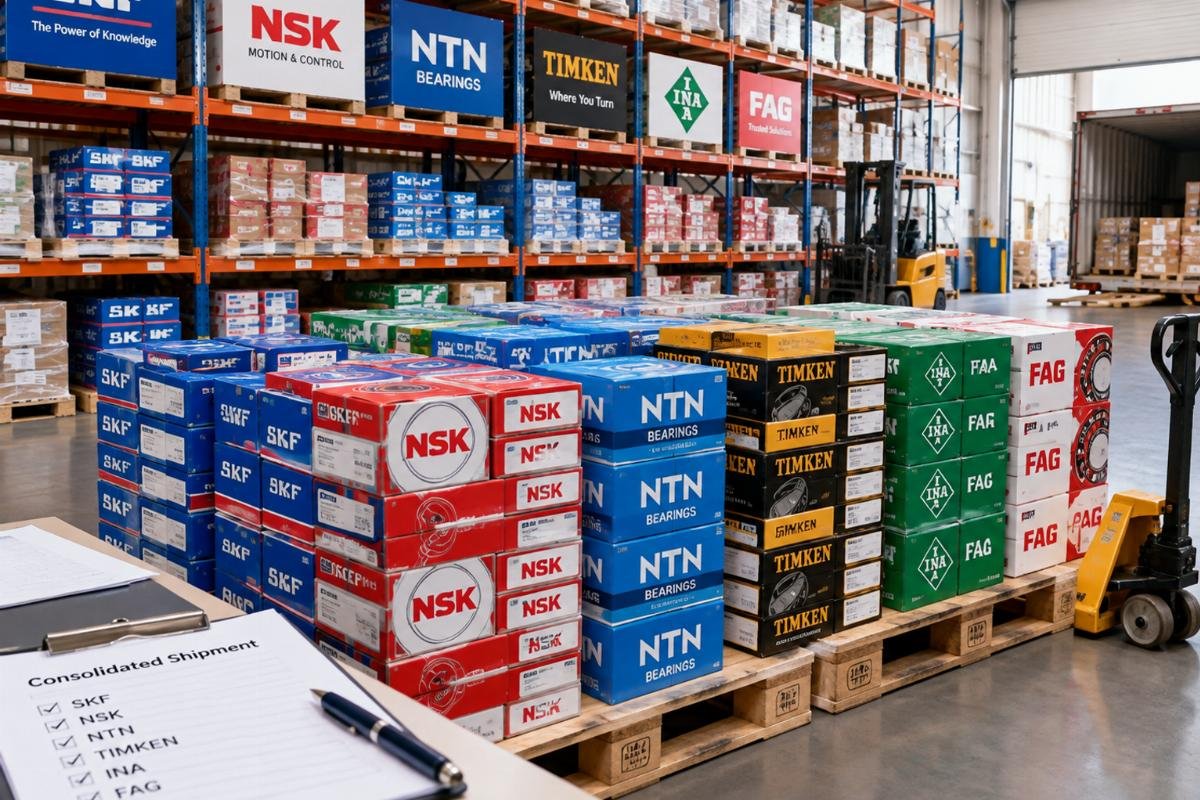
When looking for sugarcane crusher bearings Brazil India, prioritize suppliers who demonstrate technical expertise and commitment to authenticity. Ask for references, verify their inventory capabilities, and ensure they can provide the necessary documentation for customs and quality assurance.
Building a long-term relationship with a trustworthy supplier ensures that you have access to the right products when you need them most. This reliability is invaluable in an industry where every hour of downtime impacts the bottom line.
Conclusion
Reliability in sugar milling is built on precise specifications, not lowest prices.
Selecting the correct bearings for sugar mills in Brazil and India requires a deep understanding of load dynamics, environmental challenges, and material science. Prioritizing genuine quality, appropriate clearances, and robust sealing protects your operation from costly failures. Partnering with a knowledgeable supplier ensures access to authentic products and technical support, securing your harvest season against unexpected downtime.