
Genuine Bearings for Solar Plants in Middle East | Wholesale Supplier
Load capacity is not the primary failure point in desert solar trackers; thermal stability of lubrication is.
Selecting genuine bearings for solar plants in Middle East projects requires prioritizing high-temperature grease retention and full supply chain traceability over initial unit cost. The extreme ambient heat and intense solar radiation in this region accelerate lubricant degradation, leading to premature tracker stall if standard industrial bearings are used without modification. Furthermore, the prevalence of counterfeit or refurbished parts in regional distribution channels poses a severe risk to project longevity. Ensuring that every bearing comes with verifiable manufacturer documentation and is sourced from a supplier with strict inventory control is the only way to mitigate these risks.

The transition from procurement to operational reality is often where theoretical specifications meet harsh physical limits. I recall a specific instance involving a large-scale photovoltaic array where the tracking system ceased movement within months of commissioning. The initial assumption pointed toward mechanical overload or motor failure. However, upon inspection, the root cause was the complete desiccation of the lubricant inside the slewing bearings. The original specification had called for standard lithium-based grease, which could not withstand the sustained surface temperatures exceeding typical industrial limits. This experience underscores why selecting genuine bearings for solar plants in Middle East installations demands a deeper understanding of material science and supply chain integrity than merely matching dimensional drawings.
Why Do Solar Tracker Bearings Fail in the Desert?
Extreme ambient heat combined with reflective solar radiation creates a thermal environment that standard bearings cannot survive.
The failure mode of tracker bearings in arid regions is distinct from those in temperate climates. It is rarely a case of immediate catastrophic fracture due to static load. Instead, it is a progressive degradation driven by thermal stress. The primary culprit is the breakdown of the lubricant film. When the grease dries out or oxidizes, metal-to-metal contact increases, generating friction heat that further accelerates degradation. This cycle leads to scoring on the raceways and eventual seizure of the tracker mechanism. [NEED_CITE: common failure modes in high-temperature rotating applications per ISO 15243]
Another critical factor is the infiltration of fine particulate matter. Desert environments are rich in silica dust, which is highly abrasive. If the bearing seals are not designed for such conditions, or if the grease consistency is too soft due to heat thinning, dust penetrates the internal geometry. This acts as a grinding paste, rapidly wearing down the rolling elements.
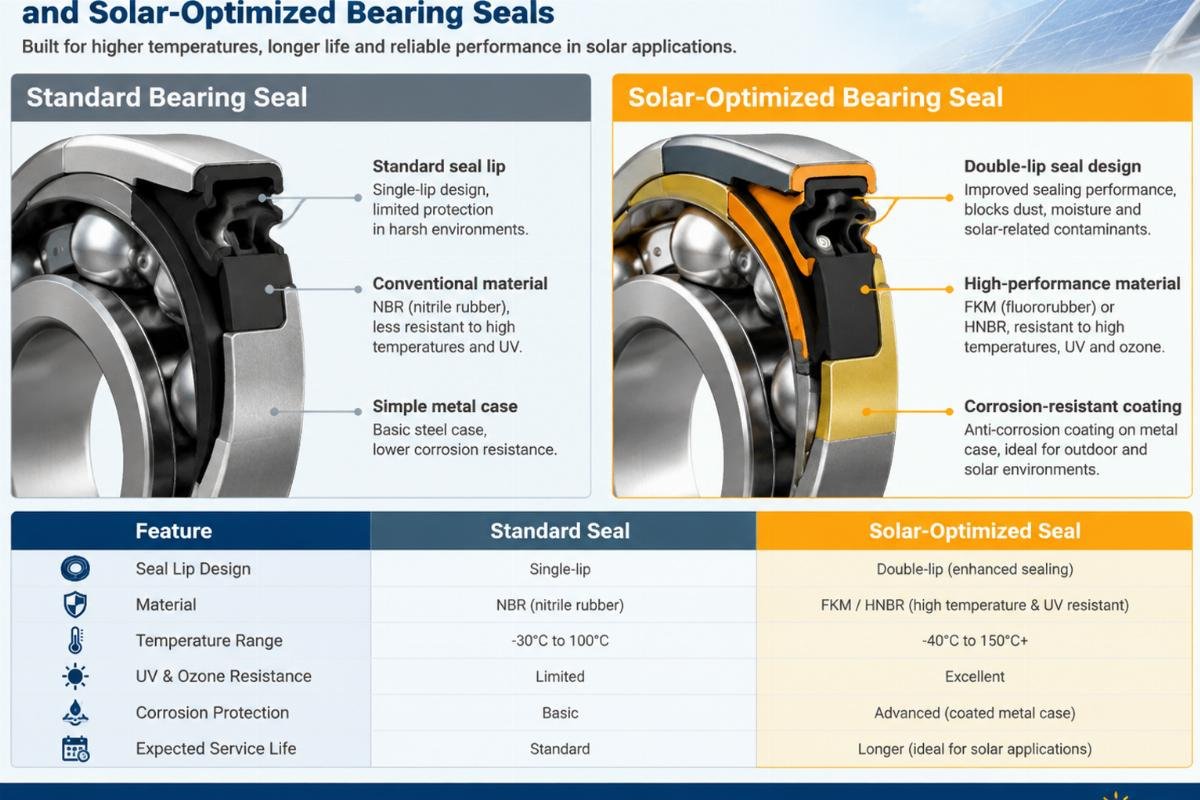
I have seen numerous cases where buyers opted for lower-cost alternatives, assuming that the load ratings were identical to premium brands. What they overlooked was the quality of the steel and the precision of the sealing systems. Counterfeit parts often use inferior steel with higher inclusion levels, making them prone to spalling under cyclic loads. Additionally, the seals on fake bearings are frequently made from non-standard rubber compounds that harden and crack under UV exposure and heat, losing their protective function entirely.

The misconception that higher load capacity equals longer life is dangerous in this context. A bearing with a high dynamic load rating but poor thermal stability will fail faster than a moderately loaded bearing with excellent heat resistance. The key is balancing load capacity with thermal endurance. This is why specifying genuine bearings for solar plants in Middle East projects must involve a review of the lubricant specifications and seal materials, not just the bearing type.
How to Compare Bearing Specs for Solar Applications?
A specification matrix reveals that sealed, high-temperature variants outperform standard open bearings in desert conditions.
When evaluating options, it is essential to move beyond basic dimensional data. A comparative analysis of standard industrial bearings versus those optimized for solar tracking highlights critical differences in design features. The following table outlines the qualitative distinctions that matter most in high-heat environments.
| Feature | Standard Industrial Bearing | Solar-Optimized Sealed Variant |
|---|---|---|
| Lubricant Type | General purpose lithium | High-temperature synthetic or complex soap |
| Seal Material | Standard NBR rubber | Fluoroelastomer or high-temp resistant polymer |
| Steel Quality | Standard vacuum degassed | Enhanced cleanliness with controlled inclusions |
| Grease Fill | Standard volume | Optimized for thermal expansion and retention |
| Corrosion Resistance | Basic coating | Enhanced surface treatment for humidity/salt |
[NEED_CITE: technical guidelines for bearing selection in renewable energy applications]
The table above demonstrates that the “solar-optimized” variant is not just a marketing label but a functional necessity. The use of fluoroelastomer seals, for example, provides significantly better resistance to heat aging compared to standard nitrile rubber. This prevents the seal from hardening and cracking, which is a common entry point for dust and moisture.
A buyer once shared a story about a project where mixed batches of bearings were used due to supply constraints. The standard bearings failed within a year, while the solar-optimized units continued to operate smoothly. The cost of replacing the failed units, including labor and downtime penalties, far exceeded the initial price difference between the two types. This highlights the importance of consistency in sourcing.
It is also crucial to verify the grease specifications. Not all high-temperature greases are created equal. Some may resist heat but lack the necessary mechanical stability to stay in place under vibration. Others may offer good water resistance but degrade quickly under UV exposure if the seal fails. Consulting with a technical expert who understands these nuances is vital. When sourcing genuine bearings for solar plants in Middle East regions, ensure that the supplier can provide detailed datasheets for both the bearing and the lubricant.
How to Verify Bearing Authenticity Before Purchase?
Traceability documentation is the only reliable defense against counterfeit and refurbished parts.
The market for industrial bearings is flooded with counterfeit goods. These parts may look identical to genuine products but lack the metallurgical quality and precision engineering required for demanding applications. In some cases, sellers refurbish used bearings, clean them, and repackage them as new. These parts have already undergone stress cycles and may have microscopic damage that leads to early failure.
To avoid this trap, buyers must demand full traceability. This means obtaining documents that link the specific batch of bearings to the original manufacturer’s production records. Key documents include the certificate of conformity, material test reports, and packing lists that match the physical markings on the bearings and packaging. [NEED_CITE: best practices for anti-counterfeiting in industrial supply chains]
I have encountered situations where buyers received bearings with packaging that looked authentic but lacked the holographic security labels or unique serial numbers used by major brands. Upon closer inspection, the machining marks on the bearing rings were inconsistent, indicating lower-quality manufacturing processes. Such details are often missed during a quick visual check but are evident to trained eyes.

Verification steps should include checking the supplier’s authorization status. While many distributors claim to sell genuine products, only those with direct links to the manufacturer or authorized master distributors can guarantee authenticity. Requesting proof of this relationship is a standard part of due diligence. Additionally, inspecting the bearings upon arrival for any signs of repackaging, such as mismatched batch numbers or damaged seals, is crucial.
Sourcing genuine bearings for solar plants in Middle East projects requires a proactive approach to verification. Do not rely solely on the supplier’s word. Insist on documentation and perform random inspections if possible. This level of scrutiny may seem tedious, but it prevents the costly consequences of installing fake parts.
What Are the Best Sourcing Strategies for Middle East Projects?
Consolidated shipping and flexible minimum order quantities reduce lead times and inventory risks.
Procuring bearings for large-scale solar projects involves managing complex logistics. Delays in customs clearance or shipping can halt construction progress. Therefore, choosing a supplier who offers consolidated shipping services is advantageous. This allows buyers to combine orders for different bearing types and brands into a single shipment, simplifying customs documentation and reducing freight costs.
Flexibility in minimum order quantities (MOQs) is another critical factor. Projects often require urgent spare parts for maintenance or replacements due to installation errors. A supplier who can accommodate small-batch orders without excessive penalties provides valuable operational flexibility. This is particularly important for remote sites where holding large inventories is impractical.
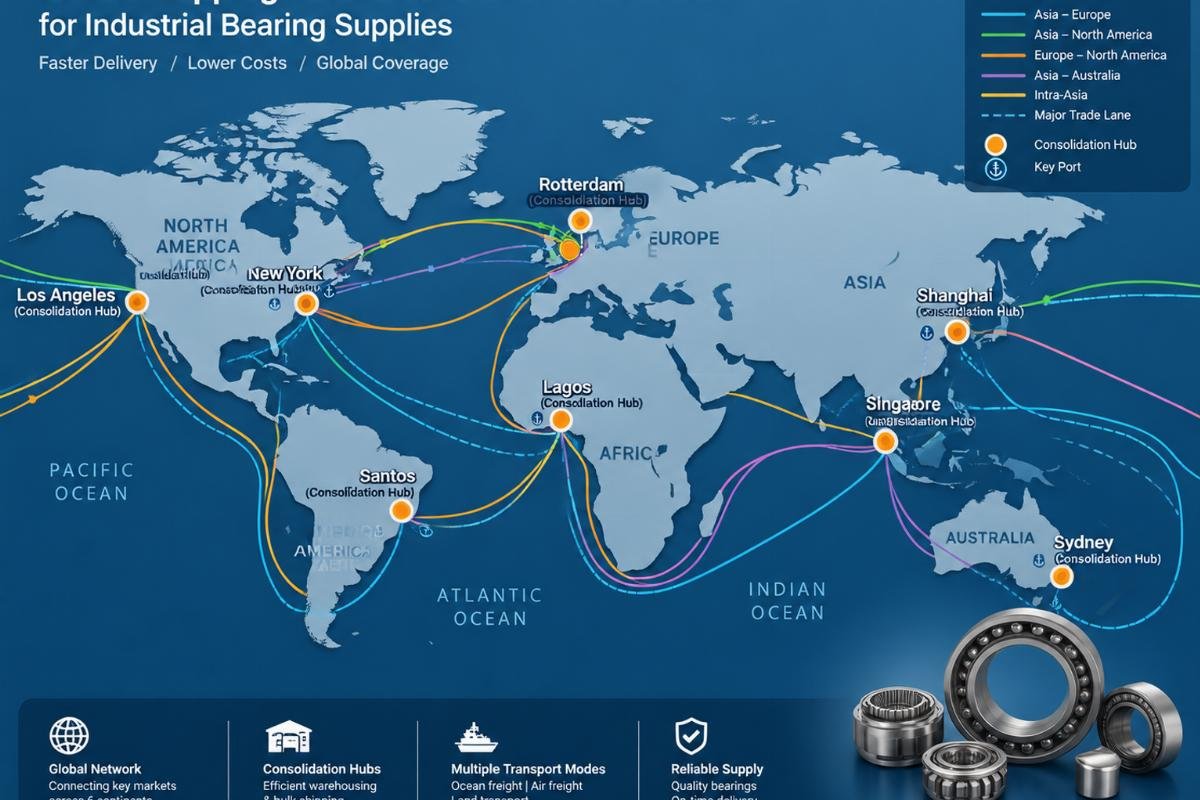
Technical support during the selection phase is also a key benefit of working with experienced suppliers. They can help identify equivalent models from different brands if a specific part is unavailable, ensuring that the substitute meets the required specifications. This cross-brand consultation capability saves time and prevents procurement bottlenecks.
When evaluating potential partners, consider their inventory depth. A supplier with a massive spot inventory of standard and special part numbers can fulfill orders quickly, reducing the risk of project delays. This is especially relevant for genuine bearings for solar plants in Middle East markets, where local availability of specific high-temperature variants may be limited.
Building a long-term relationship with a reliable supplier ensures consistent quality and priority service. This strategic approach to sourcing mitigates the risks associated with supply chain disruptions and quality variability. It transforms procurement from a transactional activity into a value-added component of project management.
Conclusion
Prioritize thermal stability and traceability over initial cost when selecting tracker bearings.
Success in desert solar projects depends on recognizing that extreme heat dictates bearing performance more than load capacity alone. By insisting on verified genuine components and understanding the specific lubrication needs of the environment, operators can avoid catastrophic failures. Secure your supply chain with partners who provide full documentation and technical expertise to ensure long-term reliability.


