Genuine Bearings for Rice Mills in Southeast Asia Wholesale Supplier
Standard size matching is not enough to keep a rice mill running.
To prevent catastrophic failure in Southeast Asian rice mills, you must prioritize advanced contact sealing and specific lubrication strategies over basic dimensional tolerances. The extreme fine dust from rice husks bypasses standard shields, requiring genuine bearings with verified traceability and robust seal integrity to ensure operational continuity.
The air in the Mekong Delta does not just smell of harvest; it carries a fine, abrasive powder that finds its way into every mechanical crevice. I remember standing in a humid workshop near Can Tho, watching a technician pull apart a main shaft assembly that had failed after only three months. The expected lifespan was twelve months. Inside the housing, the bearing cage was deformed, twisted by the pressure of compacted rice bran that had slipped past a non-contact shield. That incident was not an anomaly. It was a textbook example of why selecting Genuine Bearings for Rice Mills in Southeast Asia Wholesale Supplier solutions requires a shift in focus from simple part numbers to environmental defense mechanisms. [NEED_CITE: common failure modes in agricultural machinery due to particulate ingress]
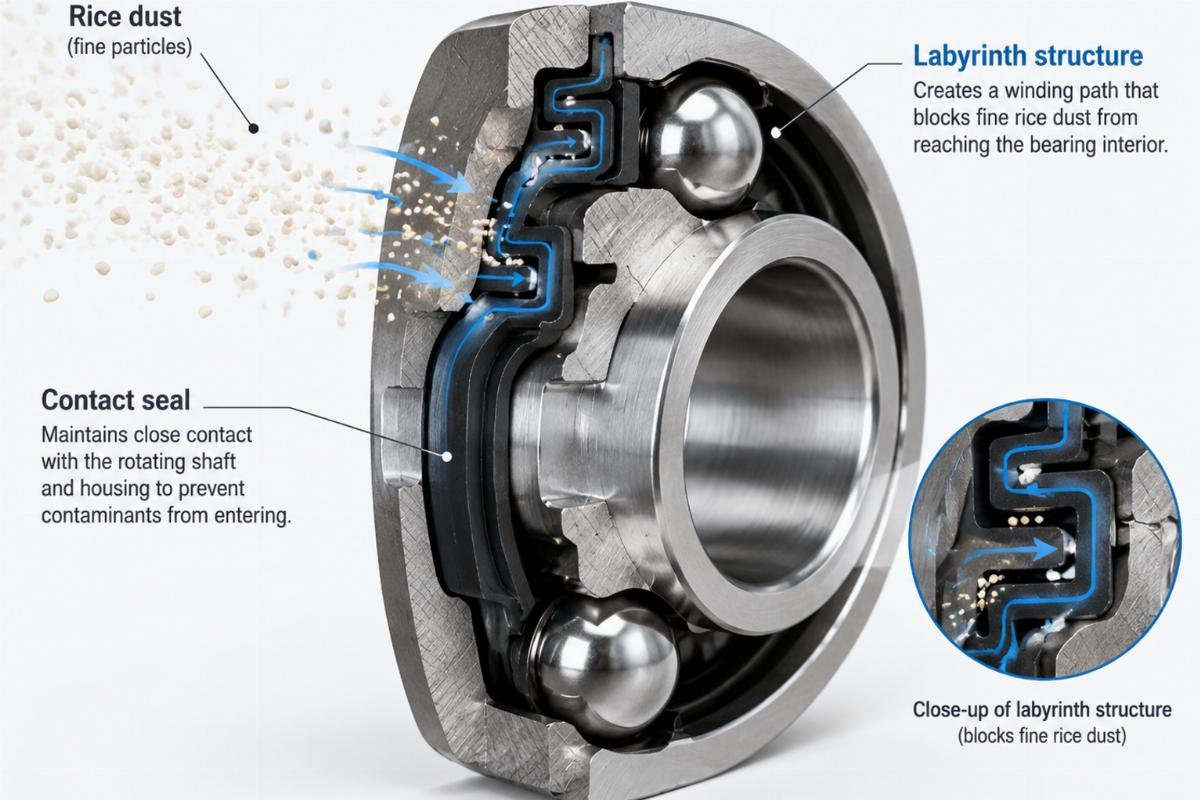
Understanding this distinction is critical for distributors and MRO operators who face the brunt of client complaints when equipment stops. The following analysis breaks down the technical requirements for surviving these harsh conditions, drawing from field observations and industry standards.
Why Do Standard Bearings Fail in Rice Mills?
Extreme husk dust bypasses basic shields, destroying internal geometry.
In many procurement discussions, the conversation starts and ends with dimensions. If the inner diameter, outer diameter, and width match the OEM specification, the part is deemed suitable. This approach ignores the primary antagonist in rice milling: organic dust. Rice husk powder is not merely dirt; it is a fine, hygroscopic particulate that can penetrate gaps measured in microns. When this dust enters a bearing raceway, it acts as an abrasive paste, accelerating wear on the balls and races while disrupting the lubricant film.
I have seen main shafts where the vibration levels spiked noticeably within weeks of installation. Upon inspection, the grease had turned into a dark, gritty sludge. The standard open or lightly shielded bearings used in general industrial applications lack the defensive architecture needed here. The dust infiltrates the rolling elements, causing micro-pitting and eventual spalling. This is not a defect in the steel quality but a mismatch between the component design and the operating environment. [NEED_CITE: impact of abrasive contaminants on bearing fatigue life]
For those sourcing Genuine Bearings for Rice Mills in Southeast Asia Wholesale Supplier inventory, recognizing this failure mode is the first step toward reducing unplanned downtime. It explains why a bearing from a reputable brand might still fail prematurely if the wrong variant is selected. The issue is rarely the core material but the interface between the rotating and stationary parts. Without adequate protection, even the highest grade steel will succumb to the relentless abrasion of rice processing.

Contact Seals vs. Non-Contact Shields: Which Wins?
Contact seals are mandatory to block fine rice bran powder.
The debate between contact seals and non-contact shields is often settled by cost considerations in initial procurement. However, in the context of rice milling, this is a false economy. Non-contact shields, typically made of thin metal, rely on a small gap to keep contaminants out. They offer low friction but provide minimal protection against fine powders. In contrast, contact seals, usually made of rubber or synthetic polymers, press against the inner ring to create a physical barrier.
Consider the case of an elevator bucket system in a large milling facility. The bearings here are subjected to constant exposure to airborne dust. When fitted with non-contact shields, the units experienced seizure due to poor grease retention and dust ingress. The operating temperature spiked noticeably, leading to thermal expansion and lock-up. Switching to bearings with robust contact seals resolved the issue. The slight increase in friction is negligible compared to the benefit of keeping the lubricant inside and the dust outside. [NEED_CITE: sealing effectiveness comparison for agricultural applications]
| Feature | Non-Contact Shield | Contact Seal |
|---|---|---|
| Dust Protection | Vulnerable to fine powder | Robust against organic dust |
| Friction Level | Low | Moderate |
| Grease Retention | Basic | Full batch-level |
| Suitability for Rice Mills | Not Recommended | Mandatory |
This comparison highlights why specifying the correct seal type is crucial when ordering Genuine Bearings for Rice Mills in Southeast Asia Wholesale Supplier products. For distributors, stocking variants with contact seals ensures that clients receive components capable of withstanding the specific challenges of their environment. It is not about selling a more expensive item but providing a solution that aligns with the operational reality of the mill.

Lubrication Strategies for High-Dust Environments
Grease selection and relubrication intervals dictate bearing life.
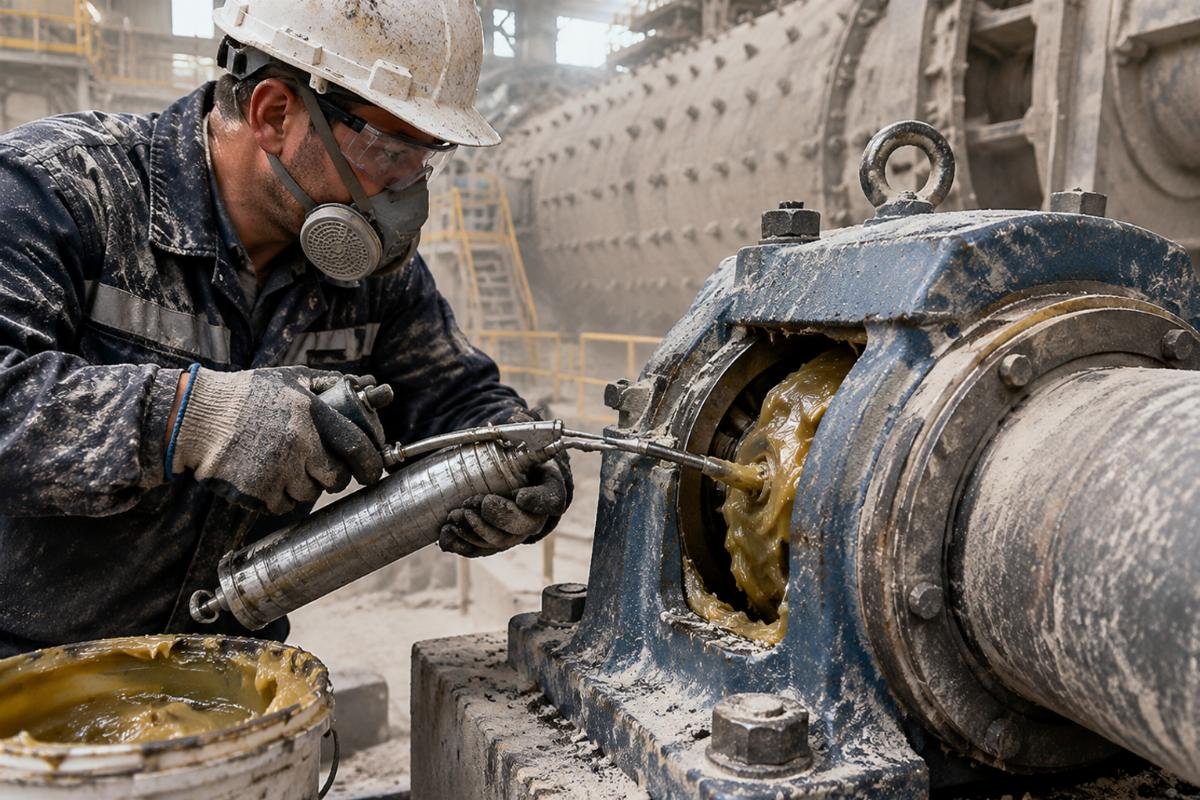
Even the best seal cannot function indefinitely without proper lubrication. The grease inside a bearing serves two purposes: reducing friction and flushing out minor contaminants. In rice mills, the choice of grease is critical. Standard lithium-based greases may wash out or degrade when exposed to the organic acids present in rice husks. Furthermore, if the grease is too soft, it can be pushed out by the heat generated during operation, leaving the bearing dry.
I recall a polisher roller application where frequent bearing replacements were driving up maintenance costs. The issue was not the bearing itself but the lubricant. The original grease had poor resistance to water and dust, leading to rapid washout. By switching to a high-viscosity, adhesive grease compatible with organic dust, the service life extended meaningfully. The key is to select a lubricant that remains stable under shock loads and resists being displaced by external contaminants. [NEED_CITE: grease compatibility with organic agricultural dust]
Relubrication intervals also need adjustment. In clean environments, bearings might go months without attention. In a rice mill, regular purging of old grease and injection of fresh lubricant can help flush out any particles that have managed to bypass the seal. This proactive maintenance strategy is essential for maximizing the return on investment for Genuine Bearings for Rice Mills in Southeast Asia Wholesale Supplier components. It transforms the bearing from a disposable item into a durable asset.
How to Verify Genuine Bearings for Agricultural Use
Traceability and authorized sourcing prevent counterfeit failures.
The market for industrial components is flooded with counterfeits that look identical to genuine products but lack the metallurgical integrity and precision engineering. For a rice mill operator, a counterfeit bearing is a ticking time bomb. These inferior parts often use lower-grade steel and inadequate heat treatment, making them prone to early failure under heavy loads. Verifying authenticity is not just a bureaucratic step; it is a risk management imperative.
A European wind farm operator once faced a similar issue with counterfeit components, leading to a mid-six-figure loss in repairs and downtime. While the scale is different, the principle applies to rice mills. Counterfeit bearings may pass visual inspection but fail under stress. To avoid this, buyers must demand complete traceability documentation. This includes certificates of origin, batch numbers, and verification from authorized distributors. [NEED_CITE: economic impact of counterfeit bearings in industrial sectors]
When sourcing Genuine Bearings for Rice Mills in Southeast Asia Wholesale Supplier stock, look for suppliers who provide full documentation. This ensures that every unit can be traced back to the manufacturer’s production facilities. It also guarantees that the bearings meet international standards for quality and performance. For distributors, offering this level of transparency builds trust with clients who are tired of guessing whether their spare parts are real. It positions the supplier as a partner in reliability rather than just a vendor of boxes.

Conclusion
Sealing and lubrication define survival in rice mills.
Selecting the right bearings for Southeast Asian rice mills requires looking beyond basic dimensions to address the root causes of failure. Extreme dust demands contact seals, while harsh conditions require specialized lubrication and verified authenticity. By focusing on these technical details, operators and distributors can significantly reduce downtime and maintenance costs. Sourcing Genuine Bearings for Rice Mills in Southeast Asia Wholesale Supplier solutions with these criteria in mind ensures long-term operational stability.