Brazil Bearing Import Guide: Licenses, Taxes & Wholesale Supplier
CIF is not the final cost. Assuming the invoice value represents your total landed expense in Brazil is a critical error that leads to severe budget overruns and port congestion.
Smooth bearing import to Brazil requires proactive license acquisition via SISCOMEX and precise calculation of cascading taxes (II, IPI, PIS, COFINS, ICMS) to prevent port delays and hidden financial losses. Without prior approval of the Import License (LI) and accurate NCM code classification, shipments face indefinite holds, resulting in rust damage and demurrage fees that far exceed the initial product value.
I still recall the silence on the phone when a long-term client in Santos realized his container of spherical roller bearings had been sitting on the dock for eight months. The防锈 paper had disintegrated due to humidity, turning high-precision components into scrap metal. The root cause was not a defective product or a shipping error, but a missing administrative step: the Import License was not secured before the vessel departed. This incident underscores a harsh reality in Latin American trade [NEED_CITE: common causes of customs clearance delays in Brazil]. Navigating the Brazilian regulatory landscape demands more than just finding a competitive price; it requires a deep understanding of bureaucratic prerequisites and tax structures.
Understanding these hurdles is the first step toward securing reliable supply chains. Let us break down the specific requirements that govern this complex market.
What licenses are required to import bearings?
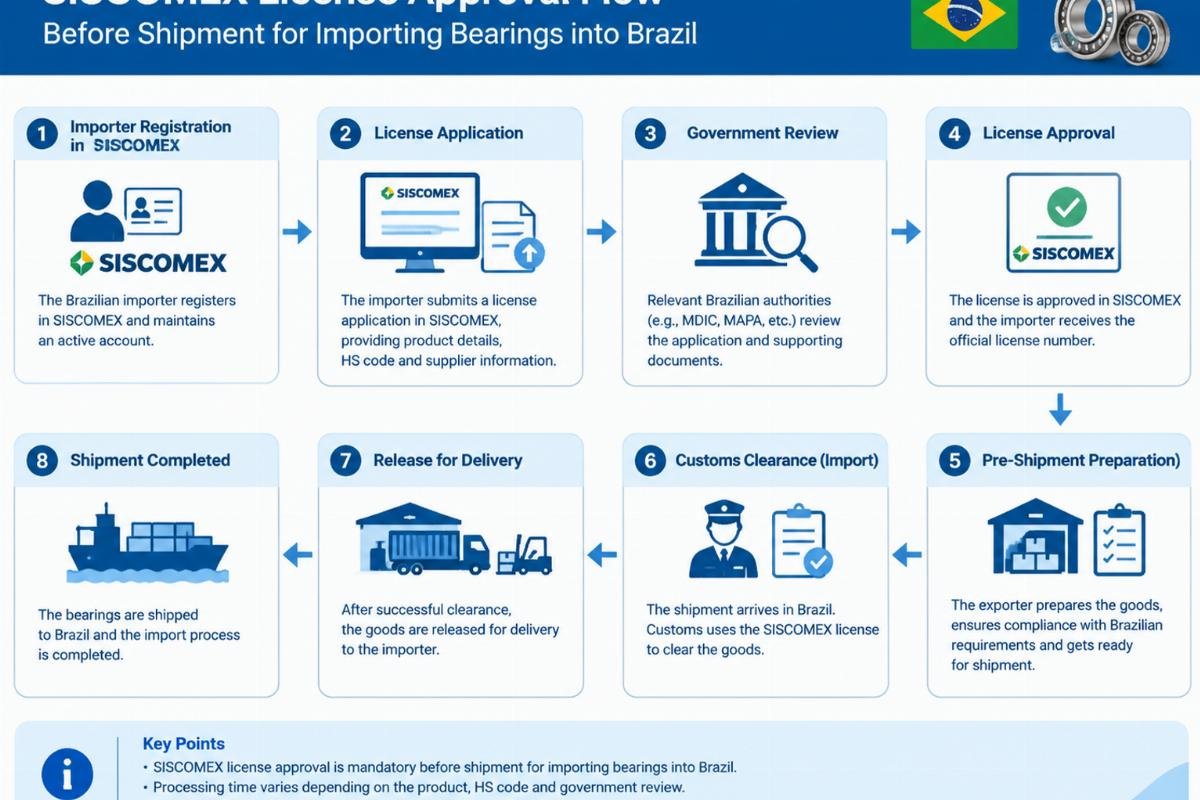
Prior LI approval via SISCOMEX is mandatory before shipping. Many international suppliers assume that a commercial invoice and packing list are sufficient for customs entry, but Brazil operates under a strict pre-shipment authorization system.
The Import License (Licença de Importação – LI) must be registered and approved in the SISCOMEX system before the goods are loaded onto the vessel. This requirement applies to most industrial bearings, including deep-groove ball bearings, cylindrical roller bearings, and tapered roller bearings. The process involves classifying the products under the correct NCM (Nomenclatura Comum do Mercosul) code. An incorrect NCM code can lead to immediate rejection of the LI application or severe penalties upon arrival [NEED_CITE: NCM code classification rules for mechanical bearings].
A distributor in São Paulo once attempted to bypass this by declaring a mixed batch of needle bearings and thrust bearings under a generic machinery code. The Federal Revenue (Receita Federal) flagged the discrepancy during the documentary analysis phase. The cargo was held for weeks while the importer scrambled to correct the classification, incurring storage costs that erased their profit margin. This highlights the importance of accurate technical documentation from the source.
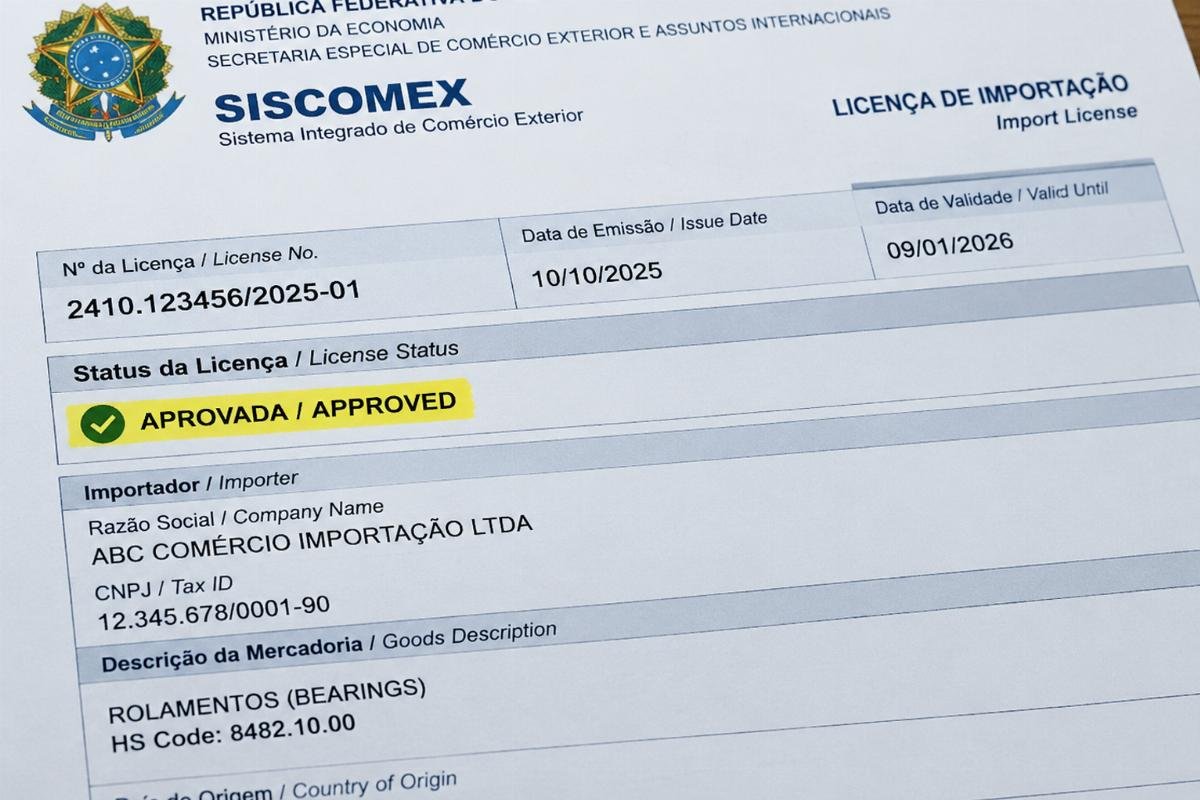
To avoid such pitfalls, ensure your supplier provides detailed technical datasheets that align with the NCM descriptions. The LI process verifies the legitimacy of the transaction and ensures compliance with MDIC regulations. Without this digital green light, the physical cargo remains in limbo, vulnerable to the elements and administrative inertia.
How are import taxes calculated for bearings?
Understand the cascading tax structure to forecast landed costs. A common misconception among new entrants is that the import duty (II) is the only significant tax. In reality, Brazil employs a cumulative tax system where each tax is calculated on top of the previous ones, drastically inflating the final cost.
The primary taxes involved in importing bearings include:
- II (Imposto de Importação): Import Duty, based on the NCM code.
- IPI (Imposto sobre Produtos Industrializados): Tax on Industrialized Products.
- PIS/COFINS: Social Contribution taxes.
- ICMS (Imposto sobre Circulação de Mercadorias e Serviços): State Value-Added Tax, which varies by state and is calculated on the total value including all other taxes.
This cascading effect means that a seemingly low import duty can result in a much higher effective tax rate. For instance, if the II is 14%, the IPI might add another 15% on the base plus II, and then ICMS is applied to the sum of all preceding values. This complexity often leads to underestimation of the landed cost by a significant margin [NEED_CITE: Brazilian cascading tax calculation methodology for industrial parts].
A mining operation in Minas Gerais faced a cash flow crisis when they realized the ICMS component alone added a double-digit percentage to their budget, which had been calculated using simple additive logic. Proper financial planning requires a detailed breakdown of these layers. Suppliers who understand this structure can assist in providing accurate proforma invoices that reflect the true fiscal burden, allowing buyers to price their resale products competitively.
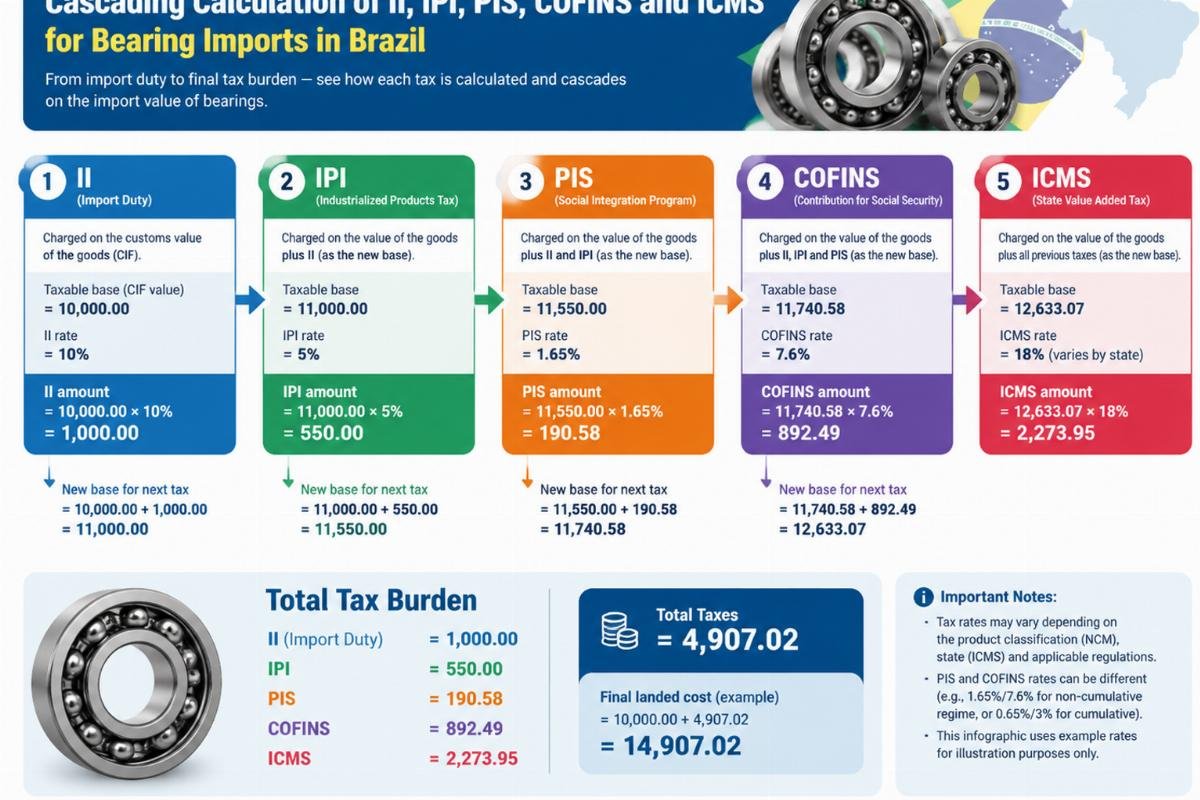
Accurate tax forecasting is not just about compliance; it is about survival in a competitive market. Ignoring the cumulative nature of these levies can turn a profitable deal into a financial loss.
What documents prevent customs clearance delays?
Complete traceability and NCM alignment avoid port demurrage. Customs officials in Brazil are meticulous regarding documentation. Any inconsistency between the physical goods, the commercial invoice, and the LI can trigger a rigorous inspection, leading to lengthy delays.
Essential documents include:
- Commercial Invoice: Must detail the NCM code, unit price, total value, and Incoterms clearly.
- Packing List: Must match the invoice exactly in terms of weight, dimensions, and item counts.
- Certificate of Origin: Required to claim any preferential tariff rates if applicable under trade agreements.
- Technical Datasheets: Provide proof of the bearing type and specifications, supporting the NCM classification.
Traceability is increasingly critical. Buyers need to verify that the bearings are genuine and meet specific industry standards. Documents proving the origin of the steel or the manufacturing process can expedite the clearance process by establishing credibility. A lack of such documentation often raises suspicions of counterfeit goods, leading to even stricter scrutiny [NEED_CITE: documentation requirements for anti-counterfeit verification in Brazilian customs].
Consider a case where a shipment of angular contact ball bearings was held because the packing list did not specify the internal clearance class (e.g., C3). The customs agent could not verify if the goods matched the LI description, which specified precision-grade components. The delay lasted several weeks, during which demurrage charges accumulated daily. Ensuring that every document is cross-referenced and complete before shipment is the best defense against such operational disruptions.

Attention to detail in paperwork is as important as the quality of the bearings themselves. A single typo can cost thousands in fees and lost time.
How to choose a reliable bearing supplier for Brazil?
Partner with suppliers experienced in Brazilian documentation and mixed-brand consolidation. Finding a vendor who simply stocks bearings is not enough. You need a partner who understands the intricacies of exporting to Brazil, from NCM coding to the preparation of LI-supporting documents.
A reliable supplier should offer:
- Genuine Products with Traceability: Ensuring that all bearings, whether from premium global brands like SKF, FAG, NSK, or TIMKEN, or reliable domestic lines, come with full documentation.
- Mixed-Brand Consolidation: The ability to combine different brands and types in a single container. This reduces shipping costs and simplifies logistics for distributors who need a wide variety of SKUs.
- Technical Support: Assistance in selecting the correct NCM codes and providing detailed datasheets that satisfy Brazilian customs requirements.
Many distributors struggle with sourcing small batches of urgent spare parts alongside large project orders. A supplier with massive spot inventory and flexible MOQs can bridge this gap, ensuring that maintenance schedules are not disrupted by supply chain bottlenecks. Furthermore, experience in consolidating global shipments means the supplier knows how to pack and document mixed loads to prevent damage and customs issues.
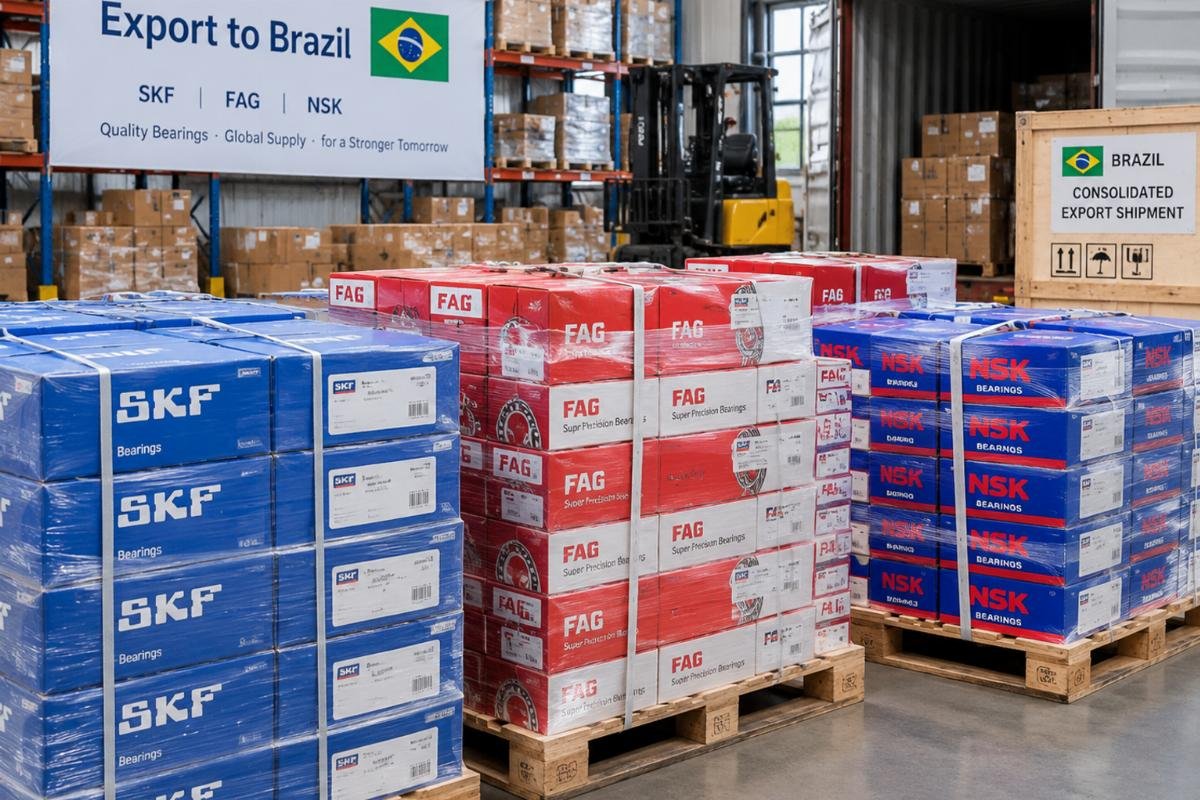
Choosing the right partner mitigates risk. It transforms the complex task of importing bearings into a streamlined process, allowing you to focus on distribution and customer service rather than firefighting customs problems.
Conclusion
Proactive compliance and accurate tax planning are non-negotiable for success. Importing bearings into Brazil is a high-stakes endeavor where administrative precision dictates financial outcome. By securing the Import License early, understanding the cascading tax implications, and maintaining flawless documentation, buyers can avoid the costly pitfalls of port delays and damaged goods. Partnering with a knowledgeable supplier who specializes in mixed-brand consolidation and regulatory compliance further ensures a smooth and profitable supply chain.