
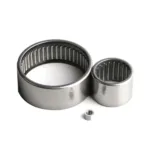


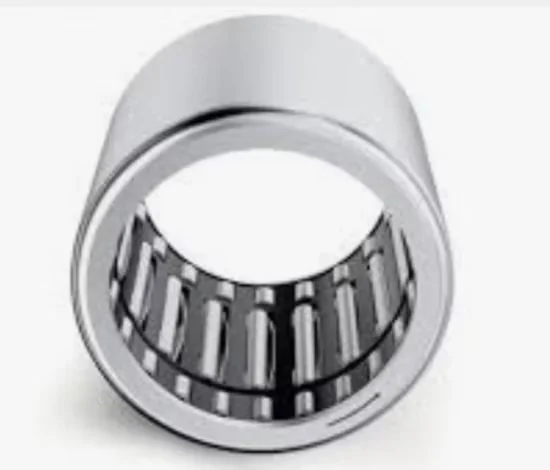

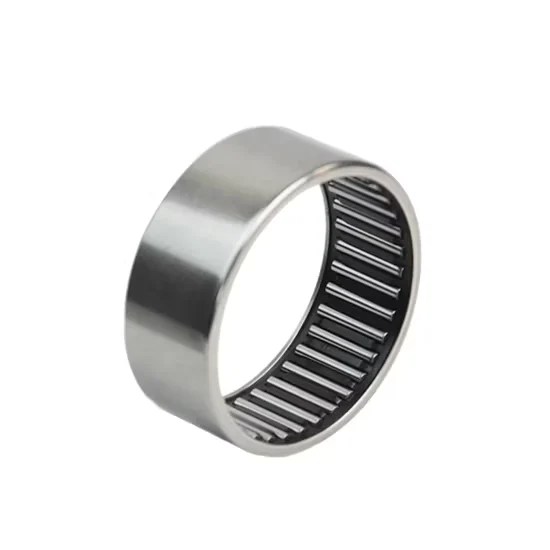


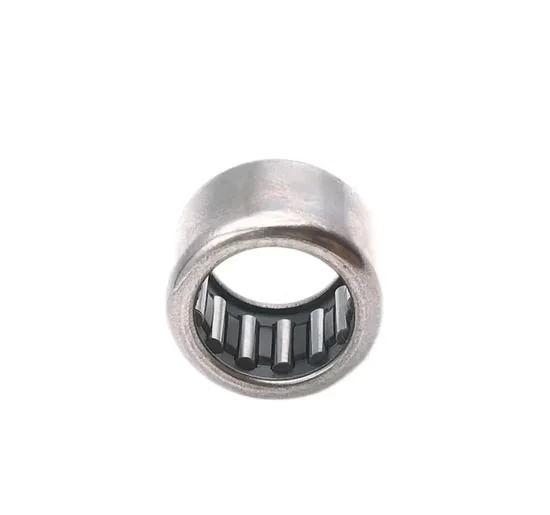


Rpna15/28 18/32 20/35 Needle Roller Bearing Wholesale Supplier
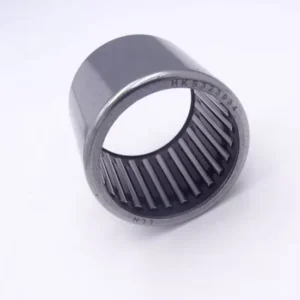
Rpna15/28 18/32 20/35 25/42 28/44 30/47 Needle Roller Bearing P0/P6/P5 — Machined from chrome steel, this single-row, without-cage full complement design maximizes radial load capacity in restricted spaces.
- Offered in P0, P6, and P5 precision ratings to meet specific dimensional accuracy requirements.
- Ensure cross-reference alignment for clearance, cage type, and precision class when replacing OEM parts.
Original Packaging
Factory sealed
Batch Traceability
Per-piece tracking
Pre-Ship Inspection
Photo & video proof
12-Month Warranty
Quality guaranteed
Technical Specifications
| Bearing Type | Needle Roller Bearing |
|---|---|
| Condition | New -- Original Packaging |
Need this bearing?
Get a verified quotation
Pricing, stock photos & batch codes — reply within 24 hours.
- Original packaging & batch codes
- Photo & video before shipment
- Mixed-brand orders welcome
Product Description
Multi-Brand Sourcing Consolidated — Fulfill mixed-brand MRO packages from a single supply chain without coordinating multiple vendors.
Technical Specifications
| Parameter | Value |
|---|---|
| Designation | Rpna15/28 18/32 20/35 25/42 28/44 30/47 |
| Bearing Type | Needle Roller Bearing |
| Cage Material | Without Cage (Full Complement) |
| Rows Number | Single |
| Material | Chrome Steel |
| Type | Closed |
| Precision Rating | P0 / P6 / P5 |
| Feature | High Speed Low Noise |
Rpna is an unverified suffix requiring manufacturer catalog confirmation for exact dimensional cross-referencing.
Application Suitability
| Industry | Typical Applications |
|---|---|
| Machine tools | Spindle support and compact transmission shafts |
| Pumps & reducers | High-speed input shafts and compact gear assemblies |
| General manufacturing MRO | Replacement for worn needle bearings in automated production lines |
Why Shaft Hardness Dictates the Survival of Your Rpna15/28 needle roller bearing
A full-complement needle bearing will rapidly destroy an unhardened shaft journal.
Early in my career on the shop floor in Suzhou, I watched a textile machine seize completely because the shaft journal lacked proper surface hardening. The uncaged rolling elements carved deep grooves into the soft steel within weeks, leading to catastrophic unplanned downtime. Sourcing the right component is only half the battle; verifying the mating surface hardness is what actually keeps the assembly running. When maintenance teams ignore this fundamental metallurgical requirement, they inevitably face repeated breakdowns. A full-complement design concentrates immense stress on a microscopic contact area, meaning any compromise in the shaft’s heat treatment will immediately manifest as severe abrasive wear.

Matching Full-Complement Designs to Restricted Radial Spaces
When dealing with compact gearboxes or pump assemblies, radial space is severely limited. The Rpna15/28 needle roller bearing eliminates the cage to maximize the number of rolling elements, significantly boosting load capacity within a tight envelope. Our engineering team routinely helps MRO clients transition from caged variants to this full-complement design when shock loads increase, ensuring the cross-referenced model aligns with the actual operational demands. By removing the cage, the bearing achieves a much higher static and dynamic load rating, making it indispensable for heavy-duty oscillating mechanisms or slow-rotating shafts where radial space constraints prohibit the use of larger, caged cylindrical roller bearings.
Navigating Lubrication and Alignment Demands in High-Speed Applications
Operating without a cage means the rolling elements rub against each other, generating additional friction and heat at elevated speeds. This design strictly requires continuous, high-quality lubrication to prevent surface smearing and premature wear. Furthermore, any misalignment during installation will concentrate stress on the edge of the needles, making precise shaft tolerance and rigorous alignment checks absolutely critical for long-term reliability. In environments where dust or moisture is prevalent, the lack of an integrated seal in many open needle designs necessitates robust external sealing solutions to prevent contaminant ingress, which would otherwise act as a grinding paste between the rubbing rollers.
Decoding Precision Classes and Material Options for Needle Bearings
Selecting between P0, P6, and P5 precision ratings directly impacts the running accuracy and noise levels of your high-speed spindle or reducer. While P0 suffices for general power transmission, P5 is essential for machine tool applications where minimal radial runout is non-negotiable. The chrome steel construction provides excellent core hardness and wear resistance, though for highly corrosive environments, clients can explore available stainless steel variants. Understanding these tolerance classes prevents overspending on unnecessary precision while avoiding catastrophic vibrations in sensitive equipment. Additionally, the closed type construction helps retain lubrication and exclude large debris, but engineers must still evaluate the specific thermal expansion characteristics of the housing to ensure the outer ring does not creep under heavy radial loads.

The Compounding Financial Impact of Incorrect Clearance and Precision
Selecting an inappropriate precision class or ignoring shaft hardness requirements rarely results in a simple, isolated part failure. Instead, it triggers a cascade of secondary damage to housings, gears, and adjacent seals, driving up warranty voidance risks and replacement costs. According to ISO 281 frameworks, ignoring the dynamic load limits of a full-complement design under misaligned conditions drastically reduces the calculated L10 life. This turns a minor MRO replacement into a major line-stop event. The financial impact extends far beyond the cost of the bearing itself, encompassing lost production hours, emergency freight charges for replacement parts, and the labor required to dismantle and rebuild the entire gearbox assembly.
Securing Traceability and Technical Validation for Mixed-Size Orders
Procuring a mixed batch of needle bearings often results in compromised documentation and mismatched tolerances from fragmented suppliers. We consolidate your entire Rpna series requirement into a single shipment, providing complete batch traceability for every single unit. Our technical team pre-validates the shaft hardness compatibility and cross-references equivalent models before dispatch, ensuring that the P5 precision components you ordered actually match your machine tool’s strict runout requirements without costly return delays. By leveraging our massive spot inventory, we eliminate the typical multi-week lead times associated with specialized precision grades, allowing your maintenance team to execute urgent repairs immediately while maintaining full compliance with your facility’s quality management protocols.
Documentation & Authenticity
- Certificate of Conformity detailing the specific P0, P6, or P5 precision class for each batch.
- Original manufacturer batch traceability codes linking the chrome steel material to its heat treatment lot.
- Dimensional and running accuracy inspection reports confirming tight tolerances for P5 machine tool applications.
- Material test certificates verifying the core hardness and chemical composition of the bearing steel.
Storage, Handling & Mounting
- Keep the full-complement bearings in their original anti-corrosion packaging until mounting to prevent moisture ingress on the uncaged rollers.
- Use clean, lint-free gloves when handling the P5 precision variants to avoid transferring acidic skin oils to the high-speed contact surfaces.
- Verify shaft journal hardness reaches HRC58-62 before pressing the bearing onto the journal.
- Apply the specified high-speed grease immediately after unsealing to prevent dry-start scoring between the rubbing uncaged needles.
Preparing Your Technical Parameters for Accurate Selection
To ensure the selected needle bearing perfectly matches your application, please provide the exact radial and axial loads, operating speeds, and ambient temperatures. Sharing the OEM equipment model number allows our engineers to perform a precise cross-reference check and verify the required shaft journal hardness. This technical review guarantees that the proposed full-complement design will deliver reliable performance without unexpected clearance loss. We also recommend detailing the specific lubrication method and sealing arrangement currently in use, as this information is vital for determining whether the uncaged configuration will survive the operational environment or if a sealed, caged alternative would be more appropriate for your specific maintenance intervals.
Frequently Asked Questions
Q: What is the difference between P0, P6, and P5 precision ratings for needle roller bearings?
A: P0 is the standard tolerance suitable for general industrial gearboxes and pumps. P6 offers tighter dimensional control for moderate-speed applications, while P5 provides the strict running accuracy required for high-speed machine tool spindles. Selecting the correct class prevents excessive vibration and ensures the Rpna15/28 needle roller bearing operates smoothly under tight radial constraints.
Q: How to verify the authenticity and traceability of multi-brand bearing packages?
A: Authenticity is confirmed through original manufacturer batch codes and comprehensive Certificates of Conformity. When sourcing mixed-size packages, we provide individual material test certificates and dimensional inspection reports for every component. This ensures complete traceability from the steel mill to your facility, eliminating the risk of counterfeit parts causing premature failure in critical MRO applications.
Q: What are the installation and alignment requirements for bearings without a cage?
A: Full-complement designs lack a cage to separate the rolling elements, making them highly sensitive to misalignment and contamination. The shaft journal must be properly hardened and ground to a precise tolerance. During installation, avoid hammering; use controlled pressing or induction heating for the housing. Proper alignment is crucial to prevent edge-loading, which rapidly destroys the uncaged needles and the mating shaft surface.
Q: How to select the correct needle roller bearing size and suffix when replacing an OEM part?
A: Always cross-reference the OEM part number with the manufacturer’s official catalog to confirm dimensional equivalence and suffix meanings. Since some suffixes require catalog verification, provide the exact shaft diameter, housing bore, and available radial space. Our engineering team will validate the load capacity and speed limits to recommend the precise equivalent model, ensuring a direct fit without modifying the surrounding assembly.
Q: What is the recommended lubrication interval for high-speed, low-noise needle applications?
A: Uncaged needle bearings generate more friction due to roller-to-roller contact, demanding rigorous lubrication schedules. For high-speed, low-noise applications, use a high-quality synthetic grease with excellent thermal stability and anti-wear additives. The exact re-lubrication interval depends on the operating temperature and speed factor; however, continuous or highly frequent re-lubrication is often necessary to flush out wear debris and maintain the hydrodynamic film between the rolling elements.
Inspection Records
- Dimensional measurement report
- Radial clearance verification
- Noise level check (Z-grade)
- Batch code & serial number log
Packaging Photos
- Sealed original box photos
- Label & marking close-ups
- Bearing surface detail shots
- Video walkthrough on request
Certificate of Origin
- Certificate of origin (CO)
- Commercial invoice & packing list
- Fumigation certificate (if required)
- Full export documentation set
All documents are prepared and sent for your review before shipment. You approve the inspection results before we ship. Additional testing or documentation can be arranged upon request.
How to Identify Genuine Bearings
Check the Packaging
Genuine bearings come in sealed, tamper-evident packaging with consistent print quality. Look for holographic seals, QR codes, and batch numbers that match the bearing markings.
Inspect the Markings
Genuine markings are laser-engraved with uniform depth and spacing. Counterfeit bearings often have uneven, shallow, or ink-printed markings that smudge or wear off easily.
Feel the Finish
Genuine bearings have a smooth, uniform surface finish. Rough grinding marks, uneven chamfers, or visible machining defects indicate poor-quality or counterfeit products.
Spin Test
When spun by hand, a genuine bearing rotates smoothly with minimal noise. Excessive vibration, rough spots, or grinding sounds suggest defective or refurbished products.
Common Counterfeit Warning Signs
- Price significantly below market average -- if it seems too good to be true, it usually is
- Packaging with spelling errors, blurry logos, or incorrect color tones
- Missing or non-verifiable batch codes and serial numbers
- Excessive or unusual grease -- used to mask surface defects
- Supplier unwilling to provide pre-shipment inspection or documentation
Free Authenticity Review
Already holding a bearing you doubt? Send us clear photos of the packaging, markings, and bearing surface. Our team will assess authenticity at no charge.
Send Photos for Review// same series
Related Products
 Needle Roller Bearing
Ta 3030z Needle Roller Bearing for Motors | Genuine Wholesale Supplier [WARN] draft identifier mismatch
View details Needle Roller Bearing
Nki22/16 Needle Roller Bearing NK Series Made in Germany [WARN] draft identifier mismatch
View details Needle Roller Bearing
Nk 20/16 Needle Roller Bearing for Low-Section Heights | Genuine Wholesale Supplier
View details Needle Roller Bearing